Debate intensifies following strike on educational facility in Luhansk
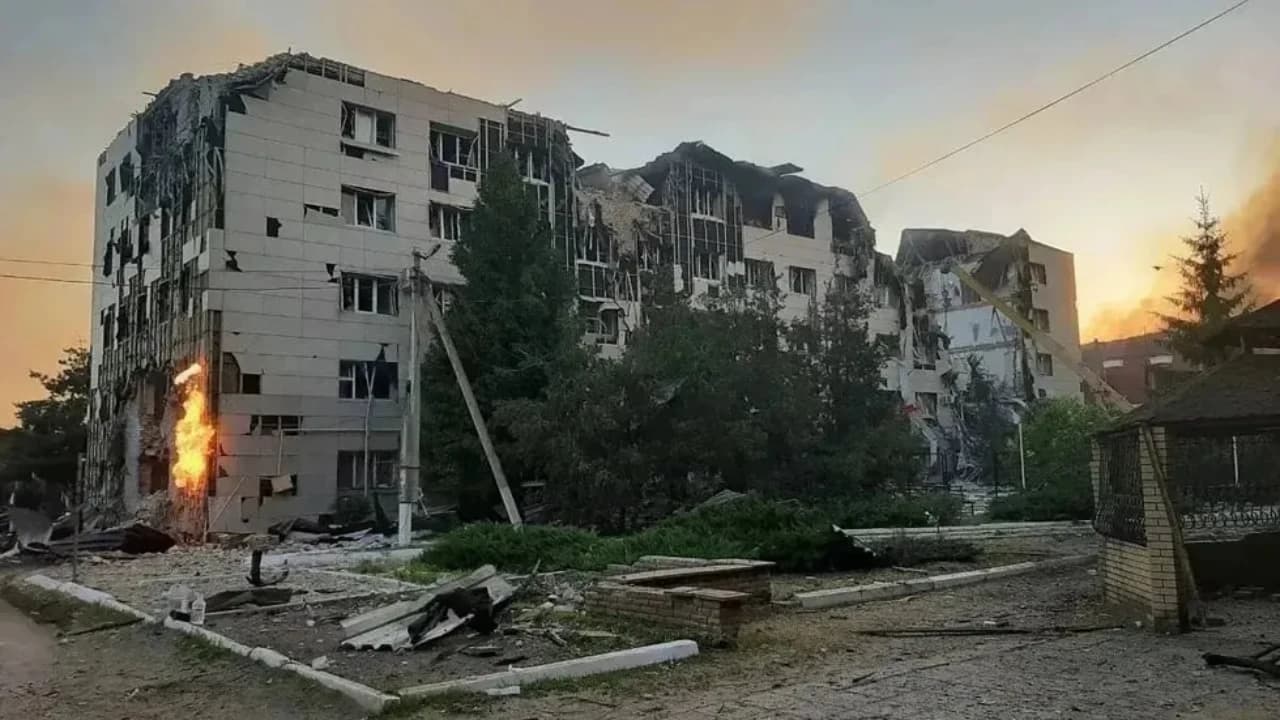
Photo: Leonid Pasechnik / College dormitory
The armed conflict in Ukraine, which remains one of the world's most volatile hotspots, has sparked further international political and military controversy. A powerful airstrike on an educational building and student dormitory at a pedagogical college in Starobelsk, Luhansk region—currently under Russian control—has become the center of intense global discussion. Russian President Vladimir Putin openly accused the Ukrainian armed forces of carrying out a "terrorist attack."
According to the latest official data from the Russian Ministry of Emergency Situations, on the night of May 22, the death toll from this horrific explosion has reached 21 people, with another 42 citizens sustaining severe injuries of varying degrees. Search and rescue operations at the site have been fully completed. Official sources stated that at the critical moment of the attack, there were 86 teenagers aged 14 to 18 inside the building.
Wave attack: Putin and statements at the UN
In his address, the Kremlin leader emphasized that this tragedy was not a coincidence or a result of a missed target. He believes the attack was highly planned, carried out in three waves, and involved directing 16 unmanned aerial vehicles (drones) at a single point.
“There were no military-significant objects near this dormitory. Therefore, there is no basis to claim that these projectiles changed course and hit the building due to our air defense systems or electronic warfare measures. Arguments that someone was aiming at a different target and the drones were shot down and accidentally fell on this site are absolutely unacceptable,” said Vladimir Putin.
These same points were echoed by Russia's Permanent Representative Vasily Nebenzya at an emergency UN Security Council meeting held on Friday. He called on Western nations to officially condemn this bloody attack, asserting that Kyiv is carrying out such long-range strikes thanks to modern weapons and intelligence provided by NATO countries.
Western and Ukrainian response: "Propaganda show"
However, the international community and Western nations, particularly representatives from the UK, Latvia, and Denmark, suggested that reports about the Starobelsk incident might be another staged "disinformation" campaign. They stated that it is impossible to verify or confirm this information from the war zone through independent sources. Ukraine's UN Ambassador Sergiy Kyslytsya (Andriy Melnyk) called his Russian counterpart's speech a pure "propaganda show."
Nevertheless, Russian Foreign Ministry spokesperson Maria Zakharova invited foreign journalists working in Moscow to visit the scene of the tragedy and see the situation with their own eyes.
For its part, the General Staff of the Armed Forces of Ukraine dismissed the Kremlin's statements about strikes on civilian objects as "manipulation of the truth." Official Kyiv stated that its military strictly adheres to international humanitarian law and strikes only enemy military infrastructure.
What is the mysterious "Rubikon" unit?
At the same time, the Ukrainian side confirmed that during the airstrikes carried out on the night of May 22, a number of important Russian military points were successfully targeted, including ammunition depots, command posts, and specifically one of the headquarters of the "Rubikon" unit located in the Starobelsk area was successfully targeted.
According to Ukrainian intelligence, "Rubikon" is a highly classified military unit of the Russian Ministry of Defense specialized in operating and utilizing unmanned aerial vehicles (drones), which is engaged in striking objects within Ukrainian territory.
The founder of the independent research group Conflict Intelligence Team (CIT), Ruslan Leviev, put forward two possible hypotheses as to why this educational institution became a target:
First version: The college building may have been used as a cover, and the Russian army's "Rubikon" training center could have been located inside. “The fact that the building is listed as a college in documents does not mean it cannot house a military headquarters,”says the expert.
Second version: A technical error may have occurred during the collection of intelligence or target identification.
The expert considers claims that the Ukrainian army deliberately shelled a simple civilian educational facility to be illogical and far from the truth. Political tensions surrounding the situation continue.
In your opinion, whose statements do you find more credible in such controversial and conflicting situations during wartime?