Were scientists wrong for 70 years? Nereid might be Neptune's only original moon
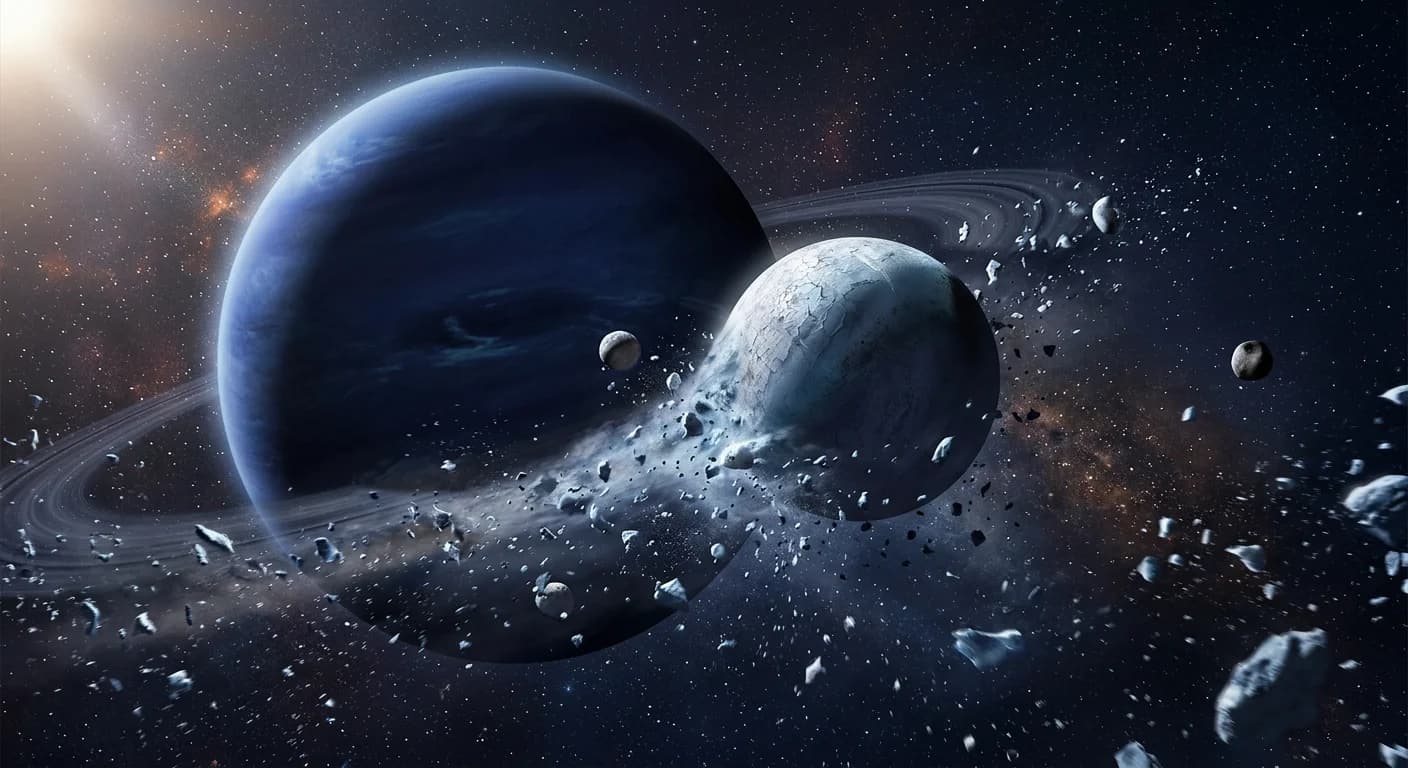
Scientists have re-evaluated the origin of Neptune's moon Nereid. More than 70 years after its major discovery, new data suggests it is highly likely to be an "original" moon of the planet, rather than a captured Kuiper Belt object as previously assumed. This is reported by Ixbt.com reports .
Nereid was discovered in 1949 by astronomer Gerard Kuiper. At the time, the scientist hypothesized that this object could be key to understanding the unusual structure of the Neptunian system. However, for decades another theory prevailed: it was believed that Neptune captured Triton and other bodies along with it, including Nereid.
The capture of Triton should have caused chaos in the Neptune system. Calculations suggest that most of the planet's original moons should have been destroyed or ejected from the system at that time. It was precisely for this reason that Nereid's elongated and unstable orbit served as the basis for classifying it as a captured object.
However, new observations made with the James Webb telescope have completely changed the picture. Analyses showed that Nereid differs significantly from objects in the Kuiper Belt. It is richer in water ice, has a higher albedo (is brighter), and does not contain specific organic compounds. These characteristics indicate that it formed near Neptune, not in the outer regions.
Computer models confirmed that Nereid could have survived the process of Triton's capture: instead of disappearing, it was thrown into a highly elongated orbit that has persisted to this day. If these conclusions are confirmed, Nereid will become a unique moon that survived catastrophic changes in the planetary system.