US Senate Supports Limiting Trump's Military Powers
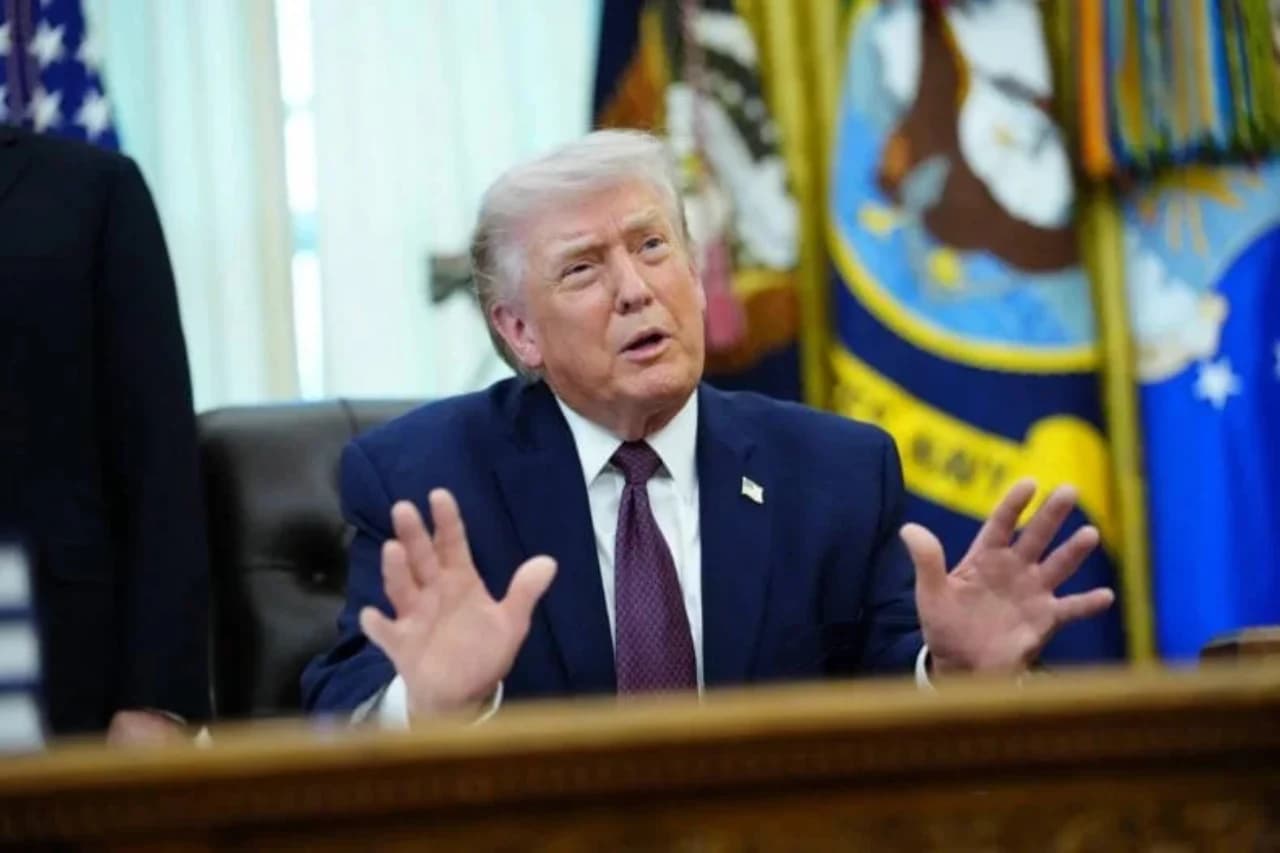
The political struggle between the United States' supreme legislative body, Congress, and the White House has intensified. The US Senate has approved a special resolution aimed at significantly curbing President Donald Trump's authority to initiate armed conflicts and military operations abroad unilaterally, without parliamentary consent.
Influential Reuters According to reports from the news agency, if this historic document officially enters into force, the head of state will be required to consult with Congress and obtain formal authorization before launching any new military campaign or armed action.
The Battle of Votes and the Supremacy of the US Constitution
On May 19 During intense voting in the upper chamber of the Senate, 50 senators supported the initiative, while 47 politicians strongly opposed it. Notably, the bill to limit Trump's powers received votes from representatives of the opposition Democratic Party as well as four Republican senators who are usually aligned with the President.
The authors and sponsors of the resolution base their argument on the fundamental principles of the US Constitution:
“According to America's supreme law, the absolute power to drag the country into a state of war with another nation or to declare large-scale military actions belongs not to the President, but to Congress, where the people's representatives sit,” the senators emphasized.
If this document successfully passes subsequent legal stages, Donald Trump will be forced to obtain legal parliamentary approval to continue armed actions in the Middle East, particularly against Iran.
Upcoming Obstacles and Trump's Veto Power
However, the full legal enactment of this resolution will not be easy. The document must still pass a final vote in the Senate and then be approved by the House of Representatives, which is controlled by the Republican Party.
Furthermore, it is almost certain that President Donald Trump will exercise his veto power against this ban. To override the White House veto and keep the decision in force, a two-thirds (2/3) majority of politicians in both houses of Congress would be required to vote in favor of the initiative.
Until now, the White House has maintained the upper hand in these political clashes. Republicans have previously successfully blocked seven similar initiatives brought to the Senate. Recently, three resolutions submitted to the House of Representatives were also rejected for failing to gather enough votes.
Conflict with Iran and the Historic 1973 Law
US lawmakers first brought this sensitive issue to the agenda in 2025, when the American Air Force launched its first missile strikes on Iran's nuclear facilities. The next heated vote on this issue was organized on March 5 of this year, at the height of the US-Israel coalition's armed conflict with Iran.
In the US legal system, there is the famous War Powers Act of 1973 . According to it, the White House leader has the right to conduct military operations abroad independently for 60 days without Congressional permission when a threat to national security arises. However, once this two-month period expires, the President must either immediately cease military actions or obtain formal approval and financial support from Parliament to continue the war. The Senate's current decision is aimed at further shortening this period of free action for Trump.
Do you think this US Senate initiative will change Trump's military plans in the Middle East, or will the White House use its veto power to have the final say?