James Webb confirms: Nereid turns out to be Neptune's only original moon
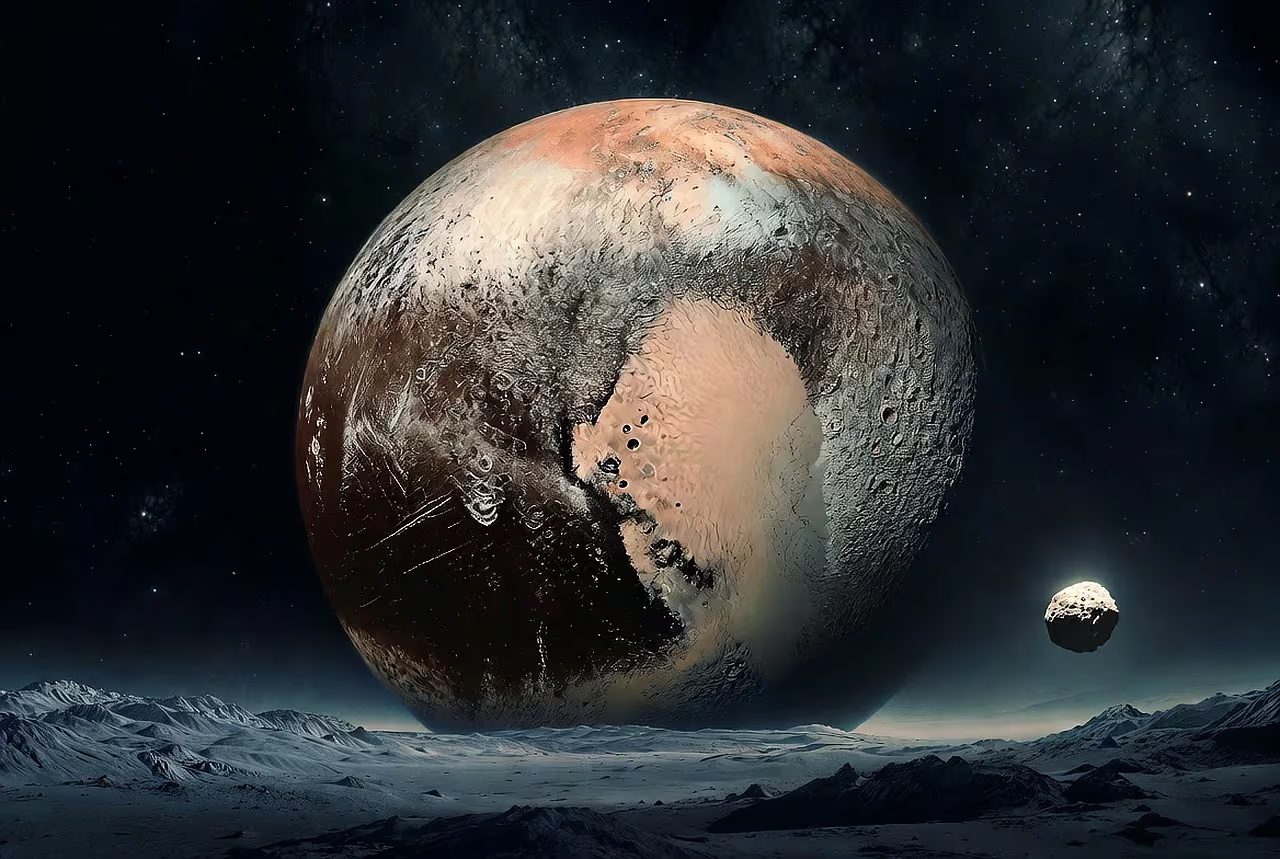
American scientists have concluded that Neptune has retained only one of its original moons — Nereid. According to researchers, the planet's other small moons formed much later, after Triton was captured by the planet's gravity and moved into its unusual orbit. This scientific work was published in the journal Science Advances. This is reported by Ixbt.com .
A team led by Michael Brown from the California Institute of Technology conducted the study using data from the James Webb Space Telescope. The results showed that Nereid did not arrive from the outside as previously assumed, but formed right near Neptune. This makes it the only survivor from the early days of the planetary system.
Scientists have long been interested in Triton, Neptune's largest moon with a retrograde motion and an unusual orbital inclination. Astronomers believe this object formed far from Neptune and was later "captured" by its gravity. Such a massive event likely shattered most of the planet's original moons or ejected them from the system.
The James Webb Space Telescope is the world's largest and most powerful orbital infrared observatory designed to study the evolution of the universe. Developed in collaboration between NASA, ESA, and CSA, this project was launched on December 25, 2021. Thanks to its unprecedented sensitivity, the telescope is capable of detecting light from the first stars and galaxies formed 13.5 billion years ago.