
Shavkat Mirziyoyev Visits the Khoja Ahmed Yasawi Mausoleum in Turkistan (Photo)

Photo: Presidential Press Service
Uzbekistan President Shavkat Mirziyoyev, together with the heads of delegations from member states of the Organization of Turkic States, visited the historical and cultural center in the city of Turkistan, Kazakhstan. As part of the visit, the high-ranking guests toured the Mausoleum of Khoja Ahmed Yasawi, one of the most brilliant masterpieces of Central Asian Islamic architecture.
Considered one of Kazakhstan's primary spiritual centers, this complex holds great historical and spiritual significance not only for Turkic peoples but for the entire Islamic world. The leaders paid their respects to the memory of the great Sufi poet, thinker, and educator Khoja Ahmed Yasawi.
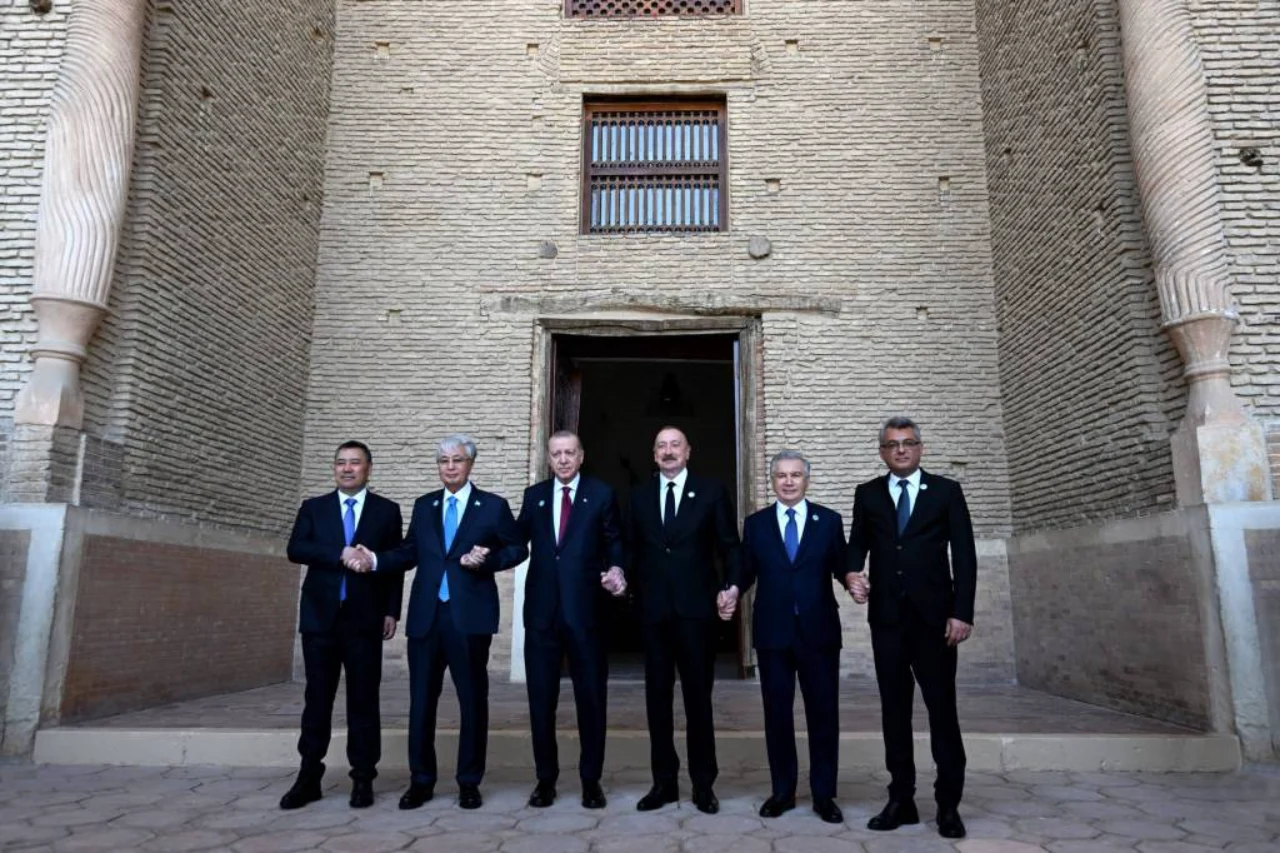
As is known, the Khoja Ahmed Yasawi Mausoleum was built at the end of the 14th century by order of Amir Timur. Construction of the complex began in 1389–1391 and continued until the end of the 14th century. Today, this unique monument is included in the UNESCO World Heritage List.
The mausoleum is one of the most magnificent and unique examples of medieval Islamic architecture in Central Asia. Masters from Transoxiana, as well as architects, decorators, and craftsmen from various regions, participated in its construction. Therefore, the complex embodies the rich architectural traditions of Turkic and Islamic civilization.
During the visit, the heads of delegations also became acquainted with the visitor center of the Hazrat Sultan Museum-Reserve. Modern conditions have been created here to welcome pilgrims and guests, organize exhibitions, and showcase the rich historical and cultural heritage of Turkistan.
A special place in the center is occupied by the permanent museum exhibition, the 'Hall of Rare Exhibits,' aimed at preserving, studying, and promoting the unique medieval heritage. This hall displays rare historical items related to the Khoja Ahmed Yasawi Mausoleum, artifacts from the 14th–15th centuries, examples of architectural and applied decorative arts, as well as pottery.
The exhibition also includes the original door of the mausoleum, the cover over the grave of Khoja Ahmed Yasawi, bronze candlesticks gifted by Amir Timur, and archaeological and ceramic finds shedding light on the ancient history of Turkistan.
Such monuments serve to deepen the understanding of the shared history, spiritual roots, and cultural closeness of Turkic peoples. They are of great importance in strengthening historical memory, preserving spiritual heritage, and passing it on to future generations.
It was noted that these cultural and spiritual sites in Turkistan serve as an important bridge uniting brotherly peoples. After all, a common history, shared faith, and rich traditions further strengthen friendship and cooperation among Turkic states.
In short, the visit of Shavkat Mirziyoyev and the heads of delegations of the Organization of Turkic States to the Khoja Ahmed Yasawi Mausoleum was an expression of high respect for historical memory, spiritual heritage, and fraternal ties. Turkistan once again demonstrated that it is one of the spiritual centers of the Turkic world.


