James Webb Telescope detects dual atmosphere on exoplanet WASP-94A b
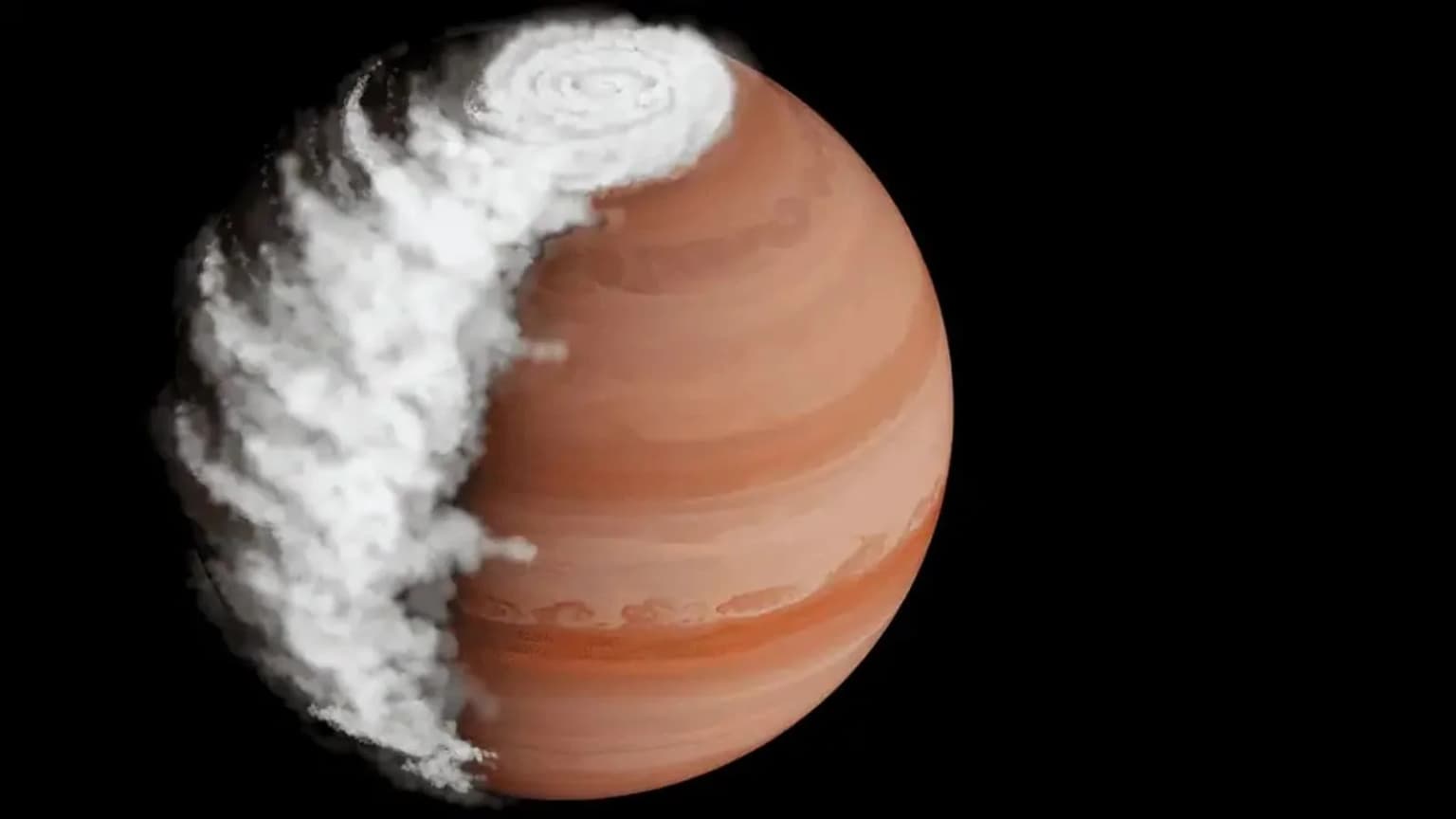
The James Webb Space Telescope has recorded an unusual atmospheric structure on the exoplanet WASP-94A b, located approximately 600 light-years from Earth. Analysis of transit spectroscopy data revealed that different zones of the planet's atmosphere possess fundamentally different physical and chemical properties, effectively meaning that "two distinct atmospheres" have formed on a single celestial body. This is reported by Ixbt.com .
WASP-94A b belongs to the class of "hot Jupiters"; it orbits its star at a very close distance and is tidally locked, meaning one side constantly faces the star. This implies that one side of the planet is under constant scorching heat, while the opposite side remains in eternal darkness. However, new observations have shown that even on the illuminated hemisphere, the atmosphere is not uniform.
Scientists identified two distinct regimes: on the planet's "morning" hemisphere, the spectrum is smoothed and lacks strong molecular signals. This is explained by dense mineral clouds that block deeper layers. Conversely, on the "evening" hemisphere, the spectrum is much clearer, with water vapor and other chemical markers clearly visible.
To interpret the data, scientists developed 3D climate models. According to these, clouds form on the cooler night side and are then transported to the morning side by strong winds. As they approach the warmer daytime zone, they evaporate, and by the time they reach the evening hemisphere, the atmosphere becomes transparent. The temperature difference between the sides reaches 126 °C, which is sufficient to change the phase state of cloud particles.
This study demonstrates that the traditional approach of modeling exoplanet atmospheres as a uniform shell can lead to misinterpretation of data. In the case of hot Jupiters, real atmospheric structures have proven to be much more complex and dynamic than previously assumed.