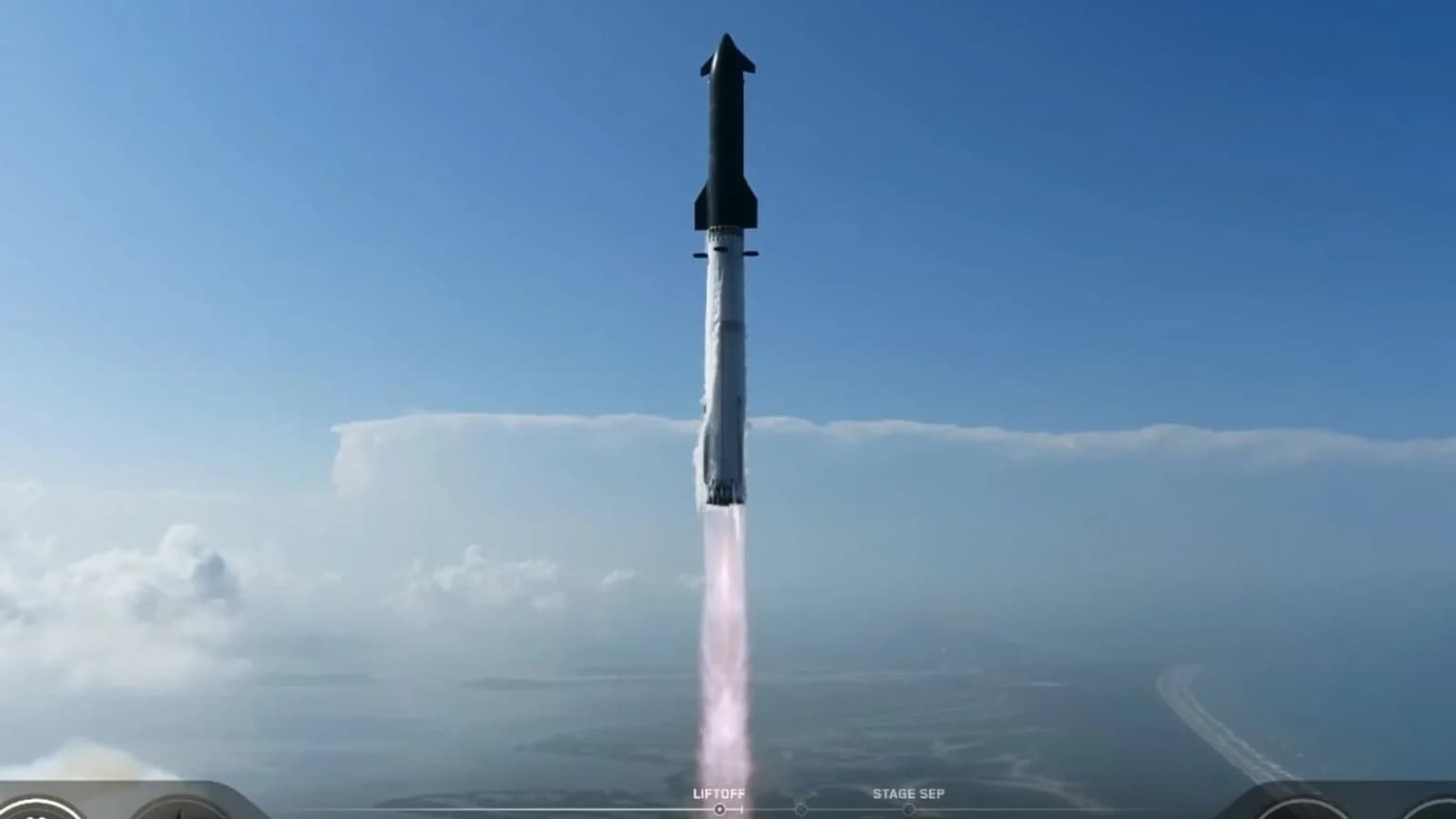
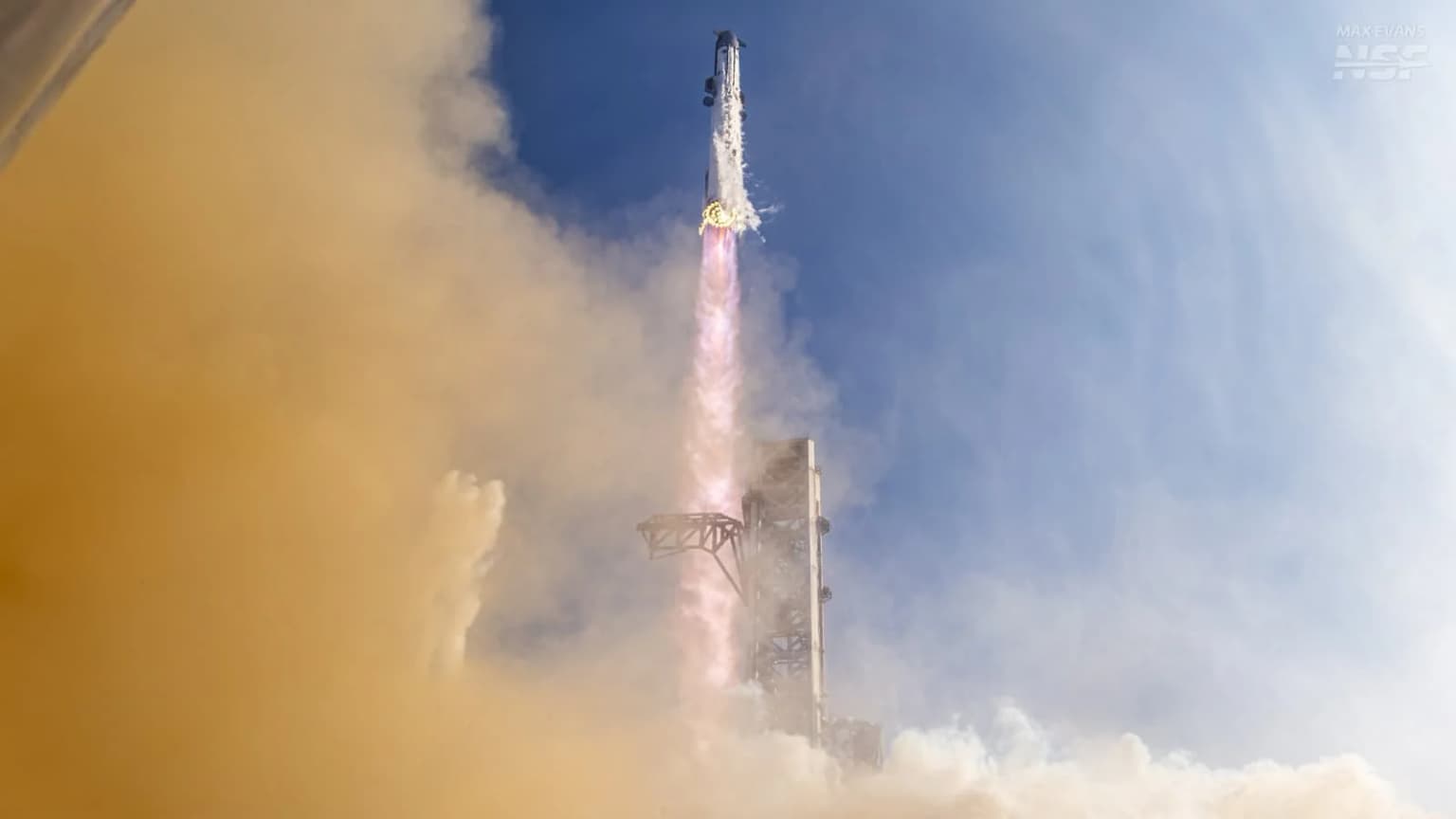
New Raptor 3 engines fail: Starship V3 completes its first flight
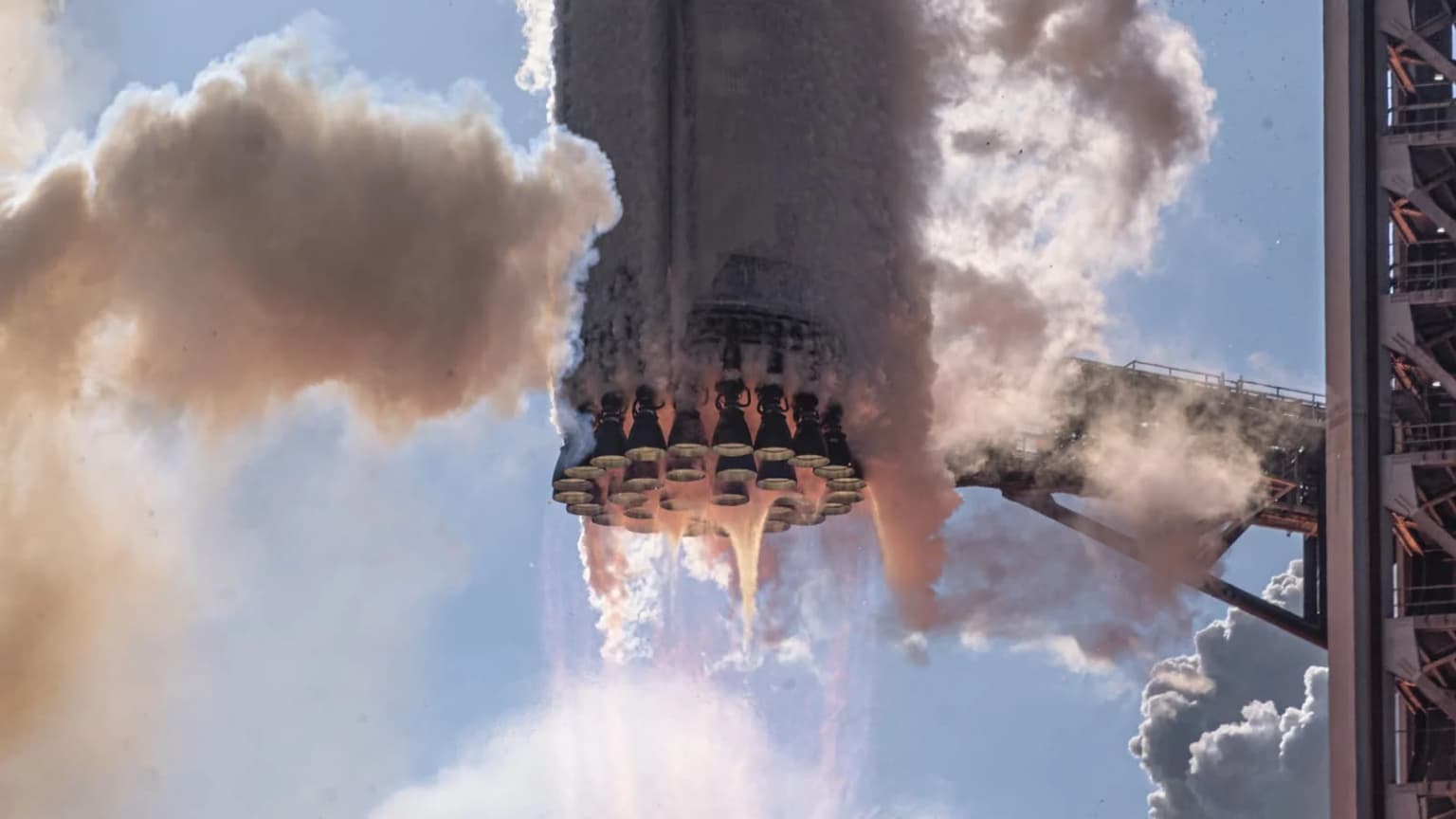
SpaceX has issued an official statement regarding today's flight of the Starship V3 super-heavy rocket. Despite being the twelfth test in the entire program, it is considered one of the most significant. For the first time, the V3 version of the ship and booster, the new Raptor 3 engines, and the new Pad 2 launch site at Starbase, Texas, were utilized. This is reported by Ixbt.com .
At launch, all 33 engines of the Super Heavy booster ignited successfully, but one shut down during the ascent phase. Nevertheless, the rocket performed stage separation, and Starship continued its flight toward space using six engines. The Super Heavy booster attempted to return but encountered issues during engine restart.
Due to the failure of some engines for the return maneuver, the landing burn attempt failed, and the booster crashed into the Gulf of Mexico. The Starship upper stage, despite losing one vacuum Raptor 3 engine, achieved its planned flight profile and proved its resilience to engine failure.
The mission's primary objective was to verify Starship's performance in space and during reentry. For the first time, the ship carried 20 Starlink satellite simulators and two modified satellites to capture the flight. Data on thermal protection and structural integrity during atmospheric reentry were collected.
In the final stage of the flight, Starship performed extreme maneuvers to test maximum load on the flaps. Ultimately, the ship performed a controlled splashdown in the Indian Ocean, completing the landing maneuver using two Raptor engines. Despite the loss of the booster, the test is considered a significant step for the next-generation Starship project.