Saudi Arabia to build a car-free, street-free, and waste-free city
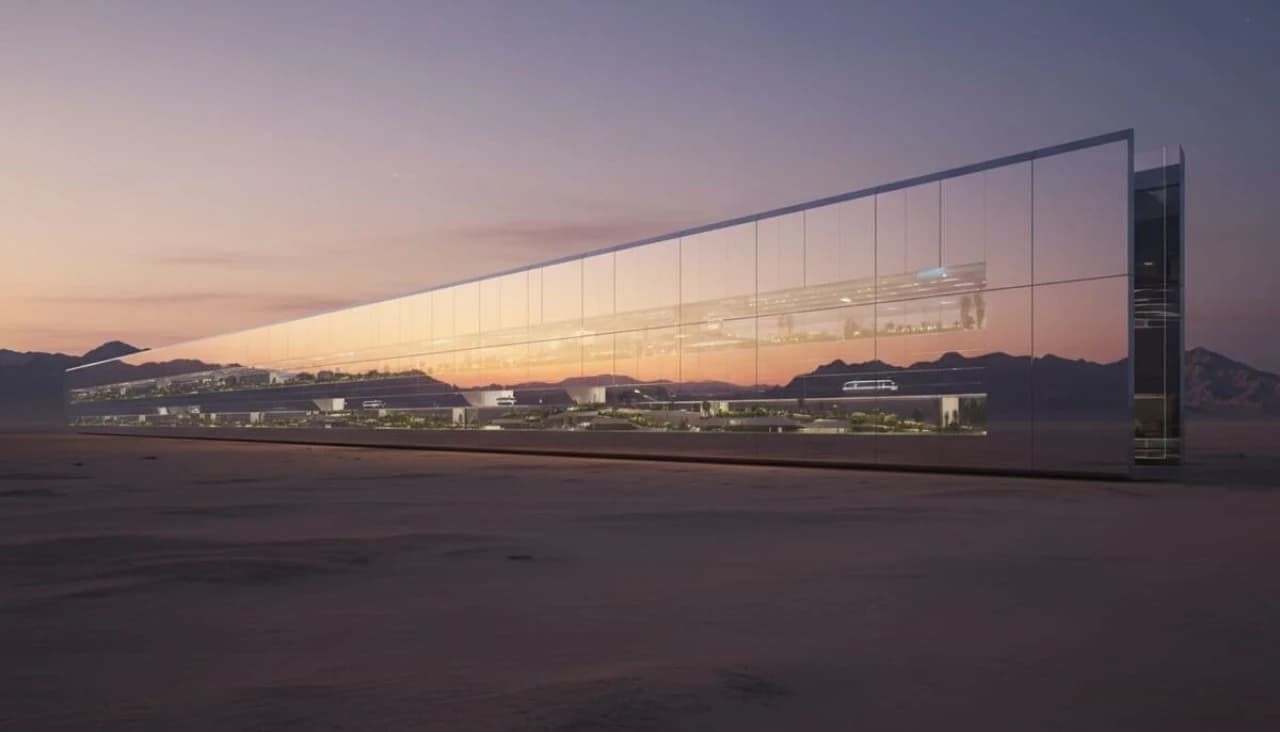
Saudi Arabia, the most powerful kingdom in the Middle East, continues to implement miraculous projects that will completely change the history of world architecture. New international contracts have been signed for the construction of two major railway tunnels with a total length of nearly 28 kilometers as part of the futuristic megacity "The Line." This project is being implemented within the framework of the country's world-famous "NEOM" global development program.
The management of the prestigious Turkish construction company Limak officially announced that this historic and massive construction contract has been secured.
According to the information received, the underground tunnels to be built will firmly connect the main logistics hubs of the mysterious 170-kilometer-long glass city rising in the northwestern part of Saudi Arabia. Special high-speed trains moving within this underground system will be capable of reaching speeds of up to 180 kilometers per hour.
Glass miracle: A green city without cars and waste
The "The Line" project is the heart and center of the "NEOM" megaprogram. According to the project description, this unique city will start from the shores of the Gulf of Aqaba and stretch 170 kilometers into the desert through the Hejaz mountain range.
The technical parameters of the city of the future are planned as follows:
The total width of the city is only 200 meters; it consists of;
The height of the magnificent glass facades covering its two sides reaches 500 meters (i.e., taller than the Eiffel Tower).
Inside this massive "ribbon," which is hard to believe, there will be residential areas for millions of people, modern offices, entertainment and service centers, and green parks. Most interestingly, there are no conventional roads planned within the city. The Saudi government has declared it the world's first "car-free, street-free, and waste-free city." Therefore, the movement of the population will be carried out entirely through high-speed transport capsules and trains in underground tunnels. According to the chief engineers' plan, people should be able to reach from one end of the city to the other in just 20 minutes. Moreover, this super-structure will operate entirely on eco-friendly and renewable energy sources — solar, wind, and hydrogen energy.
Blasting method and unique engineering solution
Instead of conventional modern drilling machines, the traditional blasting method is used for excavating the massive tunnels. Experienced experts believe that the blasting method is financially cheaper and more efficient for cutting through the extremely hard and dry rock of the Hejaz region. This approach also allows the construction consortium to start work from four different points simultaneously, speeding up the process.
The diameter of each of the future underground tunnels is exactly 14 meters. This is sufficient to comfortably accommodate double-track railways and maintenance platforms. However, engineers face a very difficult task — they must perfectly design the system's ventilation and drainage networks. This is because outside, in the scorching desert, the air temperature rises to 50 degrees Celsius in the summer months.
Construction pace: Comparing with international records
The international consortium aims to complete these complex underground excavation works within 72 months (6 years). Since construction is being carried out in four sections simultaneously, the average daily construction speed is expected to be 5.8 meters.
If we compare this pace with other major projects in the world, we can see that construction in Saudi Arabia is moving very fast:
Project name | Average daily construction speed |
Brenner Tunnel (Austria — Italy) | Approximately 4 meters |
"The Line" tunnel (Saudi Arabia) | 5.8 meters |
Eurotunnel (under the English Channel) | Approximately 7 meters |
There is no doubt that this project, which is laying the foundation for the future, will soon fundamentally change the way humanity lives.
Do you think Saudi Arabia can successfully build such a futuristic megacity in the middle of the desert that is free of cars and waste and runs entirely on green energy?