OpenAI AI breaks Paul Erdős' 80-year-old hypothesis
An OpenAI AI model has refuted a famous mathematical hypothesis that the world's greatest scientists had failed to solve for decades. This work by a team of authors led by Noga Alon has stunned the scientific community. Cambridge University professor Tim Gowers called this event a turning point in the history of computer mathematics, noting that if this work had been written by humans, it would have been published in a prestigious journal like Annals of Mathematics without hesitation. This is reported by Ixbt.com reports.
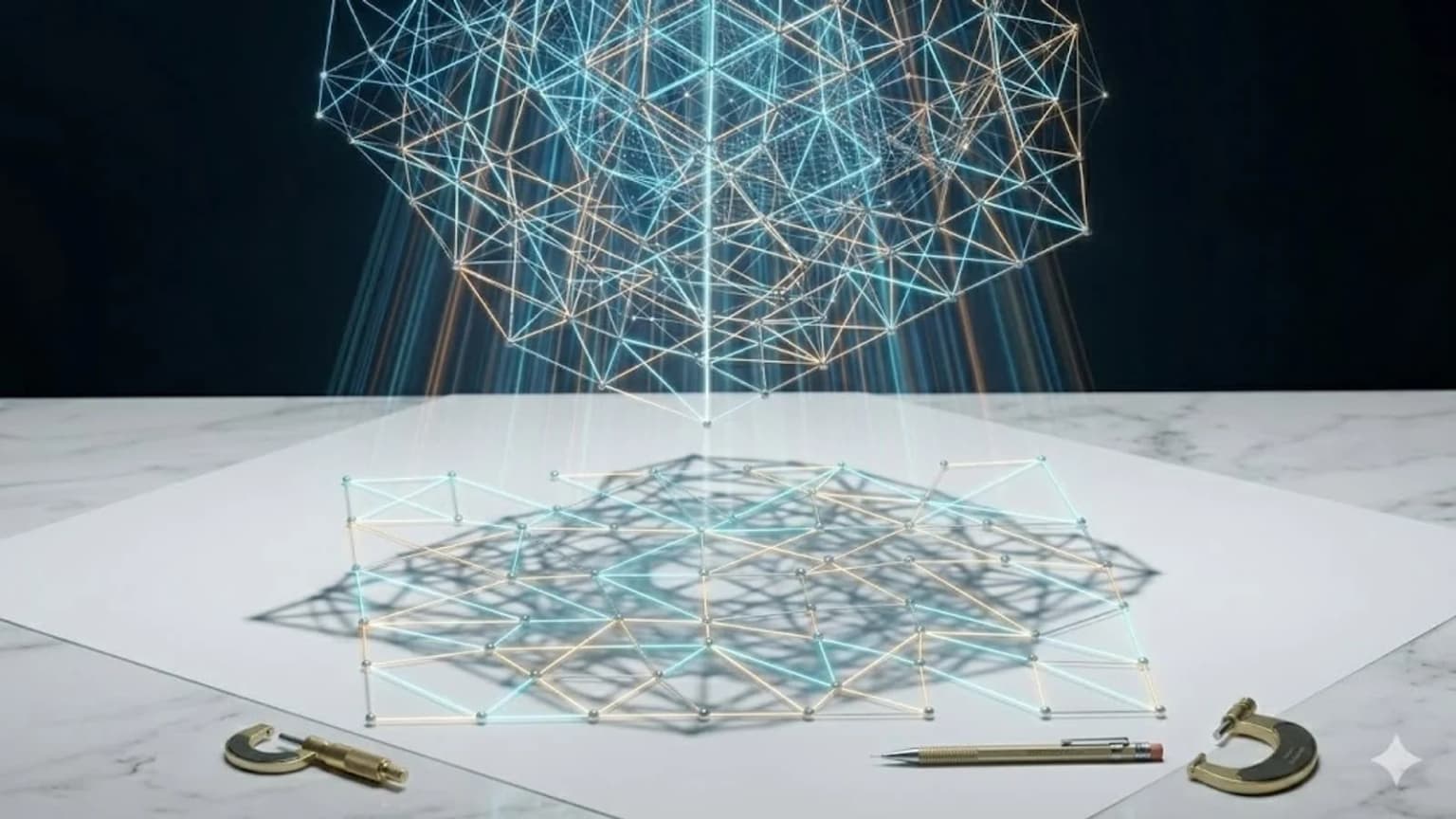
The issue concerns the planar unit distance problem. The great 20th-century mathematician Paul Erdős considered this problem his most brilliant contribution to geometry. The essence of the problem is: when arbitrary points are placed on an infinite sheet of paper, what is the maximum number of segments of the same length that can be drawn between them? Erdős hypothesized that the optimal solution would be in the form of a square grid and that the number of segments would be only slightly higher than the number of points.
However, the OpenAI neural network proved the great mathematician wrong: it turned out that by placing points in less symmetrical, complex patterns, the number of equidistant connections can be increased several times over. The algorithm used algebraic number theory for this solution. The AI built massive grids in multidimensional spaces and then projected them onto a two-dimensional plane.
According to University of Manchester scientist Samuel Mansfield, the reason humans could not reach this solution is that geometers usually lack deep knowledge of number theory. The AI demonstrated its superiority in synthesizing different scientific fields. University of Bristol professor Misha Rudnev called this discovery an "absolute bombshell."
Although this Erdős problem is considered fundamental theory, its solution provides new tools for working with Big Data, crystallography, and complex network structures. While OpenAI has not yet disclosed the model's architecture, it emphasizes that this is an important step toward Artificial General Intelligence (AGI).