


Pakistan Sends Thousands of Troops and Fighter Jets to Saudi Arabia
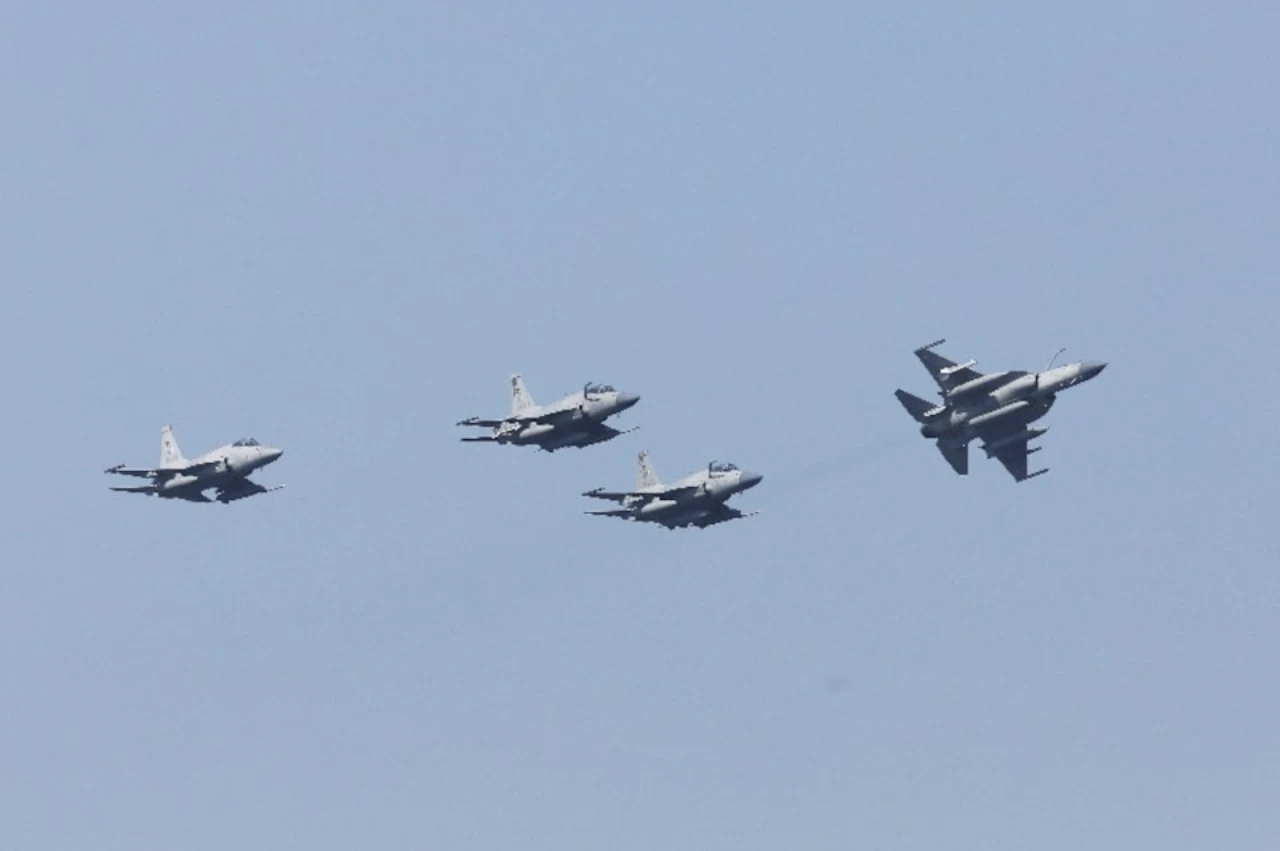
At a time when the geopolitical situation in the Middle East is extremely volatile and unstable, military cooperation between two major Muslim nations has reached a new level. The influential Reuters news agency, citing reliable sources in government and security agencies, reports that Pakistan has deployed a force of 8,000 military personnel and a squadron of modern fighter jets to Saudi Arabia.
This move, taken against the backdrop of armed clashes between the US and Israel against Iran, which are at the center of global attention, is aimed at drastically strengthening the Kingdom of Riyadh's defense capabilities and the security of its airspace.
Chinese Technology and Pakistan's Nuclear Umbrella
According to reports, in April of this year, Islamabad delivered 16 modern JF-17 Thunder fighter jets produced in cooperation with China, as well as a complex of advanced unmanned aerial vehicles (drones) to Saudi Arabia. Additionally, China's famous HQ-9 air defense systems were also sent to ensure Saudi defense. These complex military assets and systems are operated by highly trained specialists from the Pakistan Army, with all operational costs fully covered by Saudi Arabia.
Such comprehensive military support did not emerge out of nowhere. It is worth recalling that in September 2025, a historic and strategic defense agreement was signed between Saudi Arabia and Pakistan. According to this document, sealed in Riyadh by Saudi Crown Prince Mohammed bin Salman and Pakistani Prime Minister Shehbaz Sharif, an act of aggression against one party is considered an attack on both nations.
Pakistan is the only nuclear-armed state in the Islamic world. International political analysts believe that through this alliance agreement, Saudi Arabia has effectively been placed under a 'nuclear umbrella' of Pakistan. The fact that Saudi Arabia, one of the White House's closest partners in the Middle East, has bypassed Washington to enter into such a firm agreement with Pakistan indicates that the Kingdom's confidence in US security guarantees has significantly diminished.
The First Serious Test for the Agreement
After large-scale military strikes began on Iranian territory on February 28 of this year, led by the US-Israel alliance, official Tehran launched retaliatory missile and drone strikes against Washington's close regional partners, particularly major military and industrial facilities in Saudi Arabia.
This dire clash became a real test for the military pact between Islamabad and Riyadh. The immediate deployment of thousands of troops and combat aircraft to Saudi Arabia by Pakistan shows that Islamabad has fully honored its promise to its partner.
The Other Side's View: The Issue Should Not Be Viewed Solely Through a Geopolitical Lens
Responding to this Reuters report, Pakistan's influential Pakistan Today publication takes a different approach. The publication's sources emphasize that linking the deployment of troops to Saudi Arabia solely to today's war and geopolitical crises is a misinterpretation of the true essence of the relationship between the two countries. They believe that this deployment was planned in advance and that the ties between the two nations are based not only on military interests but also on centuries-old religious, cultural, political, and strong economic bonds.
Currently, Pakistan is not only acting as a military party but is also performing an active mediation mission to stop the armed clashes between the US/Israel and Iran. High-level diplomatic negotiations aimed at establishing peace in the region are also being hosted by Islamabad.
Saudi Arabia also officially maintains a neutral status in this war. However, the presence of major US military bases on the Kingdom's soil calls its neutrality into question. Furthermore, according to leaked reports in the global press, in response to Iranian strikes, Saudi Arabia secretly conducted counter-attacks against the Persian state in March of this year.
A New 'Helsinki Model' for the Middle East
Looking to the future, Saudi Arabia is actively discussing the idea of establishing a general peace pact on non-aggression between Middle Eastern states and Iran after this global conflict ends. The Riyadh government is considering the famous Helsinki Process of the 1970s, which served to ease strong political tensions in Europe during the 'Cold War' of the last century, as a potential and most suitable model for Middle East peace.
Do you think Pakistan's deployment of military forces to Saudi Arabia will help dampen the flames of war in the region or complicate the situation further?



Comments 0
…