


Restoration of Green Life in Aralkum Continues
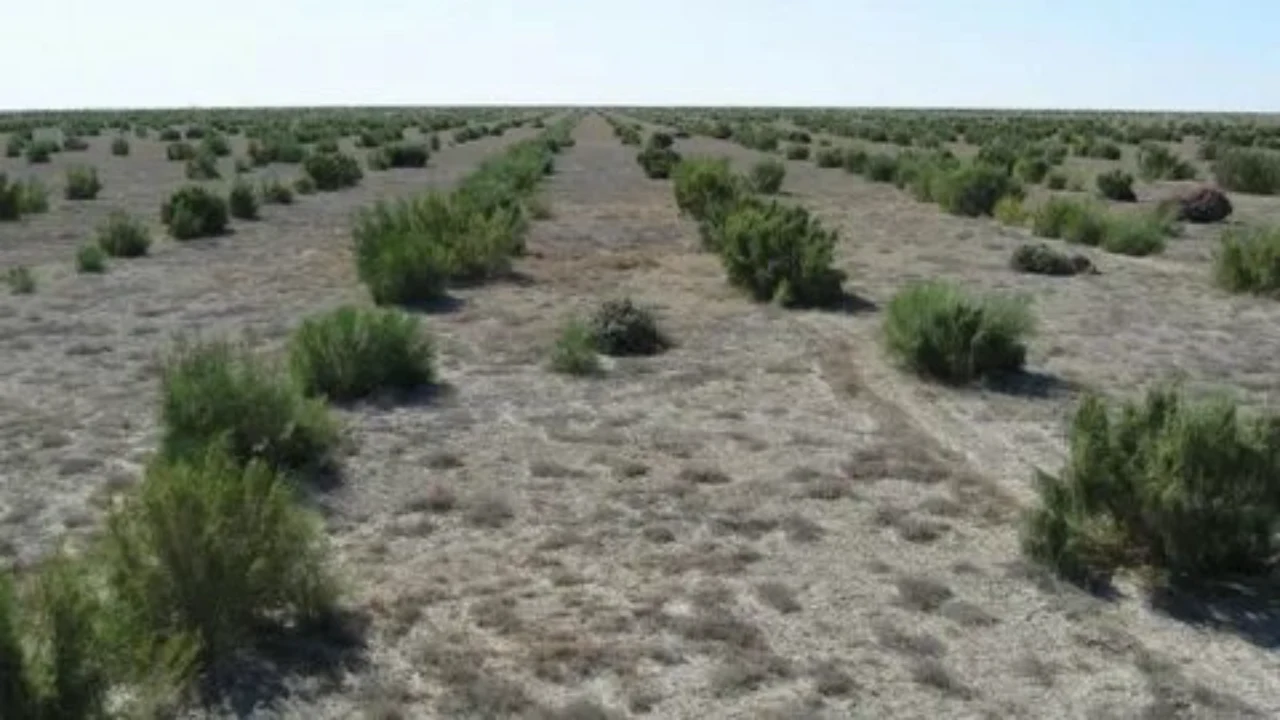
Uzbekistan continues large-scale afforestation and ecological restoration work on the dried-up bed of the Aral Sea. As part of the project, it is planned to plant forests on an area of more than 2 million hectares in the Aralkum region. This initiative is of great importance not only for the lives of the local population but also for the ecology of the entire region.
The influential Spanish publication OkDiario published an article about Uzbekistan's ecological programs aimed at restoring the Aral region. It specifically highlights the ecological projects being implemented by our country in cooperation with the international community.
The publication notes that the Aral Sea was once one of the four largest lakes in the world. However, over the years, the misuse of water resources, especially the diversion of Amu Darya and Syr Darya waters for cotton irrigation during the Soviet era, caused a massive ecological crisis. As a result, the sea water decreased by nearly 90 percent, and the Aralkum Desert appeared in its place.
Currently, Uzbekistan is taking practical measures to mitigate the consequences of this severe ecological legacy. By planting forests on the former seabed, the goal is to reduce dust and salt dispersion, strengthen the soil, improve air quality, and reduce the negative impact of climate change.
It is intended to plant mainly drought-resistant plants in Aralkum. Such trees and shrubs are adapted to grow in saline soils and play an important role in preventing dust storms, retaining soil, and restoring ecological balance in the region.
Students of Karakalpak State University are also actively participating in the project. They are contributing to the restoration of the Aral by planting trees, caring for seedlings, and participating in ecological events in the dried-up areas. This is a great lesson for the youth: ecology is not just a figure in a report, but real work done for the future.
Experts believe that afforestation is one of the most effective methods against land degradation and desertification. The expansion of green areas serves to reduce dust storms, restore biodiversity, and mitigate the local climate.
The OkDiario article also notes that this initiative of Uzbekistan is strengthening international ecological cooperation. In particular, joint projects are being implemented with Kazakhstan to restore the northern part of the Aral Sea. This shows that the Aral problem is a common responsibility for the entire region, not just one country.
The Aral tragedy has become a great lesson for humanity. But today, Uzbekistan sees this region not as a hopeless desert, but as a living space that can be restored. Planting forests on millions of hectares is not an easy task, but it is one of the most correct steps taken for the future.
In short, every seedling in Aralkum is not just a tree. It is a symbol of clean air instead of dust, hope instead of drought, and new life instead of ecological tragedy.



Comments 0
…