


Sacking Xabi Alonso could prove costly for Real Madrid
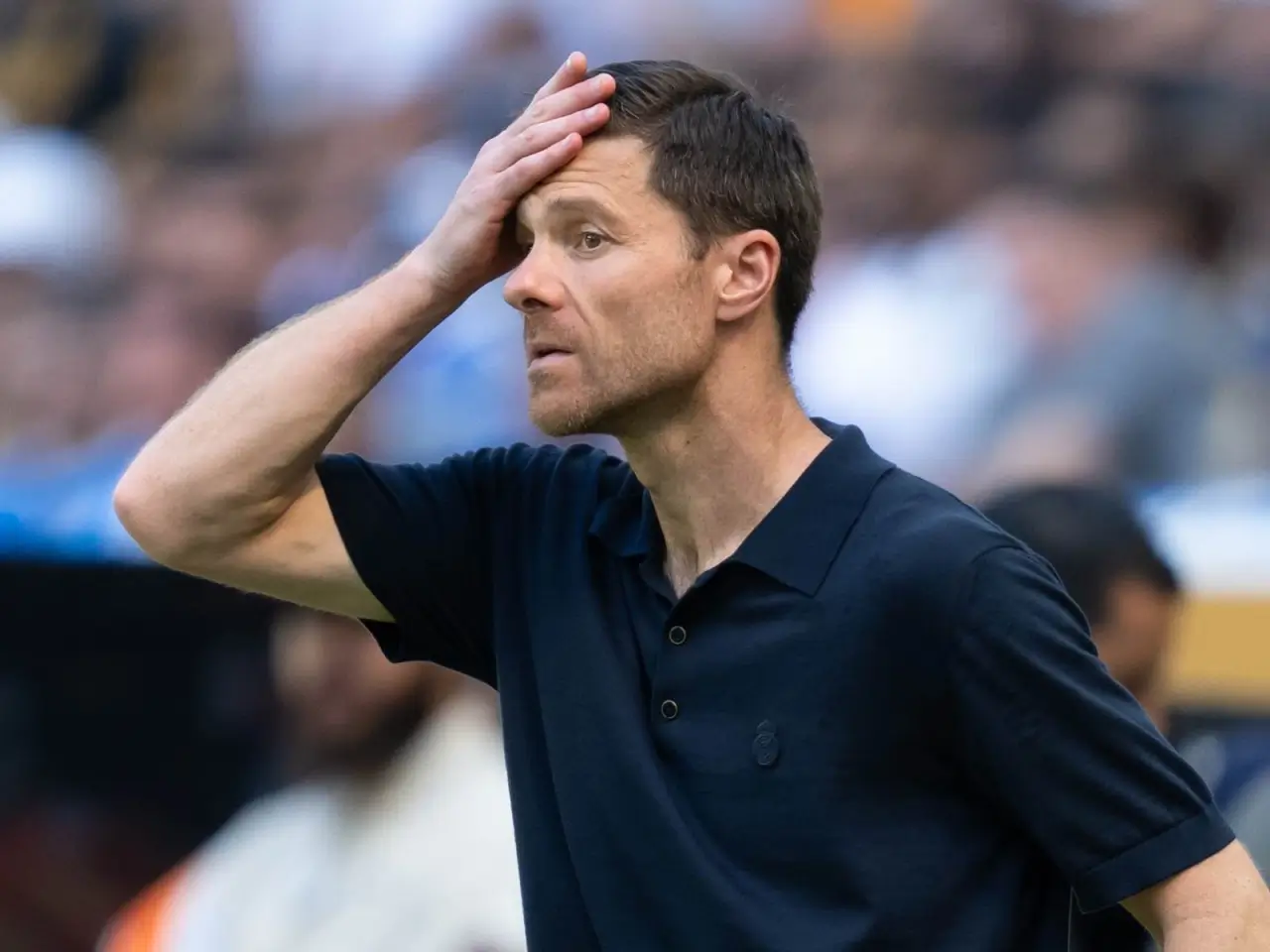
In Madrid, the usual script plays out again: Real publicly praises someone, and not long after removes that person from the project. Official statements use the gentle phrase “by mutual agreement,” but inside the club it feels like the decision had long been made—they were simply waiting for a convenient pretext. This is reported by euro-football.ru reports .
And the pretext was found: the Spanish Super Cup final was held in Saudi Arabia, and Barcelona won 3–2. The match looked dull and still unfinished for Real. In Madrid, after such an El Clásico, a coach isn’t given time to analyze mistakes—he’s shown the door immediately. Losing to Barça here is not treated as a routine defeat, but almost like a public verdict.
Xabi Alonso left his post a little over seven months after being appointed. The Basque coach’s record isn’t bad: only six losses in 34 matches. Those numbers may not look disastrous for Real, but the club’s main metric isn’t the table—it’s the sense of control and command. It felt as if Alonso was trying to conduct the team, while the “orchestra” kept playing its old hits out of habit.
The media are writing about tension in the dressing room and internal conflicts. In other words, Real once again showed that in this club, the status of stars often outweighs consistency of ideas. If the leaders don’t buy into the concept, the coach is usually the first to go.
The most interesting point in this story isn’t the dismissal itself, but the choice of successor. Real didn’t call in a big-name “savior”; instead, they appointed Álvaro Arbeloa, a product of the club’s own hierarchy. He has worked in the academy since 2020 and recently coached Castilla.
So the club is relying not on a ready-made super coach, but on “one of their own.” This suggests that for Florentino Pérez, the priority right now is not to announce a “new era” with new slogans, but to preserve the system’s controllability and loyalty.
This raises an unpleasant but necessary question: why are Real changing coaches again when the season hasn’t collapsed and the gap in the league doesn’t look catastrophic?
The answer is simple: at this club, the coach often doesn’t build a system. He serves an environment where instant superiority is expected. If that superiority disappears even for one night, “the system” is dismissed as a boring excuse, and the coach becomes a convenient lightning rod.
After the Super Cup final, Alonso spoke about injuries and physical condition. Yes, injuries affect stability, but Real’s problem lies elsewhere: such explanations sound like “analysis” only when you win. Especially after losing to Barça, they are taken as weakness. Then Madrid’s classic mechanism kicks in: if the team has no clear identity, it means there is no coach.
In reality, an identity doesn’t emerge from swapping names. It forms when a club can stick with its decisions for longer than a single emotional cycle.
Now Arbeloa will take charge of a trial match in the Copa del Rey on 14 January. For Madrid, it’s the usual “instant verdict” test: if Real win comfortably, everyone will write about the “right shake-up”; if the game is tough, whispers of “not good enough” will start immediately. Yet the level is the same—there are simply fewer excuses this time, because the club itself made a short-term choice.
That’s why the main question isn’t why Alonso left—that has already been officially confirmed. The key issue is whether anyone at Real will admit out loud that without a system there will be neither a coach nor a future. Otherwise, the next specialist will arrive as a “reformer” and leave as a “temporary patch.” And that, ironically, doesn’t fit the “royal standard” at all.


Comments 0
…