

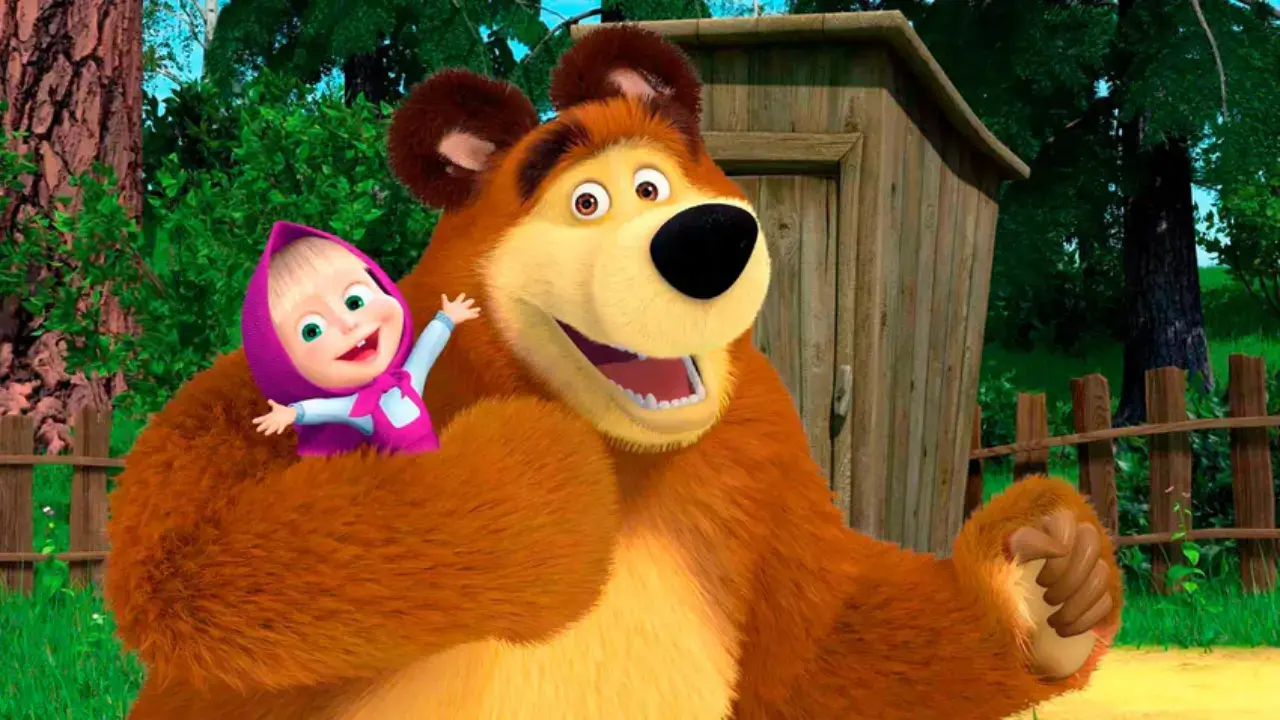
The cartoon “Masha and the Bear” has repeatedly faced cultural conflicts and parental objections. This popular Russian animated series is watched not only in Russia but also in Brazil and Japan. Currently, it is breaking records on the YouTube channel and even surpassing Disney.
However, in some countries, Masha is considered too active and bold, and her adventures are viewed as dangerous for children’s minds. Why did a seemingly harmless cartoon spark such controversies? How did bans increase its popularity? Let’s look at the map of disputes around “Masha and the Bear.”
In 2015, the Iranian government banned the cartoon from state television. The reason: the girl supposedly sets a bad example for children; she is active, disobedient to adults, and breaks rules. In a country where modesty is valued, her behavior was considered dangerous.
In Canada, the shaman scene in the episode “Distant Relative” (2015) caused many objections. Viewers noticed stereotypes about local peoples. Netflix temporarily removed the cartoon, and the creators explained it was a parody of Russian folklore, not Native Americans.
In the USA, parents criticized Masha for “encouraging disobedience.” Although there is no official ban, several calls were made on social media to remove the cartoon from children’s channels. Psychologists argued that children can distinguish cartoons from reality and that humor is part of education.
Each ban led to a sharp increase in views. For example, after the Iranian ban, the number of social media followers rose by 30%. Attempts to ban it, like with “The Simpsons” or “South Park,” made “Masha and the Bear” an even more popular project. Thus, global disputes further increased its fame, and Masha’s active, bold, rule-breaking character made her even more memorable.
Read “Zamin” on Telegram!