


Blue Origin concludes investigation and receives clearance for New Glenn flights
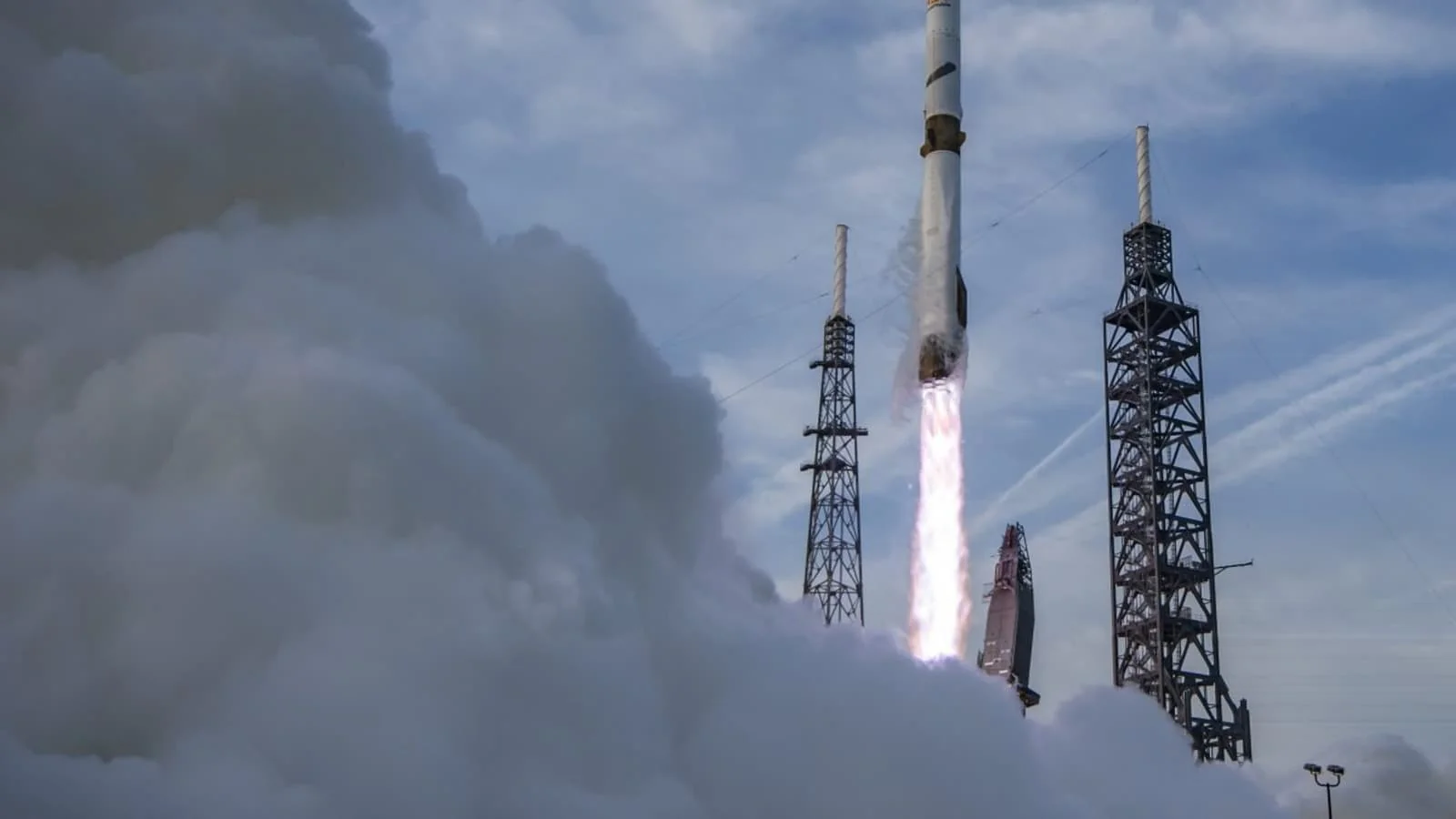
Blue Origin has successfully concluded its investigation into the anomaly that occurred during the third test flight of its New Glenn heavy-lift launch vehicle. The U.S. Federal Aviation Administration (FAA) has granted the company official authorization to resume flights. The regulator approved the final report regarding the incident recorded during the NG-3 mission on April 19 and closed the case. This was reported by Ixbt.com reports.
During that flight, the rocket's second stage (GS2) encountered a serious malfunction during the planned second engine ignition. As a result, the BlueBird 7 telecommunications satellite owned by AST SpaceMobile remained in an extremely low orbit and was lost after failing to regain its autonomy. According to preliminary data, one of the two BE-3U engines failed to provide the required thrust due to unexpected temperature conditions.
FAA representatives told SpaceNews that the accident was caused by a leak of a cryogenic fuel component. This led to the instantaneous freezing of a hydraulic line and an anomaly in the second stage power unit. As part of the investigation, Blue Origin engineers developed nine corrective measures to prevent such incidents in the future. The regulator noted that it will personally verify the implementation of these items before the next launch.
Blue Origin is currently actively preparing for the fourth flight as part of the NG-4 mission. CEO Dave Limp shared a video showing the transport of the new rocket to the launch complex. The next stage of preparation will be full-duration static fire tests of the assembled vehicle at the launch pad. The exact date and payload composition of the NG-4 mission are currently being kept secret.
AST SpaceMobile has adjusted its logistics plans: the next three BlueBird units have been delivered to Florida for launch in June using a Falcon 9 rocket. Nevertheless, the operator does not intend to cancel its contract with Blue Origin. Chief Strategy Officer Scott Wisniewski stated that such malfunctions are common in the early stages of testing new space systems and that the partnership will continue.


Comments 0
…