


Green Revolution: How did China conquer the world?
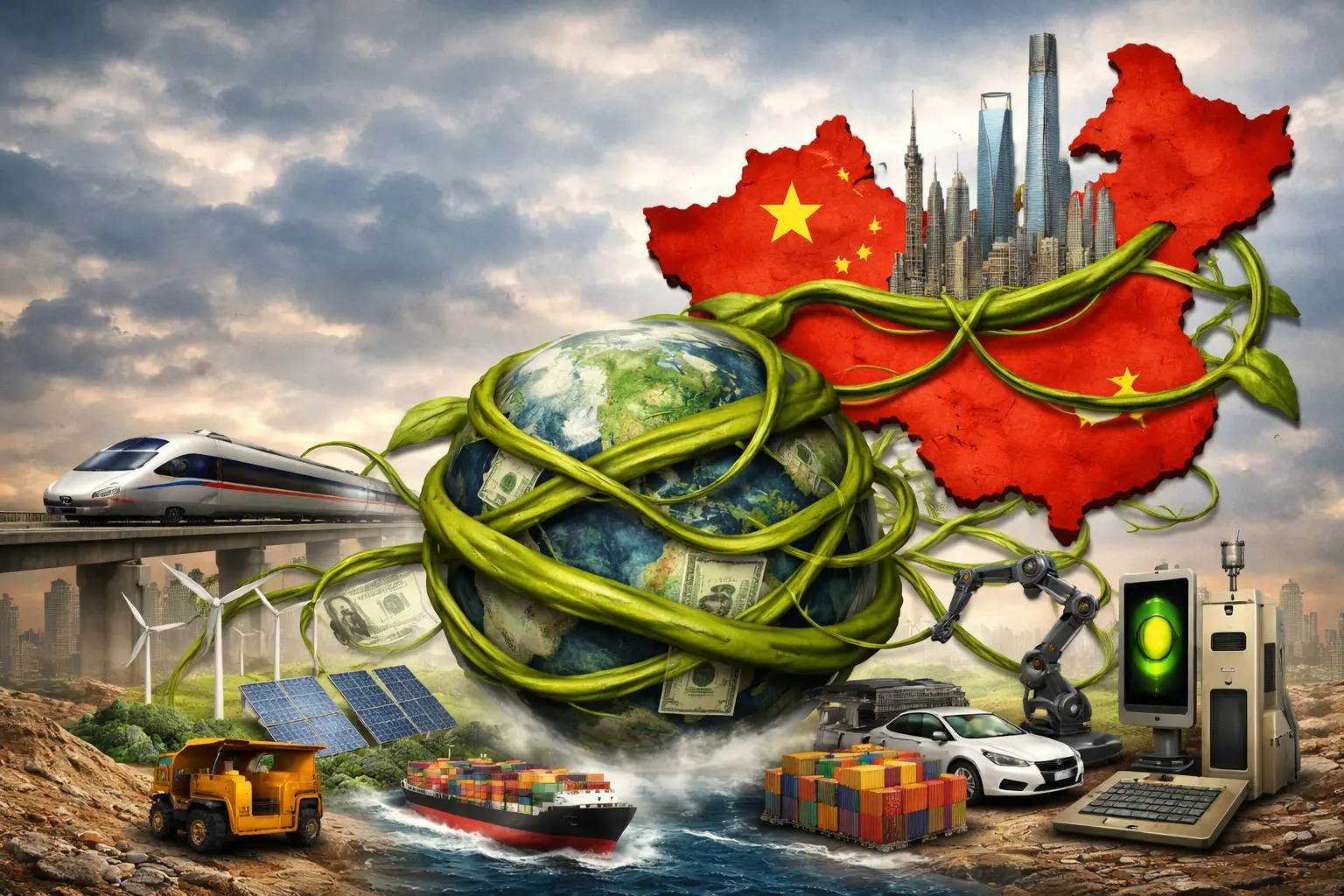
Photo: chatgpt.com
Today, the balance of power in the global economic arena is changing dramatically. Zamin.uz analyzes the most important points of this historical process.
In recent years, a new and impressive trend has become clearly visible in the world market: China has become an absolute leader in the production of not only electric cars, but also solar panels, wind turbines and high-capacity batteries. This country, which has long been known as the "planetary factory", has now taken over global dominance not only in ordinary consumer goods, but also in high-tech "green" products. So, how was this strategic victory achieved, and why has the West, considered the cradle of innovation, lagged behind in this race?
The secret formula for success
China’s current triumph is no coincidence. It is the result of consistent and determined government policies implemented over the past two decades. While the Western world has been focusing mainly on software and services (IT), Beijing has invested billions of dollars in heavy industry and manufacturing through the “Made in China 2025” program.
The government has allocated hundreds of billions of dollars in direct subsidies, tax breaks, and free land to support the clean energy sector. In this favorable environment, domestic giants such as BYD and CATL have grown at an unprecedented pace. The domestic market has served as a huge testing ground for these technologies. The full electrification of public transport and the benefits provided to citizens have allowed Chinese companies to quickly introduce the highest quality and cheapest products to the world market.
Strategic Minerals: Complete Monopoly
China has achieved absolute dominance in the market for critical minerals (lithium, cobalt, nickel, graphite), which are the "heart" of modern technologies, semiconductors and defense equipment. According to the International Energy Agency, Beijing owns:
- 96 percent of the world's rare earth metals;
- 98 percent of natural graphite;
- 97 percent of cobalt;
- 73 percent of lithium.
Over the past two decades, Chinese companies have expanded their raw material base by buying up the largest mines in Africa, South America and Australia. For example, most of the mines in the Democratic Republic of Congo, a major source of cobalt, are under Beijing's control. In addition to mining, China is also the number one country in processing (refining) them. At a time when the West has closed these factories on its territory due to environmental restrictions and expensive labor, China has completely taken over this chain.
A new chessboard in global geopolitics
This dominance has given China not only economic profits but also enormous political leverage. Energy security now includes not only oil, but also batteries and rare earth metals. Beijing has begun to use its dominance as a geopolitical weapon. For example, in response to US restrictions on chip technology, China has banned the export of gallium, germanium and antimony, which are essential for semiconductors. From the beginning of 2025, control over strategic metals such as tungsten and molybdenum has been further tightened.
Critical Minerals War: Washington's Concerns
These Chinese moves have put the United States at a strategic disadvantage. Washington is as dependent on Chinese raw materials as Beijing is on US high-tech. As a result, the Trump administration has begun to try to buy Greenland and has demanded deals with Ukraine on rare earth metals.
These metals are vital for the United States in two important areas:
1. Military technology: The effectiveness of modern drones and radar devices depends on the quality of batteries. Falling behind in this area is tantamount to losing military superiority.
2. Business race: China's BYD has overtaken Elon Musk's Tesla in the electric car market. In 2025, the Chinese giant sold 2.25 million cars, while Tesla's figure stopped at 1.64 million.
In short, future economic and military superiority depends not only on artificial intelligence, but also on control over the raw materials and energy sources that power it.
Dear readers, do you think Western countries will be able to find a worthy response to this Chinese monopoly?



Comments 0
…