








It has been revealed that fare evasion on Tashkent public transport has increased significantly. In the first four months of 2026, over 50,000 passengers in the capital were fined for traveling without a ticket. This figure, nearly double that of the same period last year, indicates a serious escalation of the situation.
Experts believe several factors have contributed to the problem. Specifically, the abolition of cash payments, the reduction in the number of conductors, and the full digitization of the payment process have been exploited by some passengers. Simply put, the system has modernized, but not everyone has adapted to it responsibly.
According to data, the majority of fare evaders are young people. It is noted that 90% of these offenders, known as 'hares', are passengers aged 16 to 30. The share of students among them is also very high, accounting for approximately 70%. This highlights the need to strengthen preventive measures specifically within youth and educational institutions.
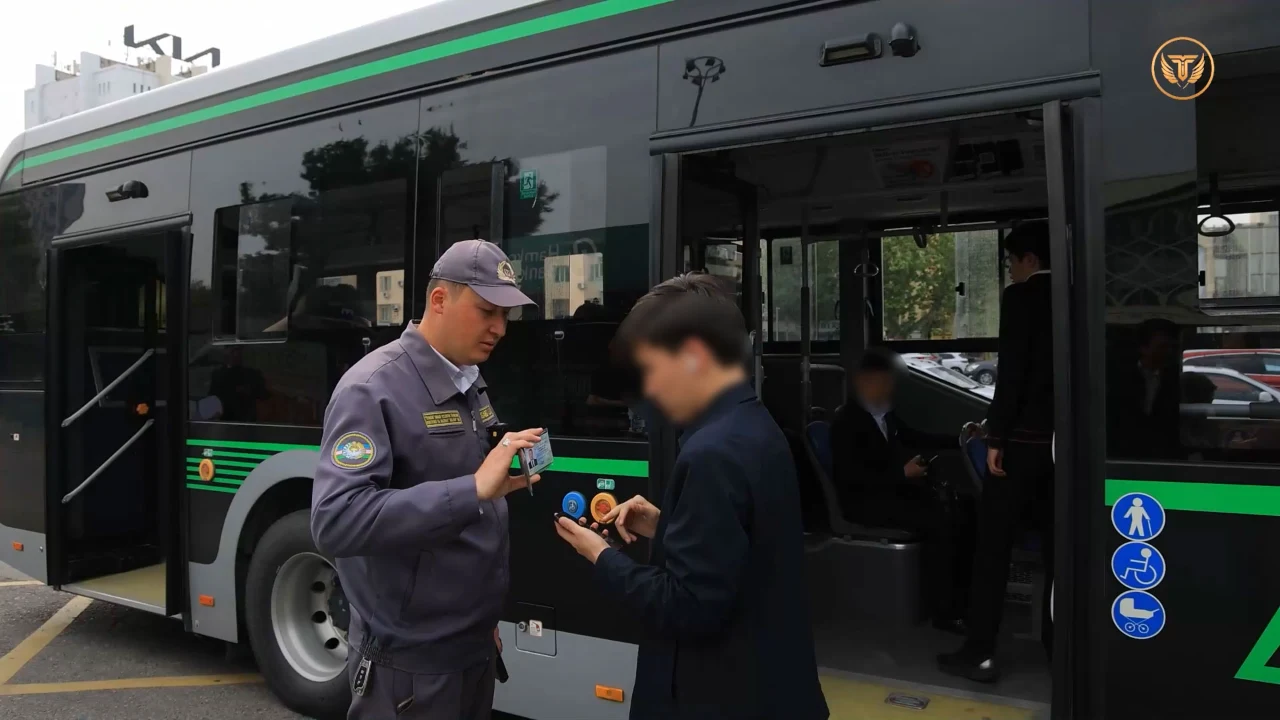
Currently, 57 inspectors are conducting daily checks on lines and at stops in the capital to monitor fare payments. They verify whether payments have been made on buses, and if violations are detected, fines are issued in accordance with the established procedure.
Additionally, data on fare evasion has been sent to the Ministry of Higher and Secondary Specialized Education. Awareness and preventive work are being carried out among students at universities. The goal is to improve the culture of public transport usage among the youth.
Toshshahartransxizmat is planning to solve the problem through modern technology. In particular, the introduction of an artificial intelligence system to monitor payments on buses is being considered. This system compares the number of passengers in the cabin with the number of transactions made. If the number of people exceeds the number of payments, the system sends a signal to the nearest inspector.
However, there are complex aspects to implementing this technology. Passengers on Tashkent buses enter and exit through all doors. Some are accustomed to paying not upon entry, but before exiting. This could make accurate accounting difficult for an AI system.
For this reason, transport authorities are also studying the possibility of returning to a front-door-only entry system in the future. Under this arrangement, passengers pay as soon as they board, simplifying the control process. However, implementing this requires increasing passenger awareness, strengthening explanatory work, and a phased approach.
In short, the sharp rise in fare evaders in Tashkent is becoming one of the most pressing problems in public transport. Digitization is good, and artificial intelligence is great, but ultimately, it all comes down to simple responsibility. Paying the fare is not a big deal, but the stable operation of the entire transport system depends on this small but important habit.
Read “Zamin” on Telegram!