


Machine learning makes James Webb telescope images clearer
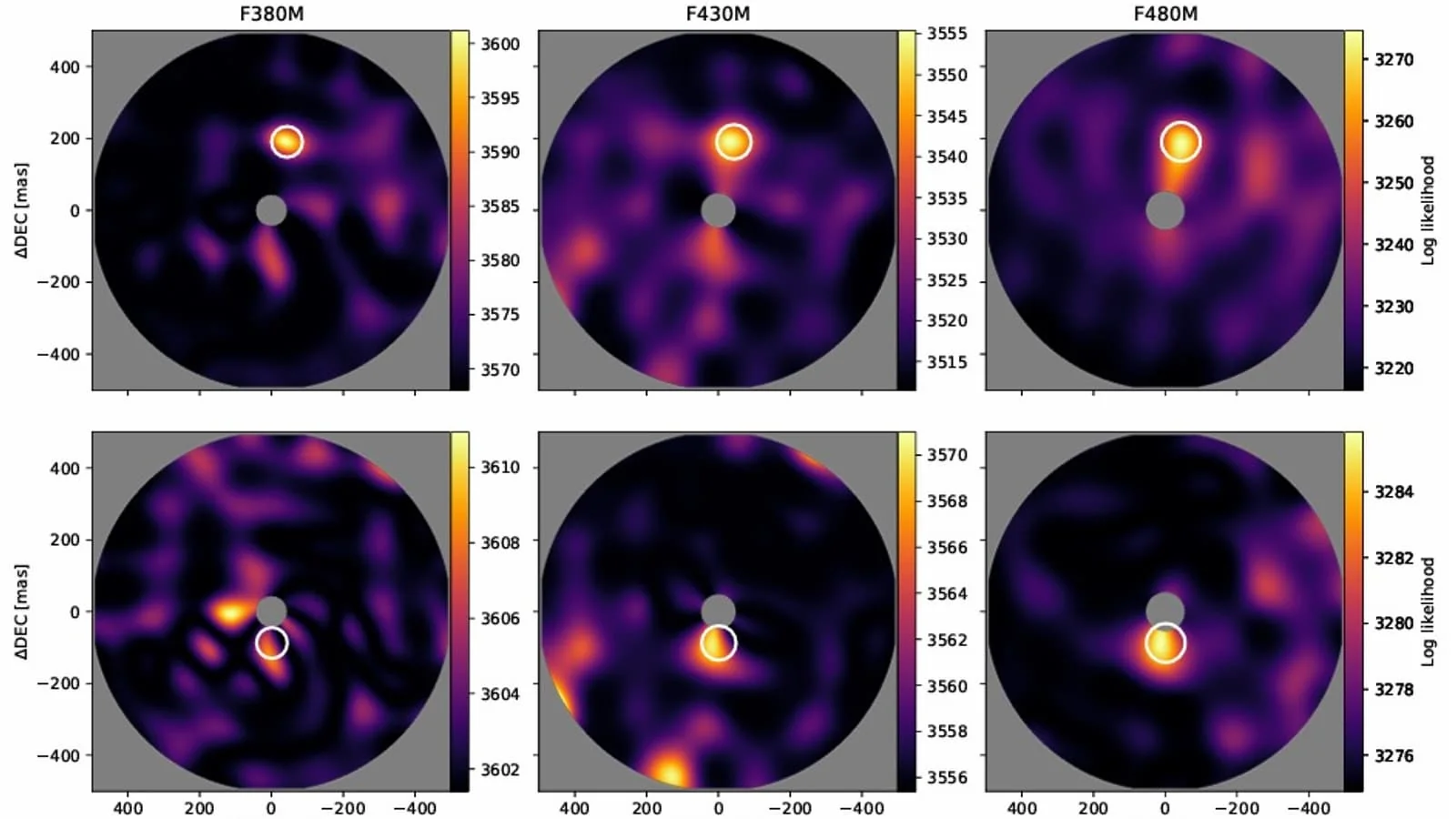
Astronomers have developed a new machine learning system that significantly increases the resolution of the James Webb Space Telescope (JWST). This method allows for the removal of hardware distortions that hinder the observation of faint objects near bright stars, helping to capture previously invisible cosmic structures. This is reported by Ixbt.com reports .
The problem occurred in the Aperture Masking Interferometer (AMI) system of the telescope's NIRISS instrument. The charge migration effect on the sensors deformed the interference pattern, reducing image quality. To solve this, scientists created a new system called AMIGO (Aperture Masking Interferometry Generative Observations).
The AMIGO algorithm creates a digital twin of the telescope, modeling the entire operation of the optics and electronics. Artificial intelligence compares real data with synthesized images and automatically corrects errors. The neural network module plays a crucial role in compensating for non-linear charge distribution on the sensors.
Using this new technology, scientists managed to identify substellar objects such as HD 206893 c and HD 206893 B, as well as volcanic hotspots on Jupiter's moon Io. This achievement opens new doors for studying exoplanetary atmospheres and observing objects near bright stars.



Comments 0
…