


Germany considers candidate for Ukraine negotiations
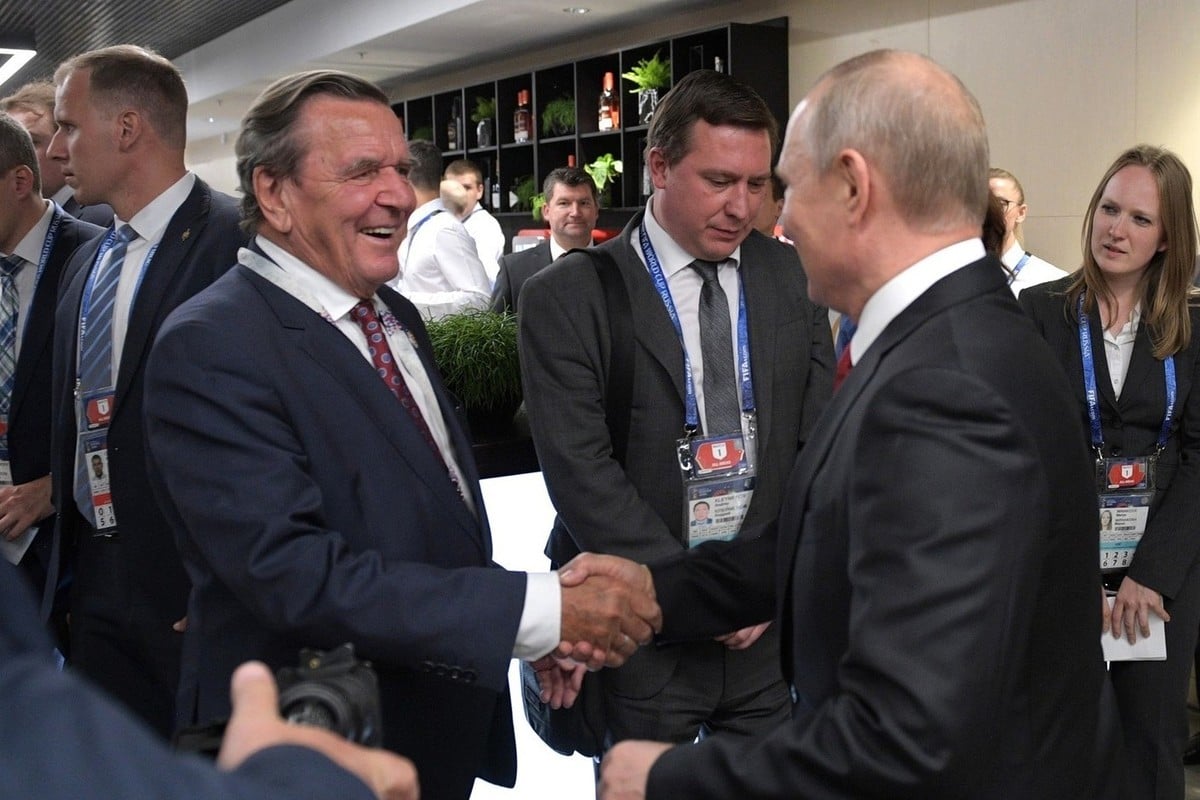
The German government coalition is discussing potential candidates who could represent the European Union in possible peace talks to end the war in Ukraine. According to Der Spiegel on May 10, citing sources close to the German government, German President Frank-Walter Steinmeier is being considered as one such potential representative.
The publication's sources state that it is highly unlikely the German government coalition would support the candidacy of former Chancellor Gerhard Schröder, as proposed by Russian President Vladimir Putin, as an EU negotiator. There is little confidence in Berlin that Schröder could handle such a complex diplomatic task alone.
At the same time, according to Der Spiegel, a potential "mediation duo" consisting of Schröder and Frank-Walter Steinmeier is being evaluated as an "interesting option" in the German capital. Some sources believe this format could keep communication channels with Russia open while giving more political weight to the EU's position.
Previously, Reuters, Süddeutsche Zeitung, Der Spiegel, and other German media outlets reported, citing sources in the government coalition, that the German government had rejected Putin's proposal to have Schröder participate in negotiations on behalf of the EU. Schröder is known for his long-standing close relationship with the Russian leader, which is why his candidacy is viewed differently in German political circles.
On May 9, during a meeting with Kremlin journalists, Vladimir Putin mentioned Gerhard Schröder as the "most suitable" candidate from the EU for negotiations on Russia's war against Ukraine. Through this, he answered the question of whether there are politicians in Western Europe with whom Moscow is ready to communicate.
According to Putin, Russia is open to dialogue, but Europe must choose a negotiator who "does not say insulting things about Moscow." He also emphasized that Russia has "always" communicated with the EU based on respect.
Currently, there are no official negotiations between Russia and Ukraine. This situation was also confirmed by Russian Foreign Minister Sergey Lavrov in mid-April. Therefore, any signal regarding potential mediators is being watched with great attention in European political circles.
According to Der Spiegel sources, the German government does not consider Putin's proposal fully credible. There is a view in Berlin that Russia has not yet demonstrated in practice that it is ready for a real compromise. Therefore, the German side expects concrete actions from Moscow, not just statements.
The publication's interlocutors believe that one way to test whether the Kremlin truly wants to end the war in Ukraine is to observe Russia's willingness to extend a three-day ceasefire regime. If Moscow agrees to continue the truce, it is not excluded that this could be assessed as a signal for the diplomatic process.
A source close to the German government, speaking to AFP, classified Putin's statement among "fake offers." In their view, such initiatives could be part of Russia's hybrid strategy aimed at dividing Europe internally.
Thus, discussions around potential peace talks on Ukraine are entering a new phase in Germany. On one side, there is a desire not to close the door to dialogue with Russia completely, and on the other, serious doubts remain regarding Moscow's proposals.
For now, there is no final decision on either Steinmeier's candidacy or a potential format involving Schröder. But the debates in Berlin show one thing: the search for a diplomatic path regarding the war in Ukraine continues, but trust is still very weak. In politics, sometimes the hardest task before sitting at the table is choosing who to sit with.



Comments 0
…