


India bans tourists from taking selfies with tigers
Quick readAI-generatedShow
- The Indian Supreme Court has implemented a ban on smartphone use during safaris in tiger reserves to curb irresponsible tourist behavior and protect endangered wildlife.
- The decision follows alarming incidents where visitors endangered themselves and caused severe stress to animals by obstructing their paths for photos and selfies.
- As home to 75% of the world's Bengal tigers, India aims to reduce human-animal conflict, which has resulted in over 400 deaths in the past five years.
- Under the new regulations, tourists must store their mobile devices in designated lockers before entering the parks to ensure a safer and more respectful environment for the animals.
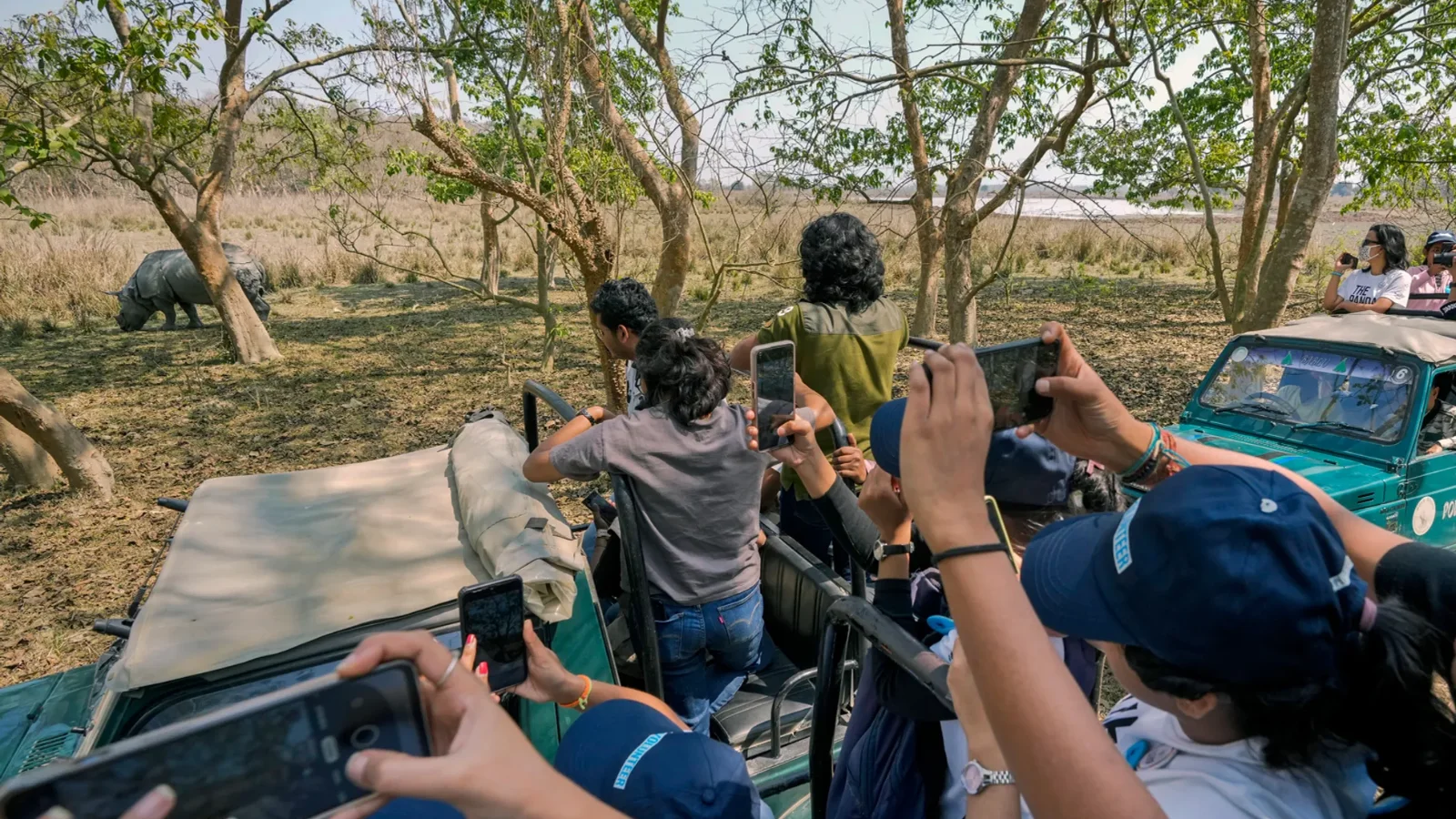
Photo: Anupam Nath / AP / Scanpix / LETA
The desire to capture unforgettable moments in the wild sometimes poses a serious threat not only to human life but also to the lives of animals. The Indian government has taken drastic measures due to the irresponsibility of tourists. From now on, the use of smartphones in tiger reserves has been declared "non-grata." Zamin.uz analyzes the new restrictions in safari parks and the reasons behind them.
Smartphones — A Source of Danger
In November 2025, the Supreme Court of India made a historic decision: visitors to tiger reserves will no longer be able to use phones during "safaris." The reason is the excessive obsession of vacationers with photographing animals. Such actions not only put humans and guides at risk but also cause intense stress for the wild animals.
The Sensational Incident in Ranthambore
A video that circulated on social media in February 2026 proved the correctness of this decision. In Ranthambore National Park in the state of Rajasthan, several safari vehicles surrounded a tiger and blocked its path. The frightened and cornered animal was left bewildered, not knowing where to go in front of the tourists' cameras. It is unfortunate that such situations have become commonplace in India.
Recklessness and Selfie Victims
Indian journalist Charukesi Ramadurai describes the consequences of the tourists' "photography frenzy" with bitter examples:
-
Tourists drop their phones, and guides are forced to jump out of the vehicle near tigers to retrieve them;
-
Cases have been observed where a child fell out of a vehicle while the mother was preoccupied with a selfie. At that moment, a tiger was only a few steps away.
Statistics: Risk and Recovery
India is the primary home to 75 percent of the world's Bengal tigers (more than 3,600 individuals). Although their numbers have doubled since 2010, the species remains endangered. At the same time, the popularity of "safari" tourism is also causing human fatalities: 418 people have died as a result of tiger attacks over the last five years.
Global Trend: Strengthening Nature Conservation
India is not alone in this regard. Other countries are also introducing strict rules to preserve wildlife:
-
Kenya: Penalties have been increased for tourists and tour operators who interfere with the migration of wildebeests.
-
Svalbard: Tourists are now strictly prohibited from approaching polar bears closer than 300–500 meters.
Now, before entering reserves in India, tourists will be required to leave their phones in special boxes.
Dear readers, do you think banning phones in reserves is enough to protect animals? Or should even stricter penalties be introduced for tourists?
Continue to follow the most important news in the world of nature and tourism on Zamin.uz.



Comments 0
…