
Smartphones: Increasing Convenience and Addiction
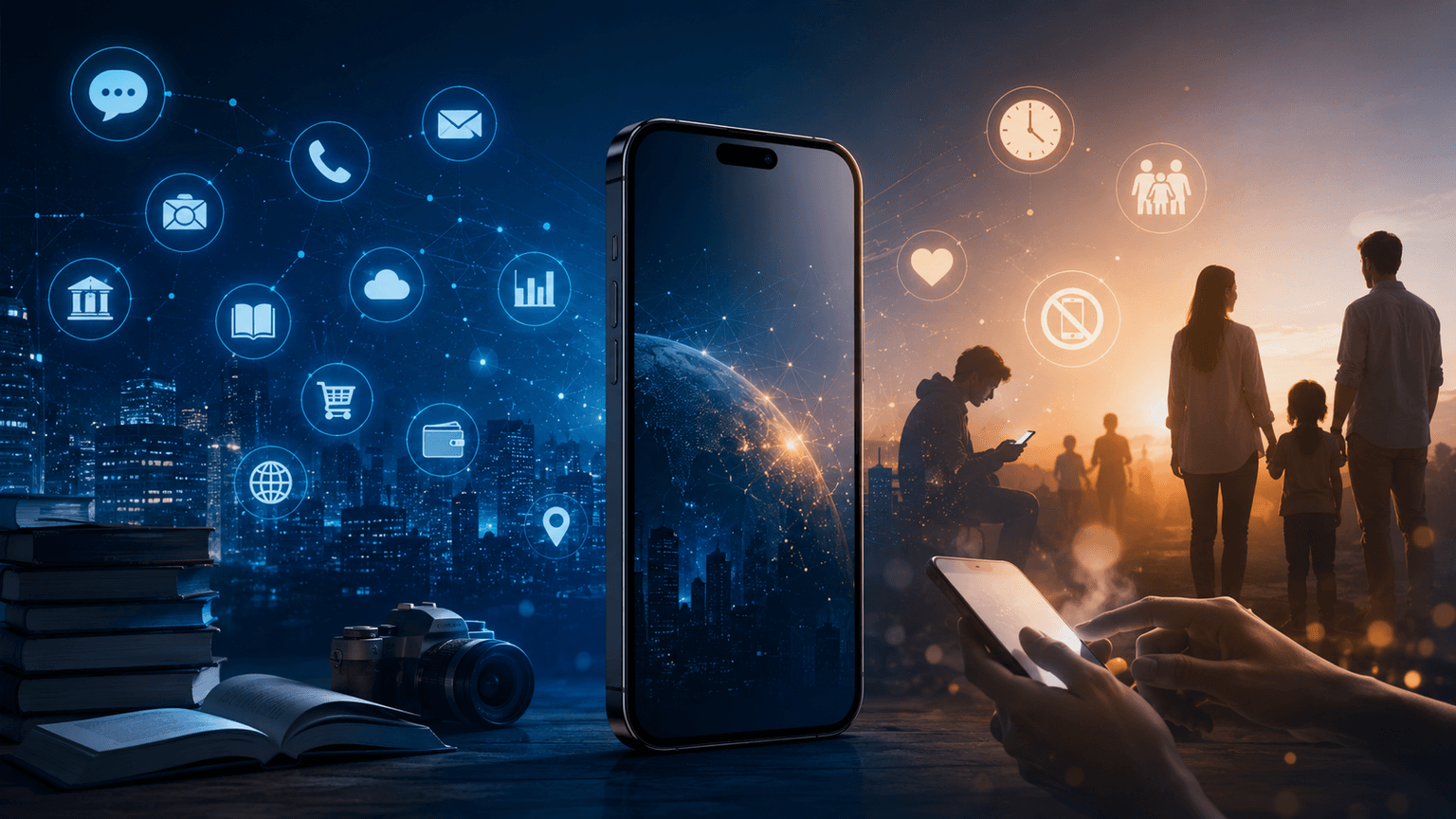
The mobile phone is considered one of the greatest technological inventions in human history. Today, it serves not only as a communication tool but also as a bank, library, camera, television, and work instrument.
Smartphones have made life significantly easier. People can now communicate from anywhere, access information, make payments, and work remotely. This has created opportunities to save both time and money.
However, like any technology, smartphones have both positive and negative aspects. Today, many sectors are losing relevance due to the influence of mobile devices. For example, landline phones, cameras, radios, and even paper diaries are no longer as widely used as before.
Smartphones have also fundamentally changed information consumption habits. Online publications have replaced newspapers and magazines, and a large portion of the television audience has shifted to mobile platforms. As a result, people began receiving information much faster.
At the same time, experts are drawing attention to the problem of digital addiction. Some individuals spend the majority of their day in front of phone screens. This can lead to reduced attention span, sleep disturbances, and weakened social relationships.
The impact of smartphones is also felt in family relationships. There are cases where people sitting in the same room spend more time with their devices than with each other. This can negatively affect communication culture and family intimacy.
From a medical perspective, excessive phone use increases the risk of eye strain, neck pain, and spinal issues. Sitting in one position for long periods is considered a significant health risk factor.
The issue of children and teenagers is particularly important. While the internet and social networks can be sources of knowledge, unsupervised usage may lead to exposure to harmful content, wasted time, and psychological problems.
Therefore, many argue that the problem lies not in the smartphone itself, but in how it is used. Technology can either improve or complicate human life, depending on the user's culture and sense of responsibility.
In conclusion, the smartphone has become an integral part of our lives. Although it has taken over the functions of many devices, adhering to time limits, maintaining face-to-face communication, and following digital hygiene rules are crucial to protecting against its negative effects.


















Comments 0
…