


Protests surge across Iran as opposition claims two cities have fallen under protesters’ control
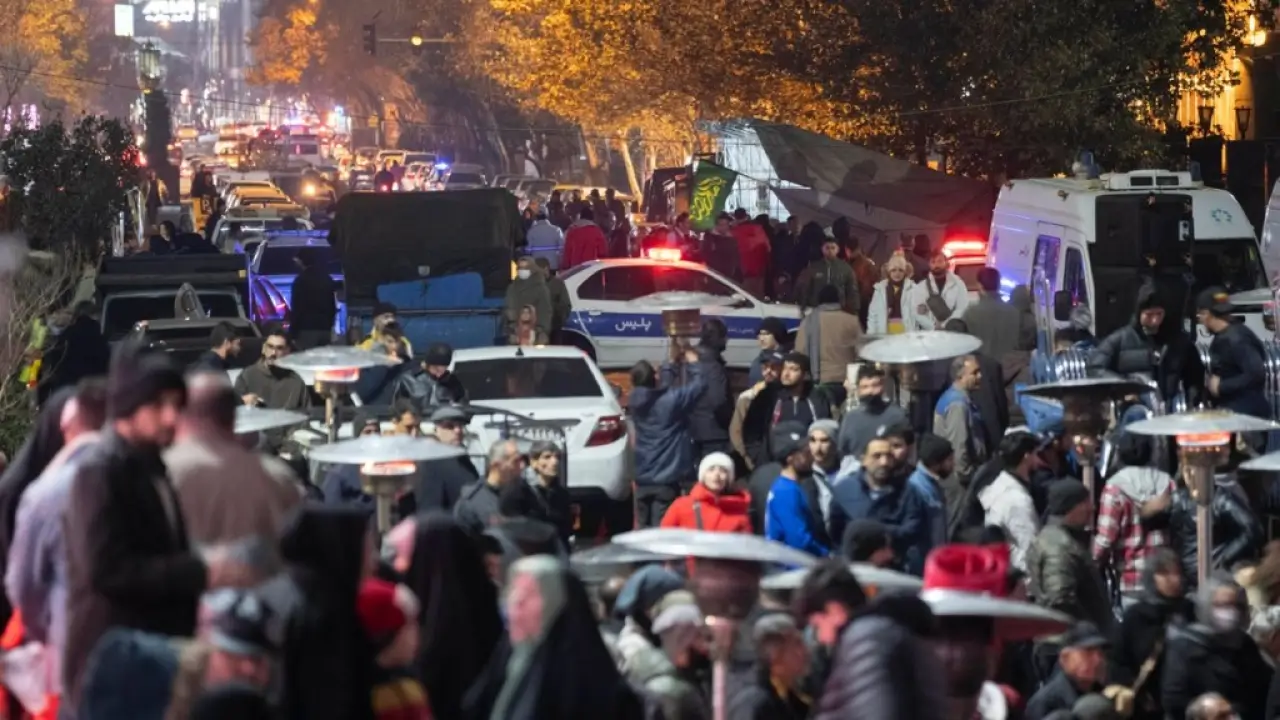
Since December 28, large-scale protests have continued in Iran amid a sharp depreciation of the national currency and rising inflation. The unrest began with merchants declaring a strike at Tehran’s Grand Bazaar, after which demonstrations spread to many parts of the country. This was reported by podrobno.uz reports .
As the protests enter their tenth day, Iranian opposition figures abroad reported that control in the western cities of Abdanan and Malekshohi has shifted to protesters. Fox News reported this on January 7, citing the National Council of Resistance of Iran.
Exiled opposition representative Ali Safavi said “serious events” took place in these cities and that chants such as “Death to Khamenei!” were heard in the streets. He added that local residents are celebrating what is happening on a mass scale.
Maryam Rajavi, president of the National Council of Resistance, also issued a statement on X, stressing that protesters “forced the repressive forces to retreat.”
Abdanan is located in western Iran, in Ilam Province near the border with Iraq. Malekshohi lies about 100 kilometers away.
According to the opposition’s account, the Islamic Revolutionary Guard Corps (IRGC) tried to disperse demonstrators in Abdanan. In response, protesters set fire to a store belonging to the Ofogh Kourosh chain, which is said to be linked to the IRGC.
In Malekshohi, opposition sources claim clashes began during the funeral of Fares Oga Mohammadi, who was killed in previous days. It is also reported that after news of the events in Abdanan, some police officers began joining the protests in Malekshohi.
The protests were also backed by exiled opposition leader Reza Pahlavi, who lives in the United States. In an article published by The Washington Post on January 6, he wrote that Iran in early 2026 is “on the verge of profound change.”
Pahlavi argues that the Islamic Republic is now in its “weakest and most fragmented” state since 1979. Noting that demonstrators are chanting his name alongside demands for freedom, he said he is ready to lead the process of “transitioning from tyranny to a democratic future.”
The three principles he proposed are: preserving the country’s territorial integrity, ensuring equal protection of citizens’ rights, and separating religion from the state.
Iran’s state media deny reports that cities have been “taken over.” The IRNA news agency wrote that police in Abdanan used tear gas to disperse protesters.
Tasnim reported that protesters then “dispersed” and that “peace and security” were restored in the city. No separate statement was issued by officials specifically addressing the question of “control of the cities” regarding Abdanan and Malekshohi.
Meanwhile, Iranian Foreign Minister Abbas Araghchi responded to Donald Trump’s remarks that the United States is “ready to help” protesters, saying: “Iran’s internal affairs concern no one but its people.”
Iran’s Supreme Leader Ali Khamenei publicly commented on the protests only once—on January 3. He acknowledged economic problems but attributed currency instability to the “enemy’s work.”
Although Khamenei noted that “protest is not disorder,” he also said that “talking to vandals is pointless.”
According to calculations by BBC Verify journalists, since December 28 the protests have spread to at least 17 of Iran’s 31 provinces. Analysts emphasize the actual number of demonstrations may be even higher.
Tensions are also high in Tehran: strikes at the Grand Bazaar continue, and student rallies have been recorded with slogans such as “Death to the dictator” and “Protest is our inalienable right.”
According to the Human Rights Activists News Agency (HRANA), at least 36 people have been killed during ten days of protests observed in 27 provinces and 22 universities: 34 protesters and 2 members of the security forces. More than two thousand people are said to have been detained.
Tensions remain high in the country, as official sources and opposition reports continue to assess events differently. As a reminder, in September 2025 the UN reinstated sanctions on Iran after a 10-year pause.


Comments 0
…