


James Webb Telescope captures high-resolution image of Messier 77 galaxy core
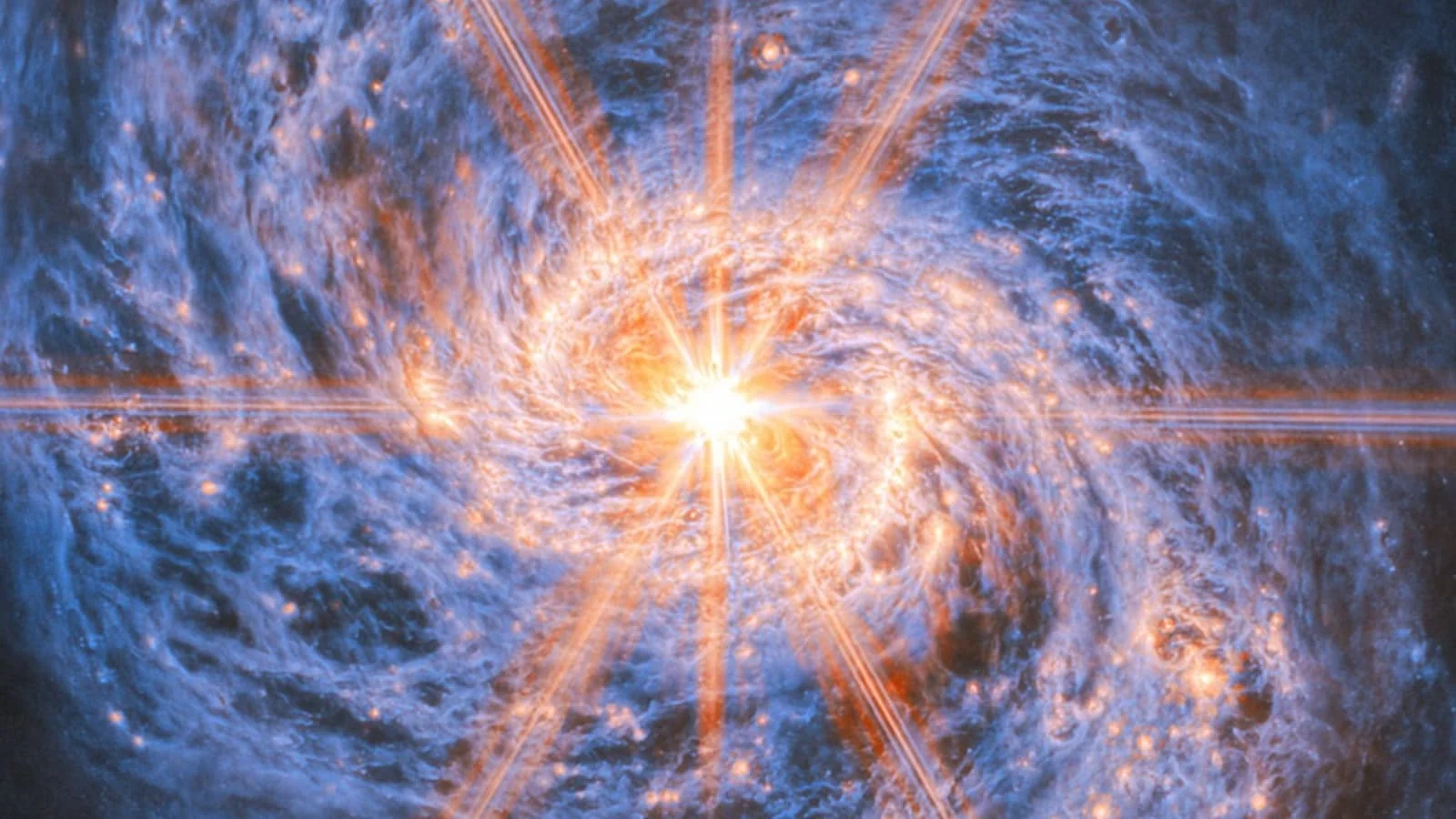
Launched into space in 2021, the James Webb Space Telescope has provided a new and detailed image of the spiral galaxy Messier 77. Located approximately 45 million light-years from Earth in the constellation Cetus, this galaxy is distinguished by its extremely bright and active core. According to Ixbt.com reports .
At the center of the galaxy lies a supermassive black hole with a mass 8 million times that of the Sun. Matter surrounding it is drawn toward the center by gravity, forming a heated accretion disk. The intense infrared radiation released as a result of this process was captured using the telescope's MIRI instrument.
The high sensitivity of the James Webb telescope allows it to 'pierce' through the dust clouds surrounding galaxies and observe the core structure with unprecedented precision. Such studies help scientists better understand the growth mechanisms of black holes and their impact on galaxy evolution.
NASA is using this telescope as a primary tool to study the early universe, star formation, and the nature of black holes. The new images of the Messier 77 galaxy clearly demonstrate how much the capabilities of modern infrared astronomy have expanded.



Comments 0
…