


Most sensitive dark matter detector challenges Schrödinger's cat theory
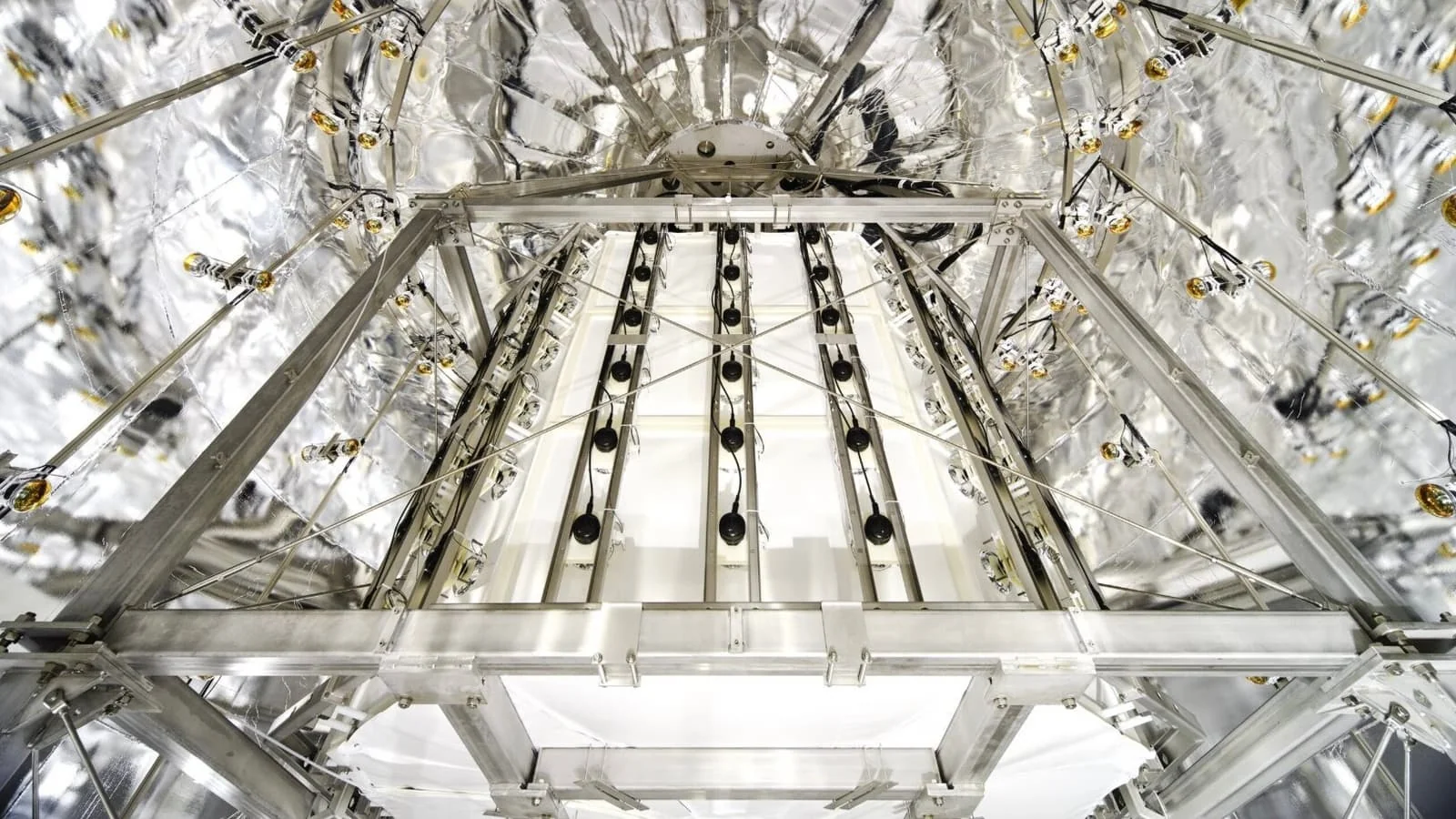
The international XENON physics team operating at the Gran Sasso laboratory in Italy has announced unprecedented results in testing the foundations of quantum mechanics. Using XENONnT, the world's most sensitive dark matter detector, scientists experimentally refuted the classic spontaneous localization (GRW) model that has existed for over 40 years. This is reported by Ixbt.com reports .
The main goal of the study was to explain the "Schrödinger's cat" paradox. According to the laws of quantum mechanics, macroscopic objects can exist in a state of superposition, but we do not observe this in real life. The GRW theory hypothesized the existence of a natural mechanism that eliminates quantum uncertainty and emits weak X-ray radiation.
Scientists used a time-projection chamber filled with 5.9 tons of liquid xenon, turning the detector into the "quietest" place in the universe. During the study, an "atomic de-excitation" model was used, which accounts for the interaction of electrons and protons within atoms, significantly increasing measurement accuracy.
The experiment results showed no excess radiation. This confirmed with a 9.1σ confidence level that the classic GRW theory mechanism does not exist, casting doubt on simpler models of quantum dynamics.
This discovery has turned dark matter detectors into powerful tools for studying not only cosmic particles but also the structure of spacetime. Physicists are now focusing on testing more complex theories, particularly "colored" noise or dissipation models.



Comments 0
…