


Xi Jinping is once again intensifying the "great purge" in the PRC army
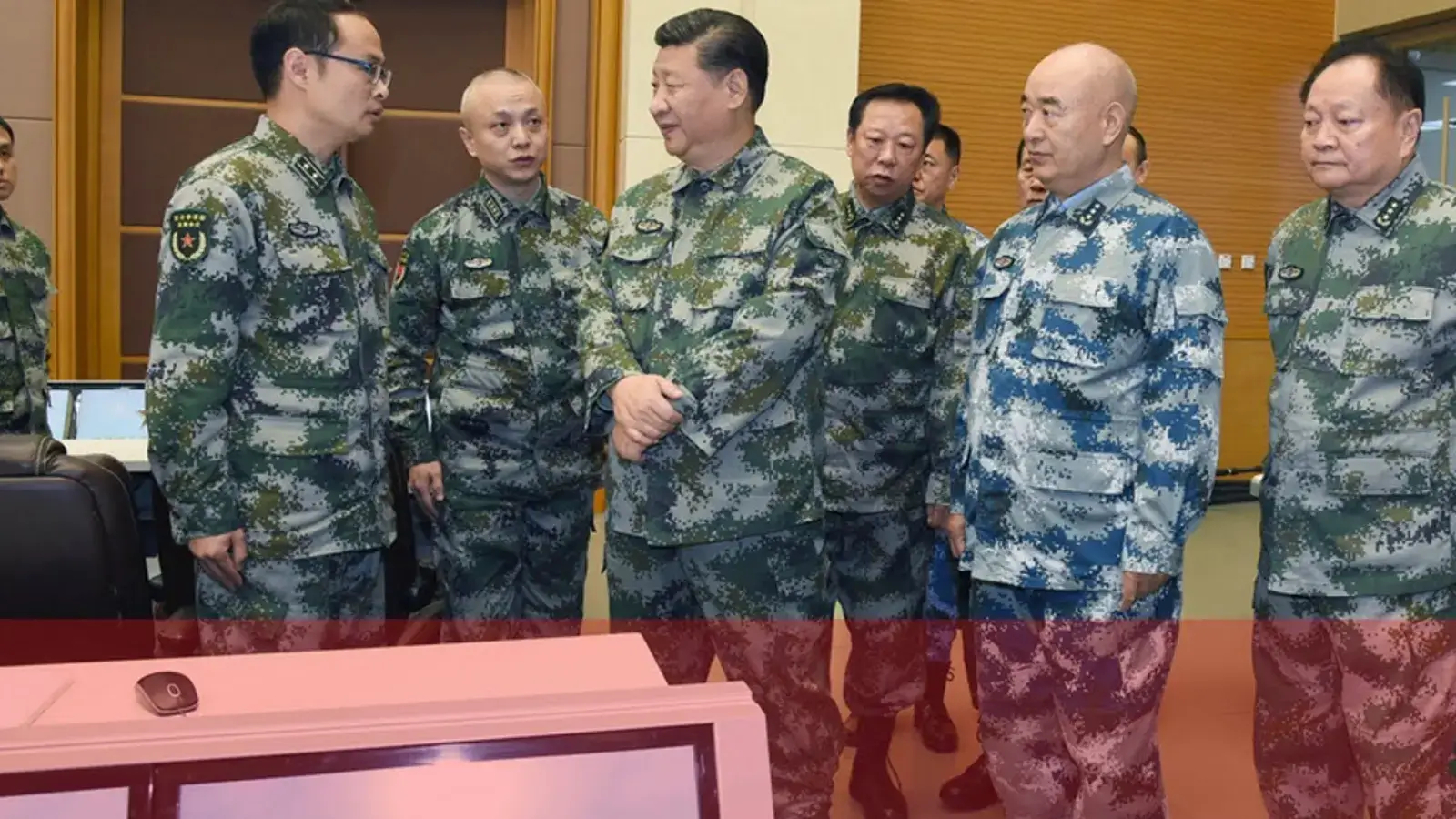
The topic has heated up again in recent days: Reuters reported at the end of January 2026 that Taiwan's officials were observing "unusual changes" in the Chinese military leadership, with some high-ranking military officials - including Zhang Yusya and Liu Zhengli - being investigated for disciplinary and law violations. This background alone strengthens the impression that "a thorough cleaning is taking place from the inside."
"Anti-corruption" or a test of loyalty?
The official version is as usual: fight against corruption. But analysts see this not only as a matter of money, but also as an attempt to further strengthen loyalty and control in the system. Because the scale is not just at the level of "one or two positions": NYT analysis states that very few of the at least dozens of Admirals-generals who headed special units and commands at the beginning of 2023 remained in their positions.
Why is this an alarming signal?
This "personnel dominance" has two sides:
1. Control is strengthened, decisions are centralized.
Xi Jinping can quickly modernize the army and make the "one-handed" system more rigid. This speeds up decision-making, especially in situations of great danger (for example, around Taiwan). But speed doesn't always mean quality.
2. Simultaneously, a leadership vacuum arises.
If, indeed, high-ranking figures like Zhang Yusya or Liu Zhengli are losing their influence against the backdrop of the investigation, the question arises in the system: "who will answer for what?" In the army, such uncertainty is one of the worst scenarios: orders slow down, initiative decreases, everyone becomes cautious "not to make a mistake."
Don't let "corruption" become an excuse...
The official version could be "the fight against corruption." But there is a second layer here: checking loyalty, breaking influence groups, and politically tightening control over the army. The fact that The New York Times analysis states that the scale of changes in the upper echelon since 2023 is large strengthens this impression.
Taiwan factor: what will change?
As Reuters writes, if Taiwanese officials are observing "unusual changes," this is interpreted in two ways:
- First interpretation: Beijing is preparing the army for potentially large-scale operations by making it "controllable" through internal cleansing.
- Second interpretation: Beijing has internal order problems, therefore it becomes difficult to take large external risks.
Which one is stronger? Short answer: no one can say 100% right now. But one thing is clear - uncertainty increases during such periods. When uncertainty increases, the probability of calculation errors also increases.
The most important question: is this beneficial or harmful to the army?
- In the short term: fear and discipline may increase.
- In the medium term: there is a risk of a decline in initiative, a shortage of managerial personnel, and the emergence of "protective bureaucracy."
- In the long term: if cleansing is accompanied not only by punishment, but also by improving qualifications and management quality - it will intensify. If the main criterion remains "loyalty" - the system can also weaken imperceptibly.
Conclusion
The current picture is as follows: the purge in the PRC army is becoming not a "ordinary tradition," but a major political and military "setting-up." How this process turns depends on the internal elite balance, external pressures, and the dynamics surrounding Taiwan.
One thing should be remembered: major changes in the army usually affect foreign policy as well. This means there's a high probability of new signals emerging on this topic in the coming weeks.



Comments 0
…