


Stellar energy in laboratory conditions: physicists set a new record
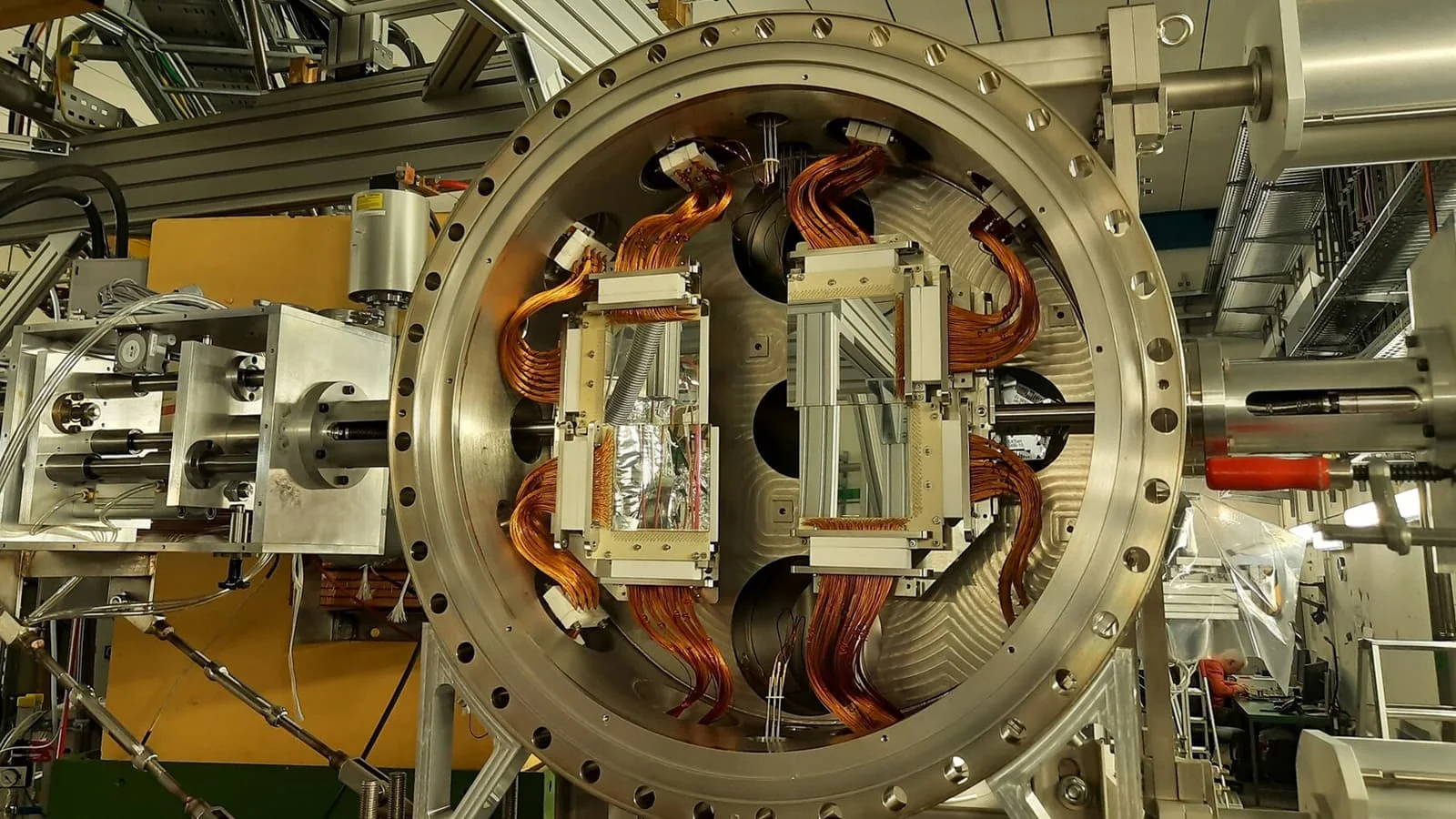
An international team of researchers has achieved a significant breakthrough in astrophysics at the GSI/FAIR facility in Germany. Using the CRYRING@ESR storage ring, scientists managed to lower the particle collision energy to 403 kiloelectronvolts (keV). This is a world record for nuclear reactions, directly corresponding to conditions inside hot stars. This is reported by Ixbt.com reports .
The main difficulty in modeling stellar fusion in the laboratory is that the probability of atomic nuclei interaction at low speeds decreases significantly. In ordinary accelerators, particles scatter quickly at such energy. However, the CRYRING device allows for the containment and cooling of ion beams. Jordan Marsh, a scientist at the University of Edinburgh, noted that the success of the experiment depended on the precise operation of ultra-high vacuum and electron cooling systems.
During the experiment, a beam of nitrogen ions was collided with a cryogenic hydrogen gas target. The CARME high-precision detector system was used to record the reaction products. The obtained data fully confirmed theoretical predictions, paving the way for studying the formation process of chemical elements in the universe.
This achievement helps to understand not only stellar evolution but also the process of light element formation in the first minutes after the Big Bang. New experiments planned by the end of 2026 will turn the CRYRING device into one of the most precise platforms for atomic-level 'cosmic archaeology'.



Comments 0
…