


James Webb Telescope reveals the evolution of molecular clouds
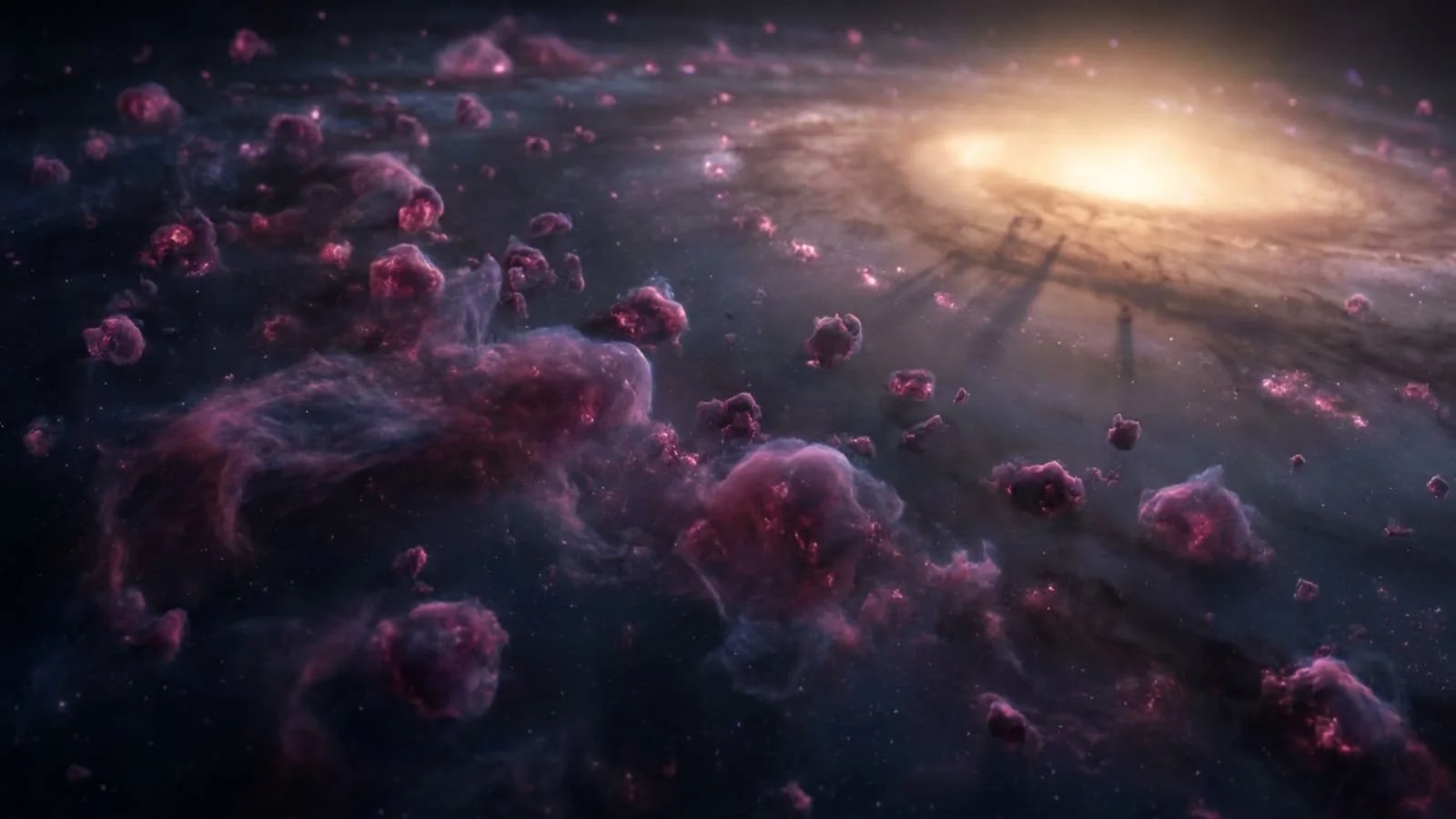
The international PHANGS-JWST research team has studied the evolution of the interstellar medium in 66 nearby galaxies using the James Webb Space Telescope. Scientists have compiled a historic catalog containing 108,466 giant molecular clouds. This work has moved from merely observing the formation process of gas clouds to quantitatively calculating their 'age'. This is reported by Ixbt.com reports .
The study used MIRI (Mid-Infrared Instrument) to record the radiation of polycyclic aromatic hydrocarbons. This method allowed for the detection of 'dark' gas regions that traditional radio interferometers cannot see. Statistical analysis showed that while small clouds form within 20 million years, supermassive structures require up to 100 million years.
Galactic dynamics play a key role in star formation. Because gas pressure is higher in spiral arms, clouds form 5–10 million years faster than in other regions. However, researchers identified a significant anomaly: internal forces such as magnetic fields and turbulence resist the gravitational collapse of gas.
This discovery explains the paradox of inefficient star formation in astronomy. It turns out that only 1 percent of a molecular cloud's mass turns into stars, while the rest is dispersed by stellar winds and radiation. This process ensures that gas reserves in galaxies are maintained for billions of years.



Comments 0
…