


Quantum algorithm learns to rapidly model highly complex materials
Quantum technologies and future quantum computers rely on special quantum materials that can drastically change their properties. For example, twisting graphene layers at a specific angle can create a superconductor. However, modeling complex systems like quasicrystals and super-moiré structures on classical supercomputers is extremely difficult, as this process requires quadrillions of computational operations. This is reported by Ixbt.com reports .
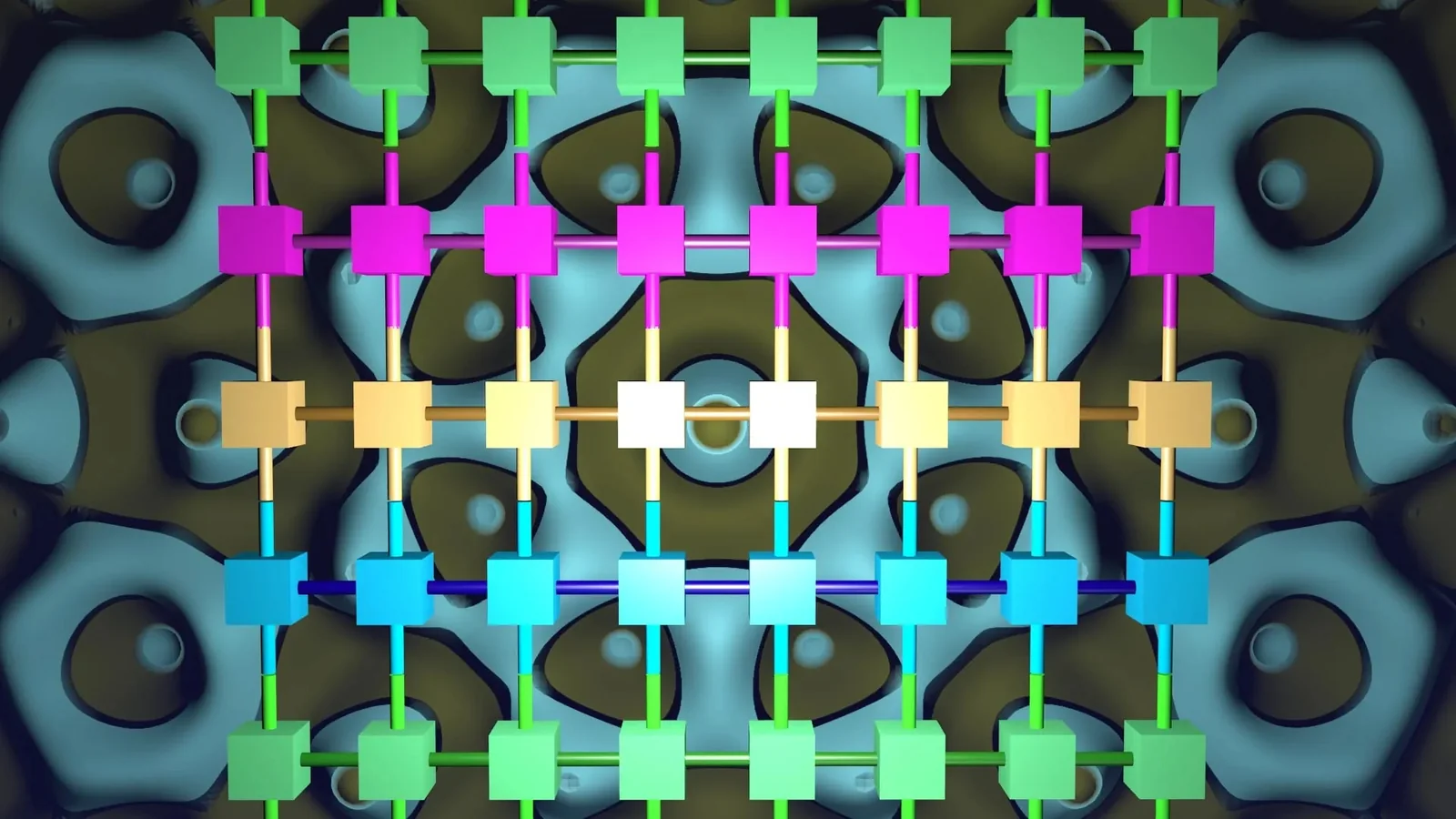
Researchers at Aalto University in Finland have developed a new quantum-inspired algorithm that significantly simplifies this process. The algorithm encodes the system as tensor networks, which allows for the efficient representation of quantum states in vast computational spaces. As a result, the scientists managed to model a quasicrystal with over 268 million nodes.
As one of the study's authors, Tiago Antao, noted, this approach enables "quantum acceleration" by providing a compact representation of data. Although this is currently a theoretical simulation, this method will serve as a foundation for future experiments. Studying topological quasicrystals is particularly important for electronics that are protected from external noise and operate without energy loss.
Research lead Jose Lado emphasized that these methods could be implemented in the future on real quantum computers such as the Finnish Quantum Computing Infrastructure. This is a significant step toward turning the design of quantum materials from a mere theoretical exercise into a practical quantum computing task. Such breakthroughs open new horizons for increasing energy efficiency in artificial intelligence and large data centers.


Comments 0
…