


Rodriguez took the oath as President of Venezuela, Maduro's case in court
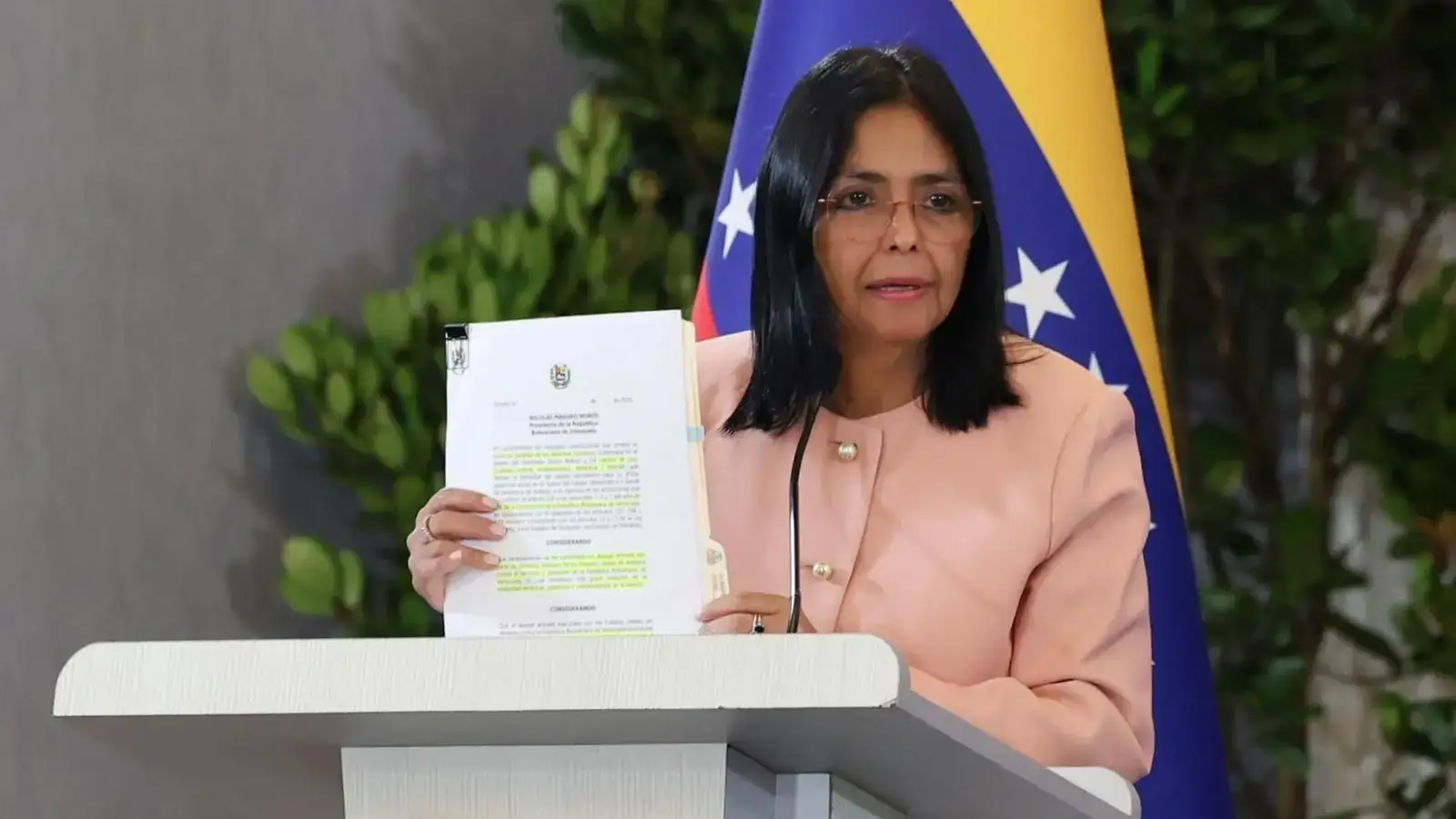
The political situation in Venezuela has once again taken a sharp turn. According to reports, Delsey Rodriguez, who served as the country's vice president after the US military operation that ended with the capture of Nicolas Maduro, took the oath of office as acting head of state before the parliament - the National Assembly. It is reported that the ceremony took place on January 5.
The oath-taking ceremony was chaired by Parliament Speaker Jorge Rodriguez, Delsey Rodriguez's brother. In his speech, Delsi Rodriguez assessed the situation as an "illegal military aggression" and expressed regret over the hardships faced by the Venezuelan people. Reports also mention that he spoke about the "two heroes" - not only Maduro, but also his wife, Celia Flores.
It was reported that Delsi Rodriguez took the oath two days after the Venezuelan Supreme Court appointed him as interim head. In his new position, he stated that Caracas would emphasize developing "balanced and mutually respectful" relations in foreign policy, including his intention to build similar relations with the US.
At this point, harsh signals also rang out from Washington. It was reported that US President Donald Trump warned that Delsey Rodriguez "will pay a very large ransom" if she does not cooperate with the US government.
In addition, Bloomberg, citing sources, wrote that after Maduro's overthrow, Secretary of State Marco Rubio could take on one of the key administrative roles in coordinating US policy and the reform process in Venezuela.
Another controversial detail: Reports have also circulated about a post titled "The Western Hemisphere - Ours" appearing on the US State Department's social media platform. It states that a threat to US security is unacceptable.
The most discussed topic is the capture of Maduro and Siliya Flores. According to reports, on January 3, as part of Operation Absolute Resolve, the US Delta special forces detained Nicolás Maduro and his wife, who were subsequently taken to US territory. It is reported that Maduro attended the first court hearing in New York on January 5.
Reuters and AP report that Maduro has been charged with "narco-terrorism," weapons storage, and several other items. Maduro denied the accusations, linking it to pressure on Venezuela's oil resources.
In short, the Venezuelan system of government came at the intersection of external pressure and internal instability. On one side - an attempt to show that "the state is working" under the leadership of Delsi Rodriguez, on the other - harsh statements and signals about the US's desire to establish new rules.
The most important questions remain open: what steps will the interim leadership take regarding the elections, to what extent will relations with Washington remain within the framework of "mutual respect," and will the pressure in the daily lives of Venezuelans decrease or not. For now, one thing is clear: the region may remain one of the hot spots of world politics for a long time.



Comments 0
…