


India’s Approach to Sustainable Development for inclusive growth and resilient future
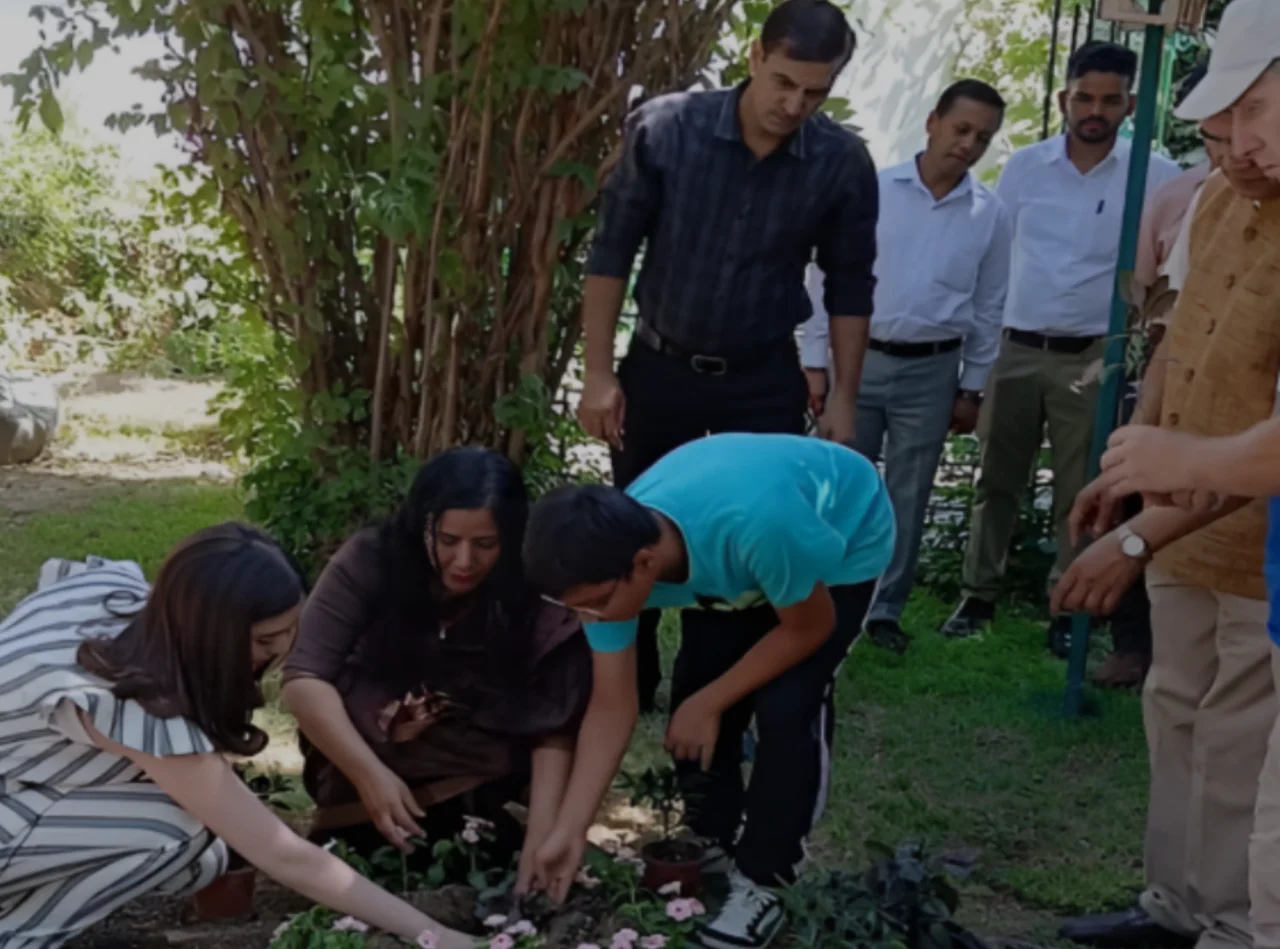
We all live in an interconnected world. The problem of one nation impacts the other and insularity in today’s world is not an option. We also live in a world where people and communities are aware and invested in issues of domestic and international importance. Never before we have seen such engagement by leaders and policy makers with the people as we see now.
This presents unique opportunities especially as we talk of sustainable development. Today, sustainable development is no longer a choice but a strategic necessity. The nations are aware that diplomacy can no longer be geopolitics alone but also extending a hand, sharing knowledge and knowhow, particularly on issues that transcend boundaries. As a firm believer of ‘Vasudhaiva Kutumbakam’ that eventually the world is one family, India could take some notable initiatives with a focus on sustainable growth and combine it with the power of public diplomacy. When India spoke about climate justice and fairness and common but differentiated responsibilities, it amplified this message through public diplomacy be it at global fora, cultural outreach, digital platforms and also development partnership.
We reached out to people and communities through transparent, honest and authentic means of communication. In a country where close to 500 million people use social media and being the largest democracy in the world, public diplomacy is the only way forward.
However, our approach has never been inward looking. We have been able to launch pragmatic initiatives for the benefit of the global south and for the wider world. Mission LiFE (Lifestyle for Environment), for example, encourages simple everyday choices to reduce waste, conserve resources and promote a sustainable way of life. It broadens the scope of climate action from policies to people’s behaviour and makes every individual a stakeholder as we all matter. The idea, of course, is to be mindful and adopt climate friendly lifestyles. India believes that we need to address the core issue when talking about climate change and, therefore, mindful choices are important. The scale at which communities are paying attention to this issue is unprecedented. A school near Chennai, Pathashaala PCL-KFI (Palar Centre for Learning, Krishnamurti Foundation India), is a fully sustainable campus, conserves water and runs on solar and biogas. Another school Vidyashilp Academy, Yelahanka has established a paper recycling unit within its campus. The paper is being used for school newsletter, reports etc. This zero waste campus model is being implemented in several schools and communities. It is not only about teaching green values, it is about living them. There are also several villages which have been fully solarised.
Many of you may also be aware about the famous Solar Mamas project which trains rural, often illiterate women from remote villages to become solar engineers. Women from 90 countries including Indonesia, Tanzania, Botswana, Mexico, Ecuador have been trained.
When we hosted the G20 summit, cooperation with others, particularly with the global south, was vital for us. We hosted Voice of Global South Summit to amplify their voice in G20 to ensure that climate energy and development priorities of developing nations were reflected. We strongly spoke on the issue of climate vulnerability, access to clean energy and sustainable finance.
In these times of geo-political contestation, the need for cooperation has never been greater. The idea to come together and work on issues that impact us and our future generations, needs to be the foremost idea. People-centric approach and placing the human at the heart of policy is guiding several of India’s efforts.
Similarly, when we launched the Global Biofuels Alliance at G20 Summit in September 2023, our effort was to bring G20 nations, developing countries and international organisations together to share technology best practice and policies.
One more initiative that I want to mention is the International Solar Alliance which brings together 120 countries. The idea is to promote solar energy and clean power adoption and share technology, finance and expertise for collective use and benefit.
On disaster management, we were the first responder to the recent cyclones in Sri Lanka, and the earthquake in Myanmar. We also provided assistance in Türkiye and Afghanistan. I am giving these examples to highlight how cooperation particularly amongst countries of the global south will remain India’s guiding mantra.
India has also been working with BRICS and SCO partner countries in the area of inclusive growth, climate resilient actions and green technology. These initiatives are important for us and for our future generations.
The modern agenda has to be an agenda for all taking into account the aspirations of people of the world. This agenda in which all can equally participate fits well with our public diplomacy efforts and with the narrative of Sustainable Development Goals. As we move ahead, India’s thrust on development partnership will continue to be important.
In a similar vein, we have spoken on Artificial Intelligence (AI) for development and for it to be inclusive, transparent and accountable. We are hosting the India-AI Impact Summit in February 2026. We want to have honest conversations on how AI can drive inclusive growth and social good with ethical responsibility and accountability. AI for All, youth and women led AI challenges are agenda items that need to be on the forefront.
Data for development is equally important. We have efficiently leveraged data to power development, improve our health education and urban services that align with Sustainable Development Goals. As we move ahead, cooperation and sharing will define India’s ambitions and priorities. Needless to add, women-led growth will continue to be an important factor in all our efforts.
We are also seeing how Uzbekistan is looking at these issues very attentively. It has adopted "green development" as an integral part of the country’s sustainable development strategy and has taken several initiatives, including reducing greenhouse gas emissions by 35% by 2030, the implementation of the national ‘Yashil Makon’ project, and the recycling of more than 65% of household waste by 2030. All these initiatives demonstrate a strong commitment under the visionary leadership of President Shavkat Mirziyoyev to implement measures, share experiences and cooperate with the international community in addressing the global climate challenges.
It is heartening to see that the academia and universities including Samarkand State University and Indian Institute of Technology, Roorkee have already commenced exchanges on agricultural crop patterns, environment and climate resilient farming practices. As countries of the global south with a young enterprising population, growing economy and commitment to sustainable practices, India and Uzbekistan cooperation in this sphere will be key to advancing a green future in the region and beyond.
Article by H.E. Ms. Smita Pant
Ambassador of India to Uzbekistan



Comments 0
…