


Released Belarusian political prisoners: Thanks to Trump and Zelenskyy!
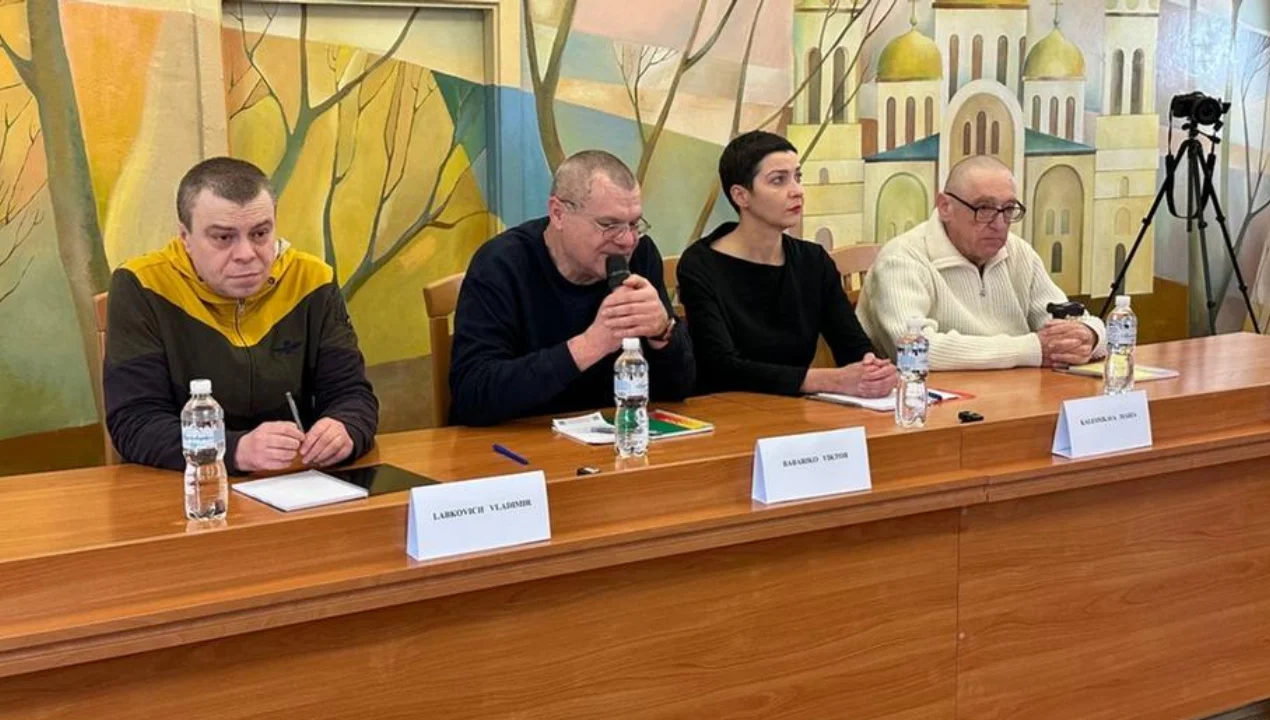
Political prisoners recently released by Belarusian authorities - opposition politicians Maria Kolesnikova and Viktor Babariko, human rights activist Vladimir Labkovich, and political scientist Alexander Feduta - held their first press conference on Sunday, December 14th, in Ukraine's Chernihiv region. They brought to the public's attention the details of their imprisonment and release.
The release process took place the day before, as a result of negotiations between the US delegation and Belarusian officials in Minsk.
Kolesnikova: I don't regret my decision
Maria Kolesnikova stated that she does not regret her refusal to leave the Republic of Belarus in 2020 and her subsequent detention.
Kolesnikova: "I believed and still believe that I supported the correct idea expressed by Viktor Dmitrievich (Babariko) and his son Eduard, that I defended my values. I'm not alone, there are many of them."
He expressed his gratitude to US and Ukrainian presidents Donald Trump and Volodymyr Zelenskyy for their efforts to achieve liberation.
Kolesnikova: "I want to thank Donald Trump and his team for moving from a dead end and for the hope of positive changes. "Thank you to President Zelenskyy and the entire Ukrainian people for your hospitality."
He also thanked Belarusian leader Alexander Lukashenko for agreeing to the release of political prisoners and expressed hope for further steps in this direction.
Babariko: Isolation and health problems
Viktor Babariko stated that he had been kept in complete isolation for the past three years and had no opportunity to write or call. He expressed concern for his son, Edward Babarico; Eduard is currently in a maximum-security colony in Orsha, to which 2 more years have been added.
The former presidential candidate recalled that approximately a thousand people are still in prison.
Babariko: "It must be understood: this liberation has affected quite media-worthy, celebrity people. But we must not forget people whose surnames we have never heard."
Babariko said that he had health problems during his detention, including "uncontrollable fainting" in 2023.
Babariko: "I woke up during one of these unconscious episodes and was found to have a broken rib, a torn lung, bilateral pneumonia, and I think I had 23 fissures on my head. I don't know how this happened. I can't say 'I was beaten' or 'I was beaten' - I don't know what happened to me."
He expressed gratitude to the doctors of Novopolotsk and the republican hospitals for the timely provision of professional assistance.
Gratitude to Ukraine
Human rights activist Vladimir Labkovich and political scientist Alexander Feduta also thanked the Ukrainian side for the "warm, comfortable, and very hospitable" reception. Labkovich also said that some of the released individuals had only a photographed certificate.
Alexander Feduta admitted that after his release, he felt "a sense of shame for the country" while talking with nurses and volunteers in Ukraine.
Feduta: "Because in a country where such events are taking place, we are received with warmth and openness, while those doctors and volunteers... are engaged in helping people who need help more than us. So thank you, Ukrainians."
Belarusian authorities announced the release of a total of 123 people from political prison on December 13 - following talks between Lukashenko and the US delegation.


Comments 0
…