


Risk of another Middle East conflict: UAE and Saudi Arabia at odds amid Houthi backdrop
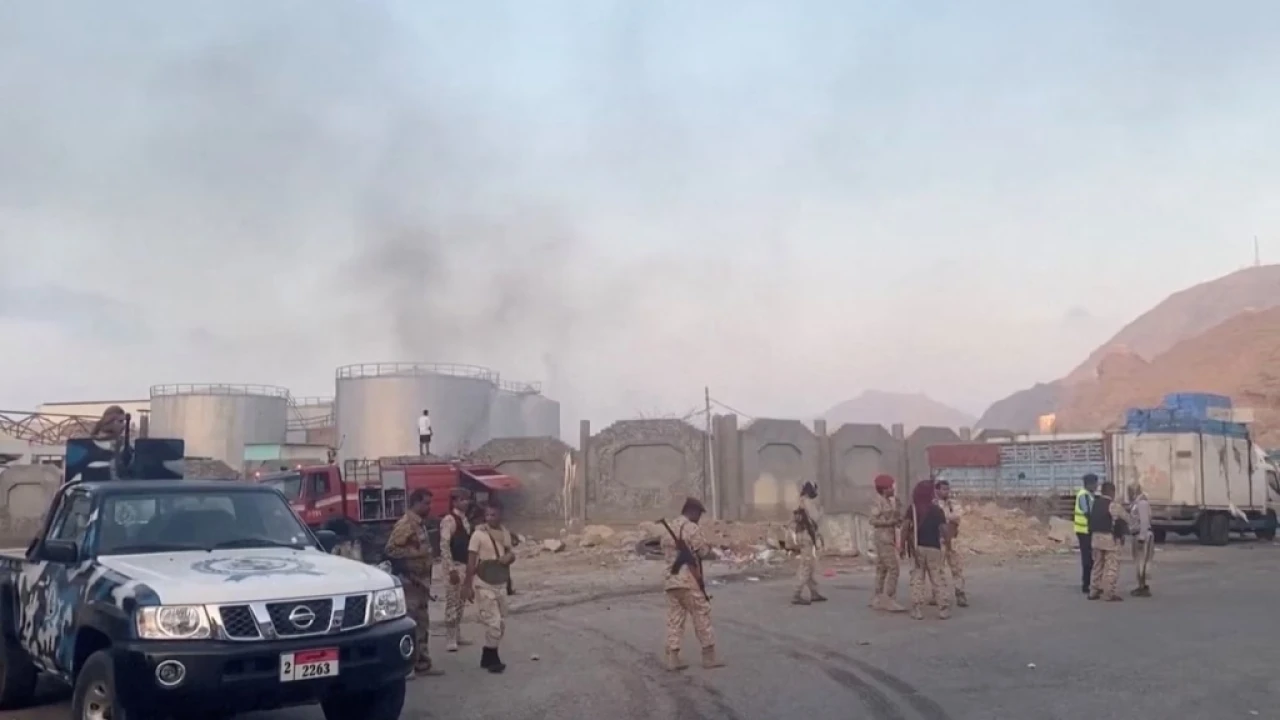
Tensions have escalated in relations between Saudi Arabia and the United Arab Emirates, which for years stood on the same side in Yemen’s war. The reasons are said to include yet another split within Yemen’s fragmented government, as well as Riyadh and Abu Dhabi backing different political and military groups. This was reported by podrobno.uz.reports.
On the night of December 30, Saudi military aircraft struck the port of Mukalla in southern Yemen. According to the Saudi Foreign Ministry, the target was allegedly weapons and armored vehicles brought in via the UAE and intended for separatists advocating the secession of South Yemen.
After that, Rashad al-Alimi, chairman of Yemen’s Presidential Leadership Council, announced the cancellation of a military cooperation agreement with the UAE. He demanded that Emirati forces leave the country within 24 hours and accused Abu Dhabi of stoking an internal war. Saudi Arabia also said it supports the demand for the withdrawal of Emirati forces.
Saudi Arabia and the UAE have been part of an international coalition since 2015, supporting Yemen’s internationally recognized authorities in the fight against the Houthis. In 2022, with their participation, a temporary national unity structure—the Presidential Leadership Council—was formed with the goal of restoring control over the north, including Sanaa.
It included representatives of three main political forces: the General People’s Congress, the Al-Islah party, and the Southern Transitional Council. However, internal rifts soon deepened, especially as southern forces intensified demands to restore the independence of South Yemen, which existed as a separate state in 1970–1990.
It is noted that Riyadh relies more on secular nationalists, while the UAE has traditionally strengthened close ties with the Southern Transitional Council. This is linked to the Emirates’ strategic interests along maritime trade routes: the Gulf of Aden, the ports of Aden and Mukalla, and the Bab el-Mandeb Strait are effectively under the control of southern forces.
In the fall of 2025, tensions in Hadramaut province escalated between the UAE-backed Al-Hirak movement and an alliance of Hadramaut tribes close to Riyadh. The situation worsened after oil production at the Masila field was obstructed, and in early December Al-Hirak reportedly went on the offensive, pushing government forces out of nearly all South Yemeni provinces within a week.
The Presidential Leadership Council, previously based in Aden, reportedly left the city urgently on December 9 and relocated to Riyadh. From there, al-Alimi announced the rupture of the alliance with the UAE and the imposition of an air and sea blockade on South Yemen for all ships and aircraft operating without the international coalition’s approval.
The report emphasizes that, in practice, there is currently no internationally recognized government left in Yemen. Nevertheless, in an official Saudi statement the UAE was called a “brotherly state,” while support for separatists was warned to be an “extremely dangerous step.” The document stressed that any threat to Saudi national security is a “red line,” and if crossed, the kingdom may take firm measures.
As of the time of publication, the UAE had not issued an official comment on the strikes on Mukalla or the demand to withdraw its forces from Yemen.
Earlier, reports also circulated that after The Atlantic editor-in-chief Jeffrey Goldberg accidentally joined a closed group on the Signal messenger, senior officials in Donald Trump’s administration discussed airstrikes against the Houthis there. The messages reportedly included U.S. Vice President J.D. Vance, Defense Secretary Pete Hegseth, and National Security Advisor Mike Waltz.


Comments 0
…