


In New York, Maduro denied the accusation, in Caracas, Rodriguez took the oath
Venezuelan leader Nicolás Maduro and his wife, Cilia Flores, detained by the US, categorically denied all the charges brought against them during the preliminary hearing at the New York Southern District Federal Court. They were charged, in particular, with "narcoterrorism," and the next court hearing was scheduled for March 17.
At the same time, the political scene in Caracas took a sharp turn: Vice President Delsi Rodriguez was sworn in as interim head of state. It is emphasized that this step was taken to prevent a "management vacuum" in the country after Maduro's arrest.
First scene in court: handcuffs, convoy, and harsh statements
According to reports, Maduro and Flores were brought to the courthouse by helicopter, accompanied by US anti-drug system officers. In mass photographs, they are in shackles, in light prison uniforms. The indictment also mentions clauses related to collusion for the purpose of drug terrorism, automatic weapons, and explosive devices.
According to American media reports, Maduro spoke Spanish in court through an interpreter and called himself the "legitimate president," even using the phrase "prison." It is reported that Barry Joel Pollock is participating as his lawyer, and the case is being heard by 92-year-old Judge Alvin Hellerstin.
The oath in Caracas and the slogan "Vamos Nico"
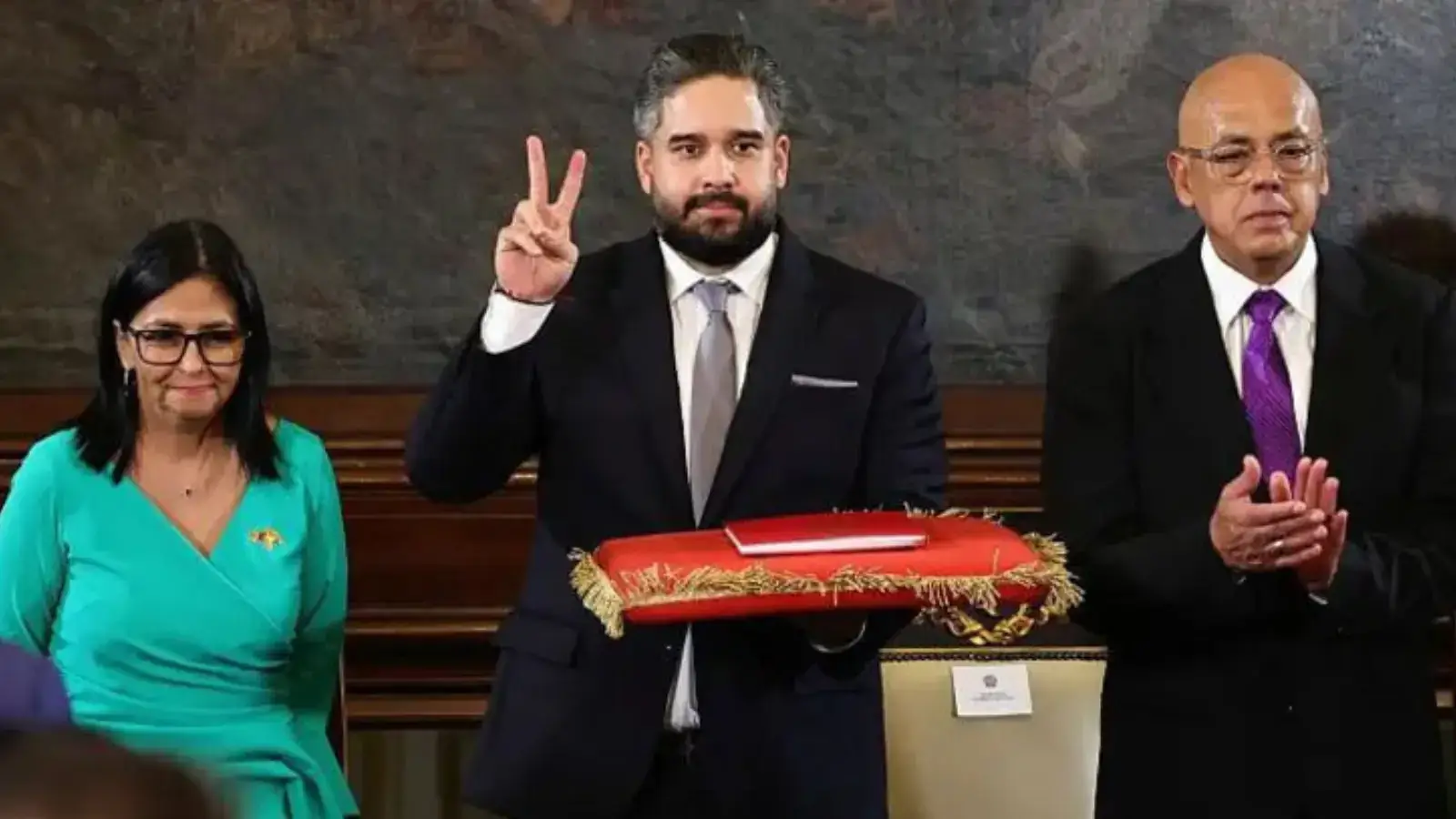
In Venezuela, Delsi Rodriguez was sworn in as interim president in the National Assembly. It was reported that the ceremony was led by the Speaker of Parliament, his brother Jorge Rodriguez. At this gathering, the slogans "Vamos Nico" ("Forward, Nico!") in support of Maduro were heard, and the Assembly even applauded him when the vacant seat of Maduro's wife, Celia Flores, was indicated.
The noise in the assembly subsided when Maduro's son, Nicolás Maduro, a member of the Venezuelan parliament, Gerra, began his speech, speaking about his parents' "return" to Venezuela.
He also expressed his "unconditional support" for Rodriguez. "Trust me. Trust my family," Nicolas Maduro Guerra told him.
Trump's Signal and Rodriguez's Response
Earlier, Donald Trump said that if Delsey Rodriguez refuses to cooperate with the US, "there will be very serious consequences."
"If he doesn't do the right thing, he will have to pay a large sum, maybe even more than Maduro's," Trump said.
In turn, Delsi Rodriguez addressed the US President, calling on Washington to cooperate and stating that Venezuela "confirms its commitment to peace and peaceful coexistence."
"President Donald Trump, our peoples and our region deserve peace and dialogue, not wars. Venezuela has the right to live peacefully, to develop, to have sovereignty and a future," he said.
Trump once again stated that the country's interim president, Delsey Rodriguez, will cooperate with the White House. He hinted that if cooperation is suspended, the US could use force again. "We are ready to do this. "In fact, we intended to do this [to send troops to Venezuela after the kidnapping of Nicolas Maduro]," he said.
UN Platform: Debate, Criticism, and Concern
The operation in Venezuela has also sparked extraordinary discussions in the UN Security Council: one side considers it an "illegal armed attack," while the US claims it is due to the "rule of law." The Cuban side confirmed that 32 of its citizens were killed during the operation. Cuban forces were involved in ensuring the safety of Nicolás Maduro.
"Our compatriots honorably and heroically fulfilled their duty and died in direct combat or as a result of bombing against those who resisted and attacked," the Cuban government said in a statement.
The world's reaction is also not the same: some countries call this a dangerous precedent for international law, while some Venezuelan allies have called for the release of Maduro and Flores.
Venezuela's Permanent Representative to the UN, Samuel Moncada, stated that Venezuela has become the target of an "illegal armed attack without a legal basis." He accused the US of "gross violation of the UN Charter." Moncada stated that this occurred due to the "greed" of the United States, which intended to seize Venezuela's natural resources.
The United States Permanent Representative to the UN, Michael Waltz, stated that the US performed "a surgical operation aimed at ensuring the rule of law." He called Maduro an "illegal president" and "outside the law."
Denmark's Permanent Representative to the UN, Kristina Markus Lassen, expressed "deep concern" and added that "the inviolability of borders will not be discussed." This follows Trump's reiteration that the US needs Greenland "in the interests of national security."
What will we observe now?
In the current scenario, there are three most important points:
- The next court hearing on March 17 - what strategy the defense will choose and in which direction the case will turn.
- The question of legitimacy and stability of the interim government in Caracas is how the internal political front will be formed.
- Whether pressure intensifies at the UN and in the international arena will determine the diplomatic "air" in the coming weeks.
In any case, it's not a genre where the situation cools down quickly - the "next episode" of this series begins in March, right in the courtroom.


Comments 0
…