


Sergey Lavrov: Greenland dispute could lead to NATO disintegration
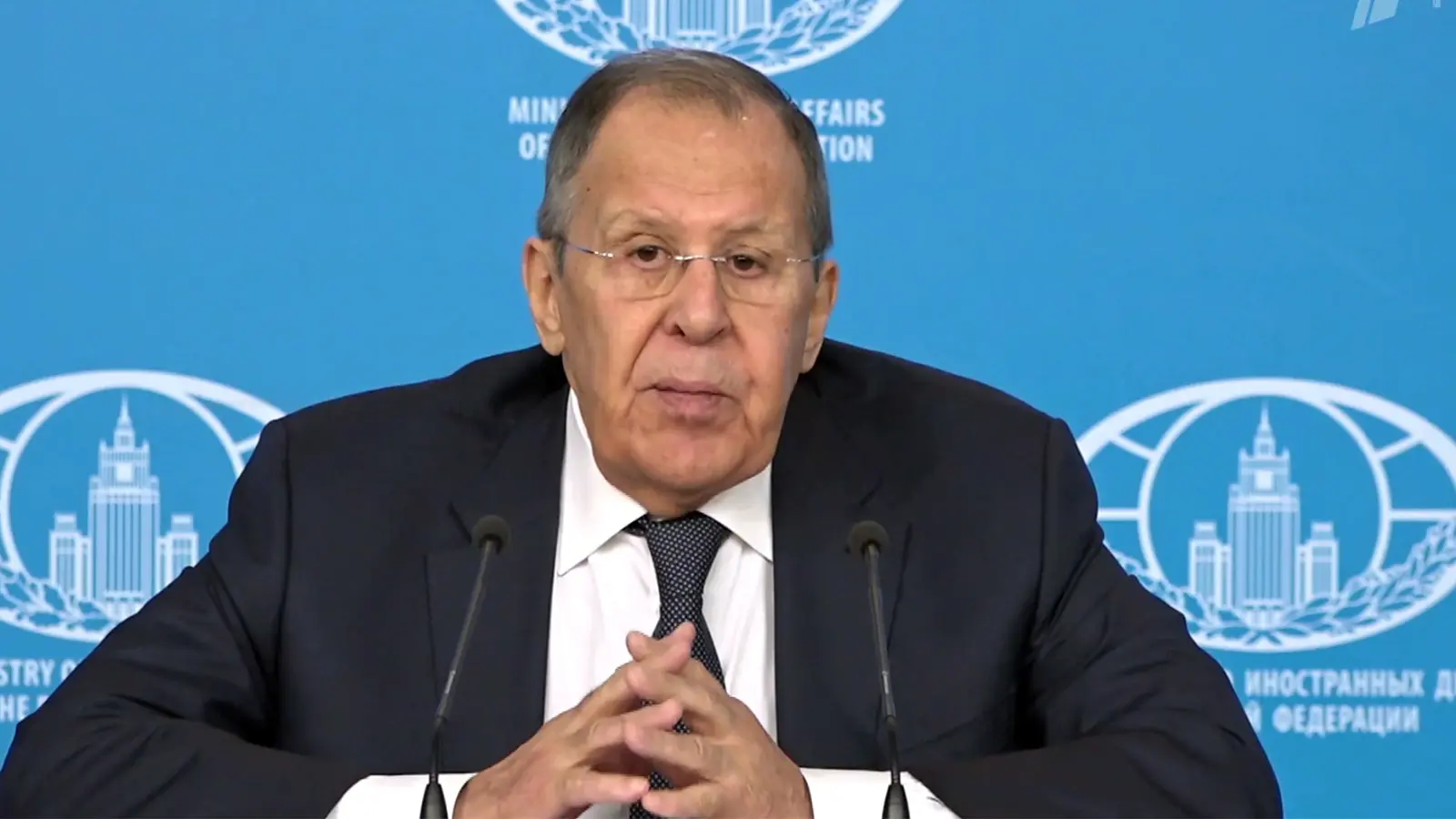
On January 20, Russian Foreign Minister Sergey Lavrov gave a press conference on the results of diplomatic work in 2025. The Associated Press has summarized the most important points of his speech. Lavrov's statements simultaneously contained strong statements about the Arctic, the future of NATO, negotiations on the war in Ukraine, and relations with the United States.
Greenland, NATO and the debate on "rules"
Lavrov said that the US president's claims to Greenland could indicate signs of a "deep crisis" in NATO. In his opinion, this situation casts doubt on the alliance's survival as a single military-political bloc. There is even talk, in Lavrov's words, of "a scenario in which one NATO member could turn against another."
At the same time, he stressed that Donald Trump's actions have turned the concept of a "rules-based global order" that the West has been promoting for many years upside down. Lavrov sarcastically said that now the rules are written not by the "collective West", but by one of its representatives. This was a serious "shock" for Europe, and the concept of Euro-Atlantic security and cooperation has not justified itself.
He also claimed that Denmark's control over Greenland is a "legacy of colonialism" and added that "Greenland is not a natural part of Denmark." However, Trump's statements that Russia and China could threaten the island were firmly rejected: Lavrov stressed that "we have nothing to do with this," and said that he would monitor the situation and draw conclusions later.
Trump's "Peace Council" initiative
At a conference where Moscow's foreign policy priorities were discussed, Lavrov expressed a cautiously positive attitude to Trump's idea of a "Peace Council." Initially, the mechanism was said to be intended to find a solution to the Israel-Hamas war in Gaza, but later it was being shaped into a structure with a broader mandate, covering other global crises - and could even rival the UN.

It was noted that the Kremlin was studying the proposal and was waiting for additional details from Washington. According to Lavrov, this initiative demonstrates the US's understanding of the need to unite a group of countries ready to cooperate, regardless of their foreign policy philosophy.
Negotiations on Ukraine and tough conditions
Lavrov also praised Trump's initiative to negotiate a cessation of hostilities in Ukraine. He described the United States as “the only country” among Western countries that “understands the need to take into account Russia’s interests” and has made proposals that address the root causes of the crisis.
However, he criticized attempts by Kiev and its European allies to modify the U.S. peace proposals. Lavrov said that Trump’s initial proposal, accepted by Vladimir Putin at the Alaska summit, included “measures to protect Russian-speaking people in Ukraine and the Ukrainian Orthodox Church, which is affiliated with Moscow,” but that these clauses were removed from subsequent versions. Moscow has made it clear that it will not accept such changes.
“We will not allow the Kiev regime to have the luxury of respite and rearmament,” Lavrov said, as one of the strongest points in his speech.
At the same time, he said that he would not completely rule out contacts with European leaders, but added that it might be difficult to reach an agreement on any issue because Europeans are “deeply engrossed in hatred” of Russia.
“They (the Europeans) are so deeply rooted in hatred of Russia that it is probably impossible to reach an agreement with them on any issue,” Lavrov added.
Maduro, tanker and nuclear deal
Lavrov made a sharp statement about the arrest and removal of Venezuelan leader Nicolas Maduro, calling it a “brutal military intervention.” He also mentioned the threats against Cuba and other countries in Latin America and the Caribbean.
“We have witnessed unprecedented events: a brutal armed invasion of Venezuela by the United States, dozens of deaths and injuries… As well as the arrest and removal of the legitimate president of Venezuela, Nicolas Maduro, and his wife. At the same time, these actions are accompanied by threats against Cuba and other countries in Latin America and the Caribbean,” Lavrov said.
In addition, Moscow is still waiting for the release of two Russian sailors from a Russian-flagged tanker seized by the US in early January.
The issue of the New START nuclear arms control treaty was also raised: Lavrov said it expires next month, but Washington has not accepted Putin's offer to extend the restrictions for another year.
Nevertheless, Lavrov stressed that Russia is ready to continue dialogue with the United States on the basis of mutual respect for national interests.
"Russia is ready to continue dialogue with the United States on the basis of mutual respect for national interests," he said.
He recalled that Marco Rubio had said during the talks in Saudi Arabia that "we should cooperate where interests coincide and not turn disagreements into sharp confrontations," and said he fully supported this approach.
In short, Lavrov's press conference demonstrated one thing: Moscow, as it heads into 2026, will maintain a firm stance on issues ranging from the Arctic to Ukraine, from Latin America to nuclear treaties, and will not close the door to negotiations with the United States on certain issues.



Comments 0
…