


The Kremlin is worried about Iran: "won't it be Russia's turn?"
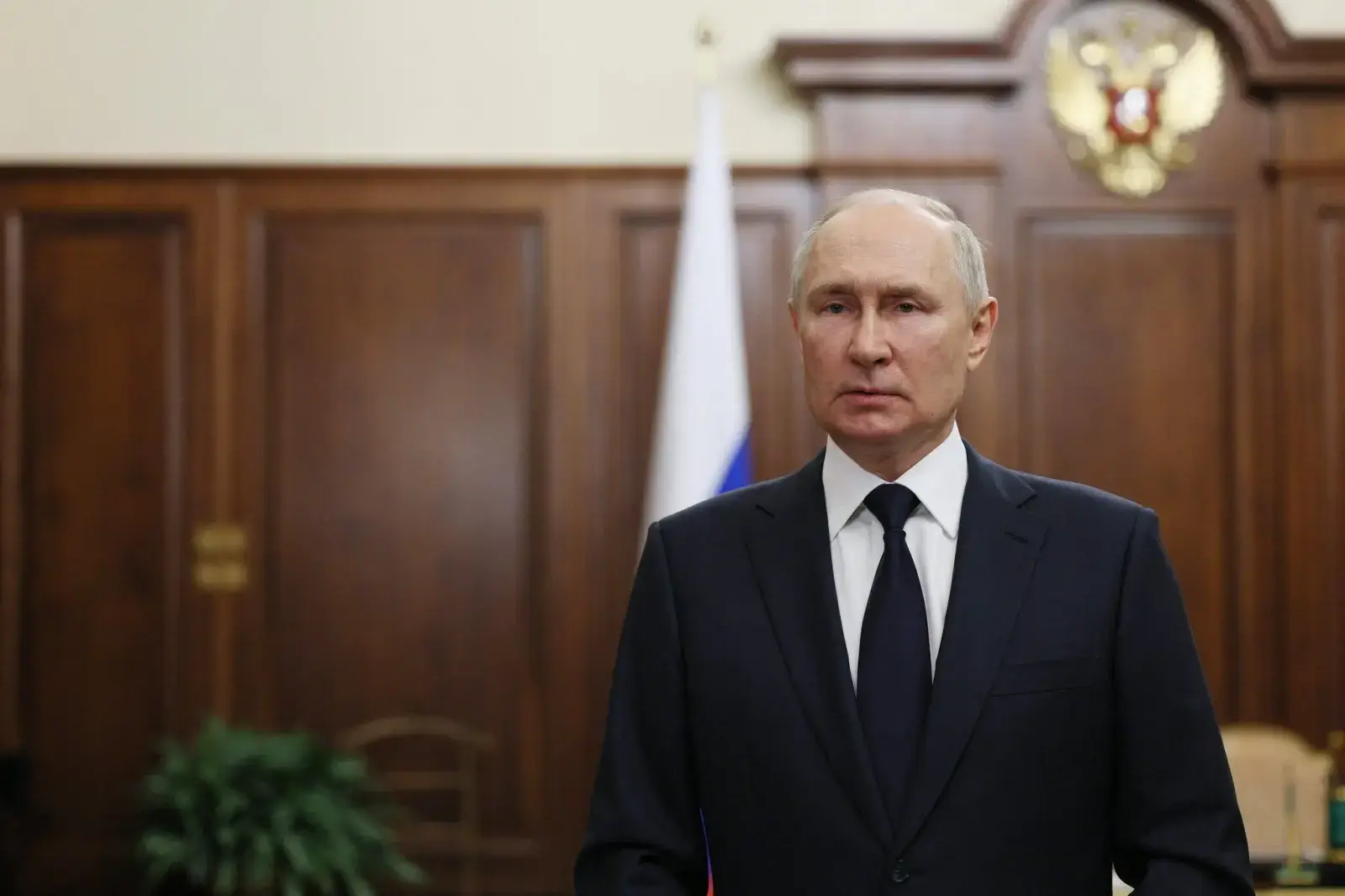
Ideological circles close to the Kremlin are viewing the Tehran crisis not from the perspective of a simple "weakening ally in the region," but with broader fear. That is, it is said that the idea that the scenario in Iran may one day move to Russia in the context of confrontation with the West is openly discussed in some influential circles in Moscow. President Putin's strong condemnation of the assassination attempt on the top leader is being interpreted as part of this concern.
In Kun.uz's "Geopolitics" program, political scientists focused on this issue and drew a unique picture of Russia's reaction and its causes.
Kamoliddin Rabbimov noted that Putin's position on this issue did not appear yesterday. In 2025, at a meeting with journalists, when asked "what would you assess if Imam Khamenei was killed by the US or Israel?," Putin replied twice with the same meaning: "I don't even want to explain or imagine this." According to Rabbimov, there may be a war in Putin's worldview, but directly targeting the head of state is a line that is fundamentally unacceptable.
From this point of view, threats to the Iranian leadership are not just a foreign policy episode for the Kremlin, but also a matter of "precedent." That is, this automatically triggers the thought "who's next tomorrow?"
Alexander Dugin's statement was also mentioned as one of the people who brought this idea to the public. He warned that "if Iran falls, then Russia will be in line." Although Dugin does not hold an official position, he is often mentioned as a person close to the ideological environment around the Kremlin. That is, these words are not a state position, but they could be a "voice version" of the concern circulating within the state.
In the context of regional interests, the picture is clear: Iran's weakening is advantageous for Israel, as Tel Aviv sees Tehran as the main security threat. But the discussion is not limited to the Middle East alone.
At a time when global competition between the US and China is intensifying, Russia and Iran are considered important partners for Beijing. Against this backdrop, economic difficulties in Cuba and Venezuela were also noted: the reduction in energy flows exacerbated fuel shortages, power outages, and problems in social infrastructure in Cuba. According to analysts, if Iran also seriously weakens, the strategic burden on Russia and China will become even heavier.
However, the main dilemma lies in the fact that Moscow, on the one hand, is unable to fully support Iran, and on the other hand, is anxiously monitoring the situation. The war in Ukraine has significantly limited Russian resources, and the new major geopolitical upheaval means another difficult front for the Kremlin.
Shuhrat Rasul drew attention to another episode that is being discussed in the Russian public: information about the telephone conversation between Masud Pizishkian and Vladimir Putin. It was said that Valery Solovey spoke about this. Although he often appears as an opponent, there is a view that sometimes the Kremlin "circloses" to the public the theses that it cannot officially state.
According to the opinion cited by Solovy, a new method of explanation may also be being formed within the Kremlin: allegedly, the tension around Iran is even economically beneficial for Russia in a certain sense - because the rise in energy prices works in Moscow's interest. At the same time, it was stated that justifications such as "Iran was not a full military ally, and at the time, Tehran itself was not very interested in deeper cooperation" may also circulate.
But the most difficult point of the conversation is the question of help. It is reported that Pisiskyan requested military assistance, and Putin stated that resources are limited. It was noted that Russia itself has a shortage of weapons and ammunition, especially air defense systems that Iran could request.
There's also an important reality regarding China: Russia-China-Iran proximity is more at the level of political statements, with no strict military obligations like "forced mutual defense in war." When it comes to arms trafficking, it doesn't automatically mean "enter the war" - it is often interpreted as a business. For this reason, analysts noted that there are not yet sufficient grounds to immediately call today's conflicts a "world war," and for such a definition, specific military blocs and mutual obligations must be formed.
In conclusion, Moscow is caught between two fires on the Iranian issue: ideological anxiety and fear of "precedent" on one side, and resources and real opportunities reduced due to the war in Ukraine on the other. Therefore, a harsh statement may be heard from the Kremlin's mouth, but there is a noticeable "shortness of hands" in the matter of actual assistance. And the most interesting thing is that when the war ends, both the silence and the statement are remembered.



Comments 0
…