


The ongoing oil game in the Strait of Hormuz hits Asia the hardest...
The new infographic clearly showed who is extracting crude oil through the Strait of Hormuz and, most importantly, who is receiving these volumes. Data from the U.S. Department of Energy Information were used as the source, and the figures relate to the first quarter of 2025.
The "Persian Gulf Five" dominates on the supply side
Oil flows through the Strait of Hormuz are almost entirely concentrated in the hands of the Persian Gulf states. The largest share belongs to Saudi Arabia - 37.2% of crude oil exports through the strait.
Next come the following manufacturers:
- Iraq - 22.8 percent
- United Arab Emirates - 12.9 percent
- Iran - 10.6 percent
- Kuwait - 10.1 percent
That is, these five countries own 93.6 percent of the total volume of crude oil passing through Hormuz. These figures clearly demonstrate the extent to which the global oil market is "dependent" on the extraction of oil in the Persian Gulf.
Which side can "burn" more?
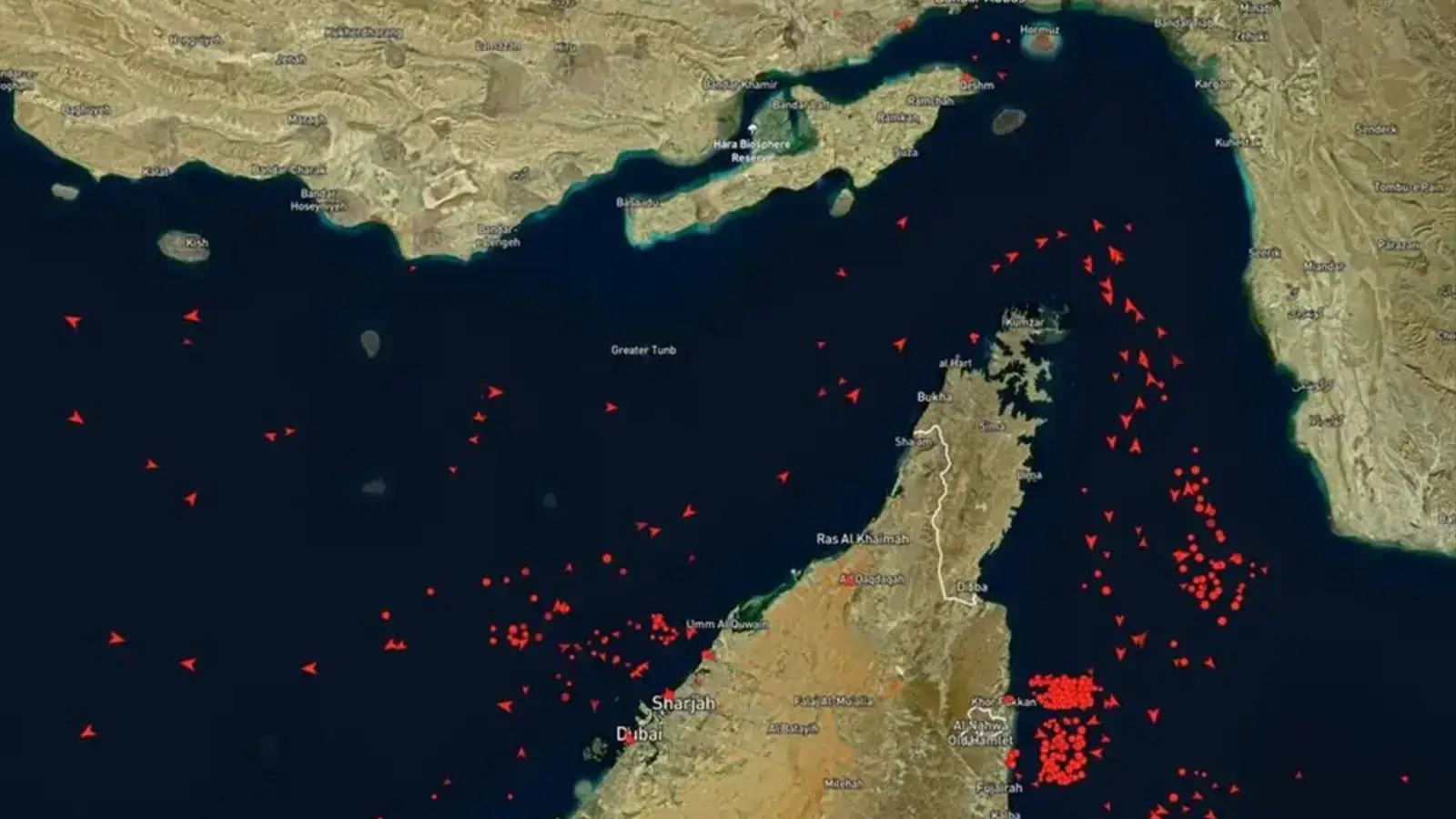
Against the backdrop of the latest tensions in the Middle East and Iran's statements about its readiness to attack ships crossing the strait, the danger is not simple: more than 20 percent of global oil flows are associated with this corridor.
Even if Hormuz is blocked for a day, panic, price jumps, and logistical confusion may begin in the market. Because this is not an "ordinary waterway" - it is one of the roots of the global oil system.
On the demand side, the picture is, in one word, "Asian"
The most striking fact is that 89.2 percent of the volume of oil passing through Hormuz is accounted for by Asian countries. That is, if there is a disruption in this strait, the biggest blow will hit the economies of Asia.
In the first quarter of 2025, the distribution of recipients was as follows:
- China - 37.7 percent (largest recipient)
- India - 14.7 percent
- South Korea - 12 percent
- Japan - 10.9 percent
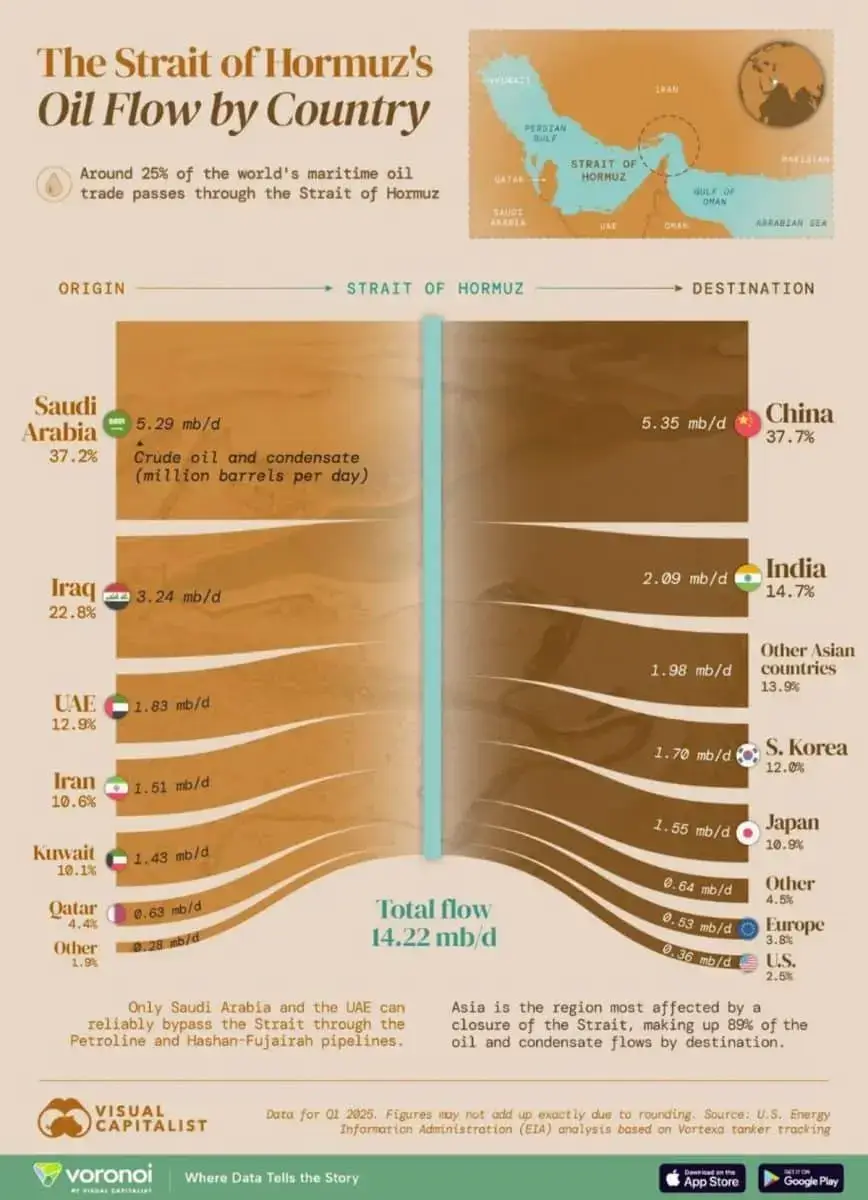
In short, China and India together receive more than half of the oil flowing through Hormuz. This means that if the strait is blocked or there is a serious disruption in its operation, the greatest pressure falls on these two giant economies.
Conclusion
The Strait of Hormuz is a "global tumbler" for oil. When it's turned on, the market is calm; when it's turned off, prices, logistics, inflation, and production chains can vibrate instantly. And the numbers tell one truth: Asia is likely to bear the heaviest share of this risk.



Comments 0
…