


What political games are behind Tashiyev's resignation in Kyrgyzstan?
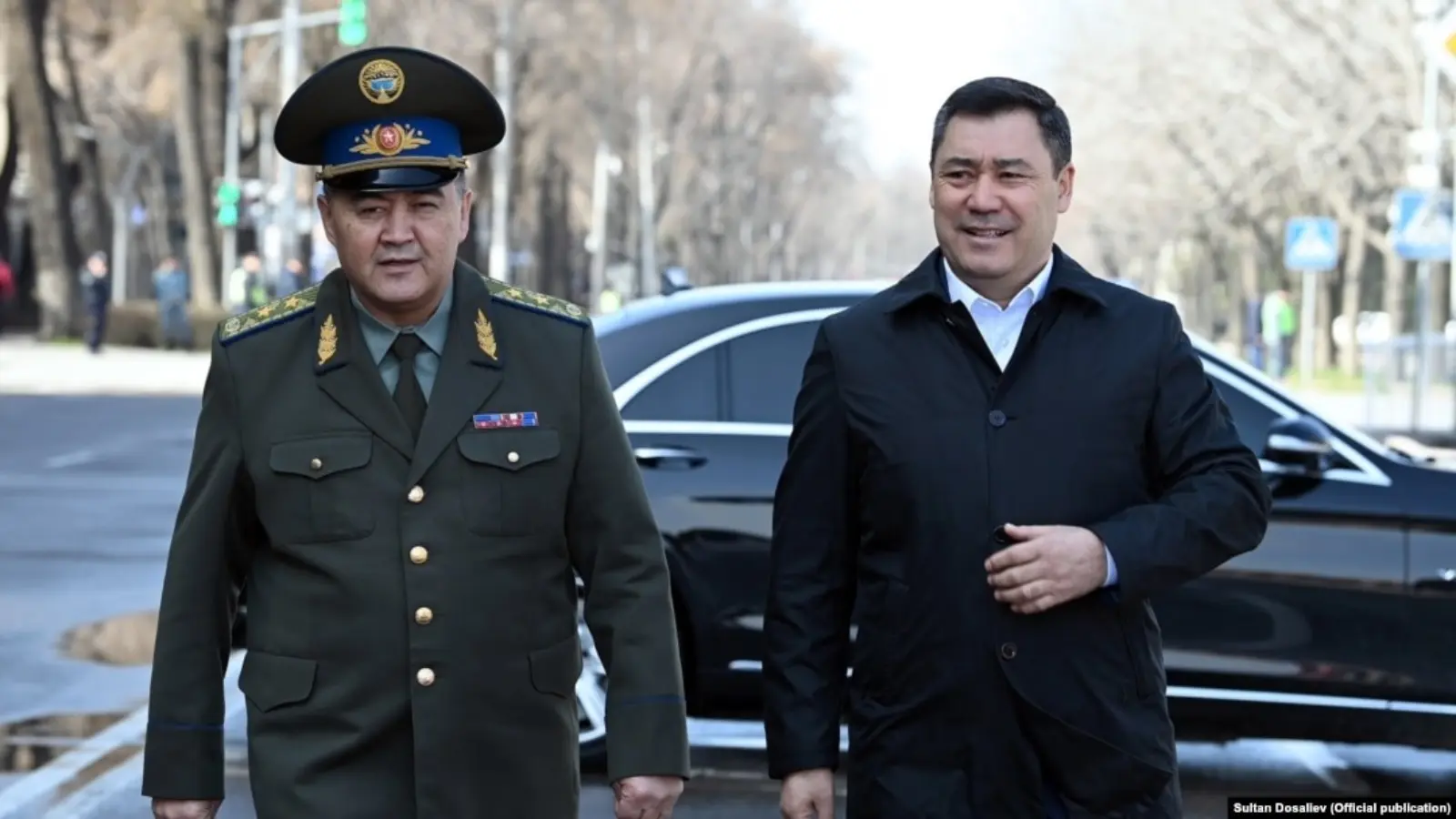
In Kyrgyzstan, the recent days were marked by a decision that resonated significantly on the political stage: the unexpected dismissal of Kamchibek Tashiev in Kyrgyzstan has fueled various questions and speculations. The fact is that he was considered not just a head of an agency, but a person with a heavy "weight" on the state security vertical.
According to reports, the decree signed by Sadyr Japarov on February 10 prematurely terminated Tashiyev's powers as Deputy Chairman of the Cabinet of Ministers - Chairman of the State Committee for National Security. Following this decision, information also spread about the change of a number of leaders in the committee's system - which shows a bigger picture than the scenario of a "simple personnel change."
The most interesting point: in the official commentary, the decision is linked to explanations such as "preventing division in society, instead strengthening unity." But in politics, "everything fell into place in one sentence" is rare - especially in the security block.
Analysts for Central Asia link this event to a stronger decentralization of the security system. For example, a complete restructuring of the security architecture - the separation of individual services, the formation of new structures directly subordinate to the president, the replacement of people in influential positions - creates a picture close to the concept of a "crisis of trust." That is, it is seen as a signal that the most sensitive part of power - the security elite - should not become too independent.
In this context, political scientist Otabek Akromov's main idea is this: suspicions about the security elite starting their "game" through separate political channels could become a strategic threat to the president. It's not about the individual, but about the mechanics - in whose hands the system is more rigidly concentrated.
Another "painful" point is the topic of the presidential term. According to the analysis, after the 2021 constitutional changes, any open discussion around the timing issue may seem to be a factor of instability for the regime. For this reason, there is also a view that the authorities try to take control of any center of influence "which can be lost" in advance.
Of course, these are all assumptions and interpretations. In the official document, there is only one fact: Tashiyev's authority was terminated prematurely. The rest is the classic of politics: after big decisions, questions multiply, and answers usually come slowly.
One thing is clear: the actions surrounding the security system in Kyrgyzstan have become one of the biggest political plots of today. Now the main intrigue is the next steps: how will the new balance in the system be built, and will this truly lead to the goal of what is called "solidarity" or will it start a new stage of competition?



Comments 0
…