









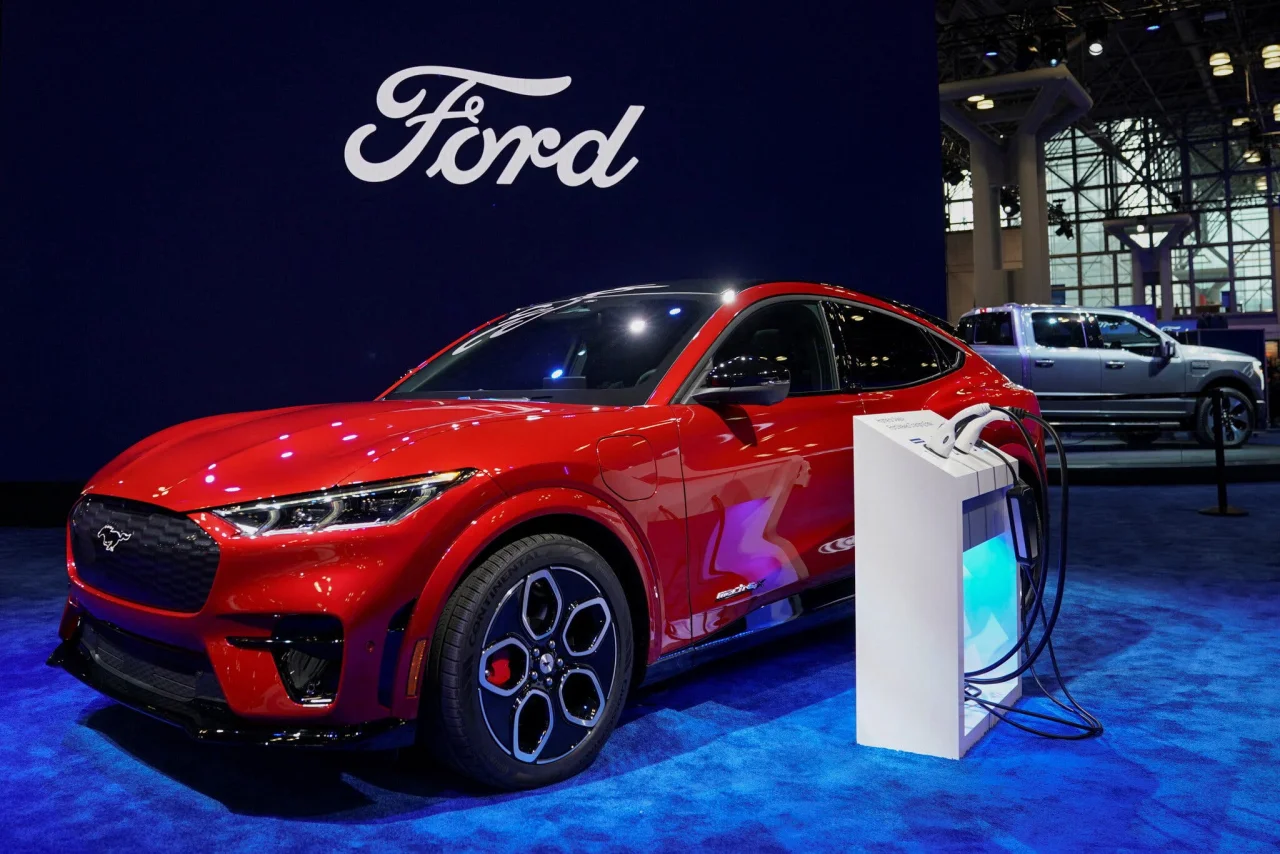
Ford Motor Company has made a drastic decision regarding its electric vehicle (EV) direction. According to information shared by Reuters, the automotive giant has officially announced that it will write off $19.5 billion in losses and abandon a number of EV projects. This decision is directly linked to the recent global market changes observed in recent months.
The company’s management stated that the demand for electric vehicles did not grow as expected and even declined in some markets. As a result, Ford has had to revise its strategy, optimize costs, and redefine its priorities. Most of the losses were recorded in the fourth quarter and will be gradually written off over the period leading up to 2027.
It was reported that approximately $8.5 billion from the total amount is attributable to the termination of EV projects. Additionally, $6 billion is tied to the closure of a battery production plant that Ford had developed in partnership with South Korea's SK On. The remaining $5 billion has been allocated for additional expenses and restructuring processes.
Furthermore, Ford announced that it will discontinue the current version of its electric pickup truck, the F-150 Lightning. It will be replaced with a next-generation model. The new vehicle will not be fully electric but will feature a hybrid system where the battery is charged with the help of a gasoline engine. This approach indicates the company’s attempt to adapt to market realities.
Additionally, Ford is stepping away from its plans to produce the fully electric truck known under the code name T3 and the electric van intended for the business segment. While these projects initially generated high hopes, they are no longer deemed economically viable in the current conditions.
According to Ford CEO Jim Farley, the market situation has changed very rapidly and drastically in recent months. This factor forced the company to reevaluate its strategy. Moving forward, Ford plans to place more focus on the development of gasoline and hybrid models while continuing to invest in its workforce and manufacturing infrastructure.
It is also anticipated that there will be reductions at the battery plant located in Kentucky, which is being built in partnership with SK On. This reflects Ford's shift toward a more cautious and calculated EV strategy.
At the same time, the company has not entirely abandoned its long-term plans. According to Ford’s forecasts, by 2030, approximately 50% of its global product lineup will consist of hybrids, long-range EVs, and fully electric models. Currently, this figure stands at only 17%.
In summary, Ford is not completely retreating from EVs but is adjusting to market conditions and preferring a gradual and measured approach. While this decision could be painful for the company, it is seen as an important step to maintaining stability in the future.
Read “Zamin” on Telegram!