


The Epigenetic Chronicle of Humanity: How Natural Selection Changed Our Gene?s
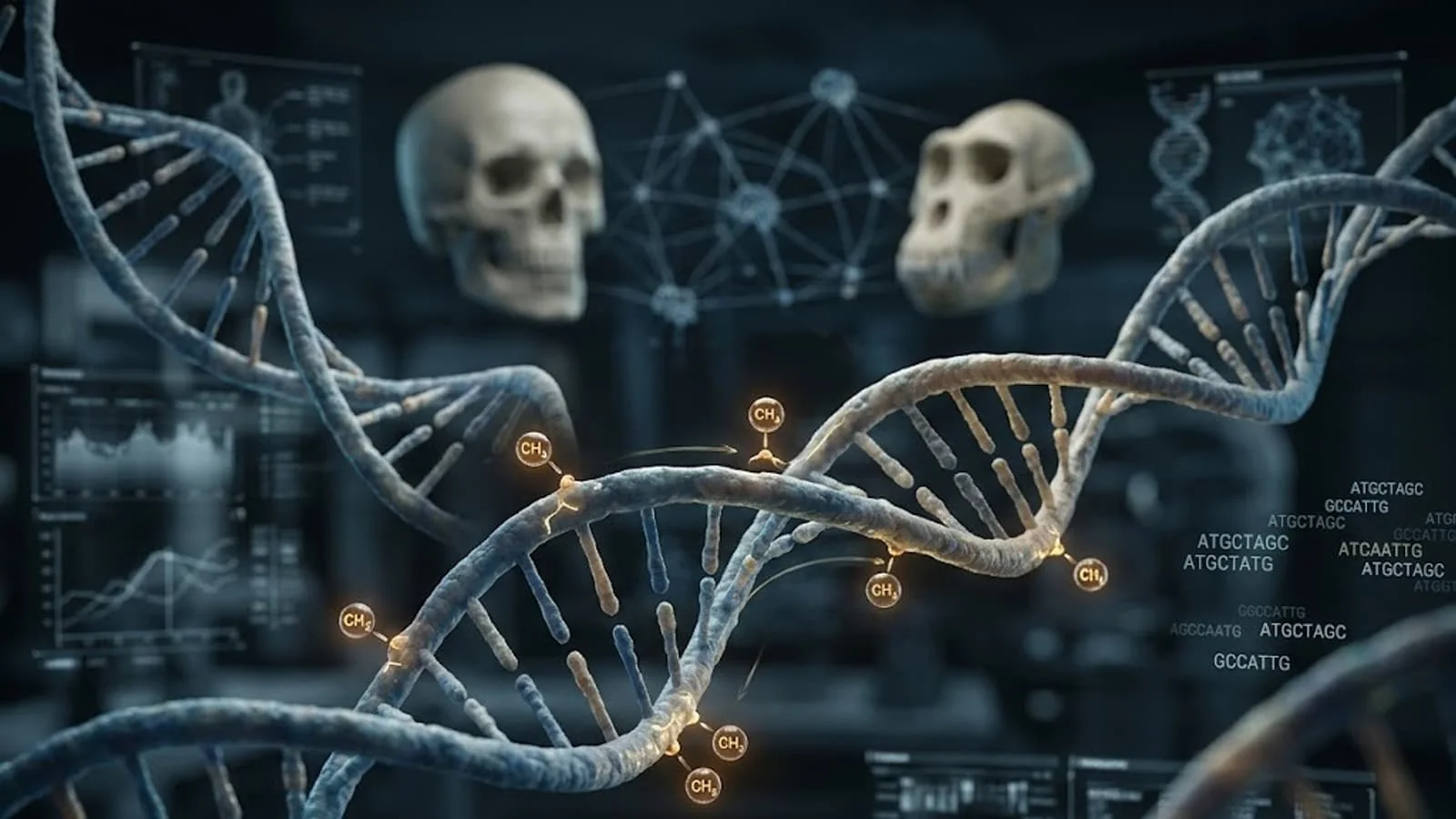
For decades, scientists have tried to understand why, despite human and chimpanzee genomes being 99 percent identical, we differ so drastically. The answer lies in the system of "switches" that control genes. A research team led by Stanford University professor Hunter Fraser proved that this process is not random, but a result of natural selection. This is reported by Ixbt.com reports .
Researchers used a method involving tetraploid hybrid cells called "centaur cells." This method allowed for the comparison of human and chimpanzee genomes in the same environment. The results showed that 83–93 percent of the changes in DNA methylation are determined by the local DNA code itself. This means that evolution has changed not just external settings, but the very mechanisms of gene function.
The most important discovery is that these changes are not random "noise," but the product of targeted natural selection. Specifically, epigenetic changes in the GRIK2 and TUBB3 genes increased synaptic plasticity in the brain, giving us an advantage in cognitive abilities and speech development. These changes also influenced facial skeletal structure and tooth eruption timing.
As renowned paleogeneticist David Gokhman noted, epigenetics reveals evolutionary details invisible when reading the simple genetic code. The slower growth and maturation of the human body compared to primates is part of this complex adaptation process. This study confirms that epigenetic "switches" played a decisive role in the formation of modern human appearance and intelligence.



Comments 0
…