


Uzbekistan’s housing market will renew in 2026
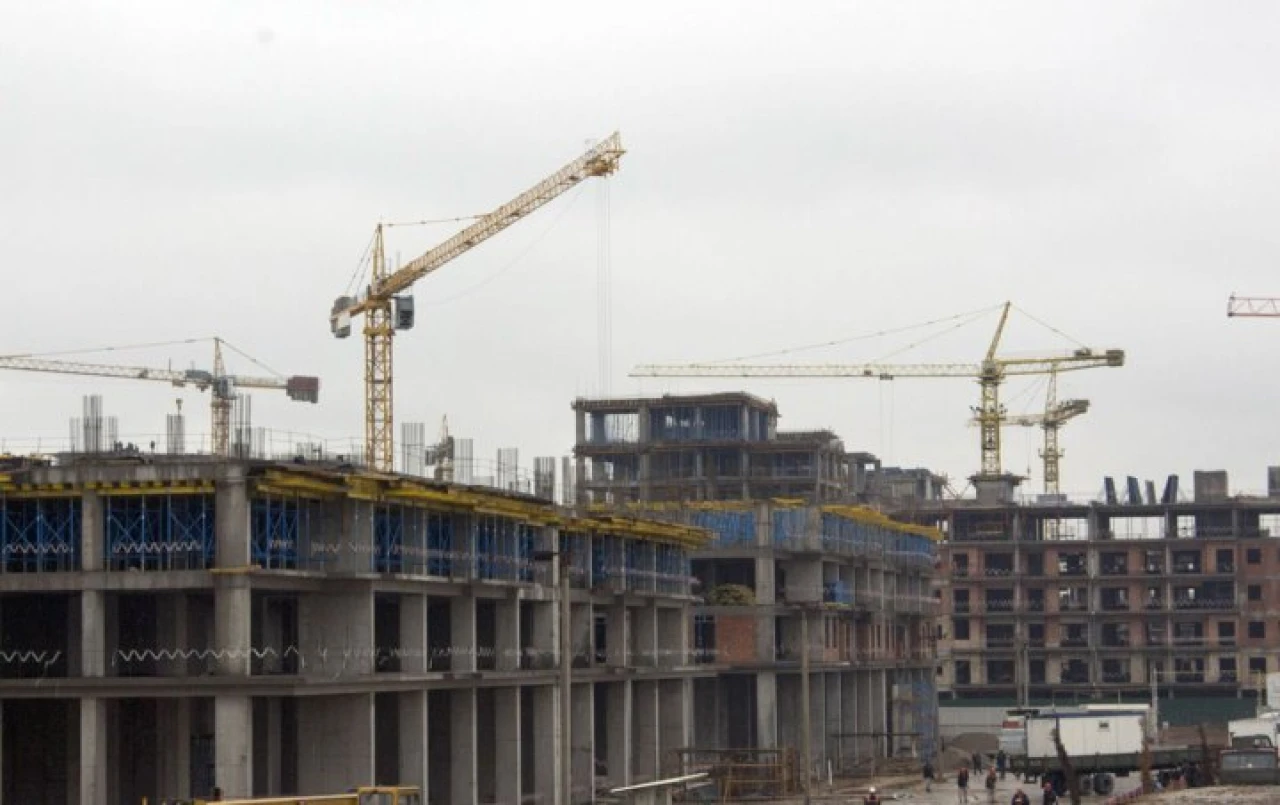
By the end of 2025, Tashkent’s real estate market seems to be taking a long pause: experts say an entire era has ended. CMWP Uzbekistan’s analysis shows the market had been growing for a long time on “speed,” but is now moving into a qualitatively new stage due to internal reforms and global economic pressure. This was reported by upl.uzreports.
Washington’s political agenda is also part of the backdrop: high interest rates and a revision of trade rules have made global investors more cautious. As this wave reaches Central Asia, Uzbekistan faces a clear task: to create an investment product with understandable returns and transparent rules.
Central Bank statistics for the first three quarters confirm demand remains high: across the country, the number of transactions rose by 12.8% to 229.8 thousand. However, growth is uneven: cities in the Fergana Valley recorded positive momentum of around 7–8%, while Tashkent Region saw almost a pause—just 1.7%.
Signs of “overheating” were not strongly felt in the capital’s housing market. According to CMWP, 2.17 million sq. m of housing was commissioned in Tashkent in 2025—16% more than in the previous period. The main share (about 85%) fell into the economy and comfort segments. In the secondary market, prices declined by 0.9%, while new builds in prestigious areas saw increases in the 4–9% range.
Denis Sokolov, head of CMWP Uzbekistan, noted that the strengthening of the national currency in 2025 created an interesting situation: although prices in dollar terms rose by 5–5.5%, aggressive developer discounts (averaging 10%) made buying a home relatively easier for buyers with foreign-currency savings. 2026 is expected to become the market’s “escrow year”: as project financing enters, major players will strengthen, and under tighter bank oversight the market will increasingly “filter out” smaller developers.
Tashkent’s office real estate figures also look like a “league table”: total leasable space reached 591,217 sq. m. Despite new properties such as Bomi and Summit, the vacancy rate fell from 25% to 16%. As a result, rents increased: in Class A, the average rose to $34.6 per sq. m. Analysts say businesses are now ready to pay not for an “empty box,” but for turnkey engineering solutions and professional management.
In retail, the picture is paradoxical: in the capital, only 165 sq. m of quality retail space falls per 1,000 residents—almost three times less than norms in major megacities. In 2025, not many—around ten—international brands entered the market. The issue is not interest, but a shortage of space that meets international technical requirements. Facilities like Scopus Mall or Tashkent City Mall set the standard, yet much of the supply still needs serious modernization.
The warehouse market stands out for being concentrated mainly in Tashkent and the surrounding region (72.5% of stock). In 2025, rents in this segment fell by 13.4% to $8.86 per sq. m. This is not due to weakening demand, but because large professional projects entered the market and the built-to-suit format expanded: companies increasingly prefer building facilities tailored to their needs rather than leasing older Class B and C warehouses.
In the coming season, the impact of the “New Tashkent” project is expected to grow, while the practice of “construction without documents” is expected to retreat definitively. Developers will now be forced to compete not by floor area, but by the end-user quality of the asset. Overall, prices are expected to stabilize, but in the emerging premium segment (housing and offices) a “gap” of 30% above the market average may occur.
The signal for investors is clear: the era of speculative growth is over. Real estate is turning from a quick-rich tool into a classic asset whose value is determined by operating income.
Analysts note another important fact: in 2025, not a single new project was launched in Tashkent’s “ultra-premium” residential segment. At the same time, demand for A+ class office space was 1.5 times higher than supply, forcing some international companies to lease space in neighboring countries.


Comments 0
…