









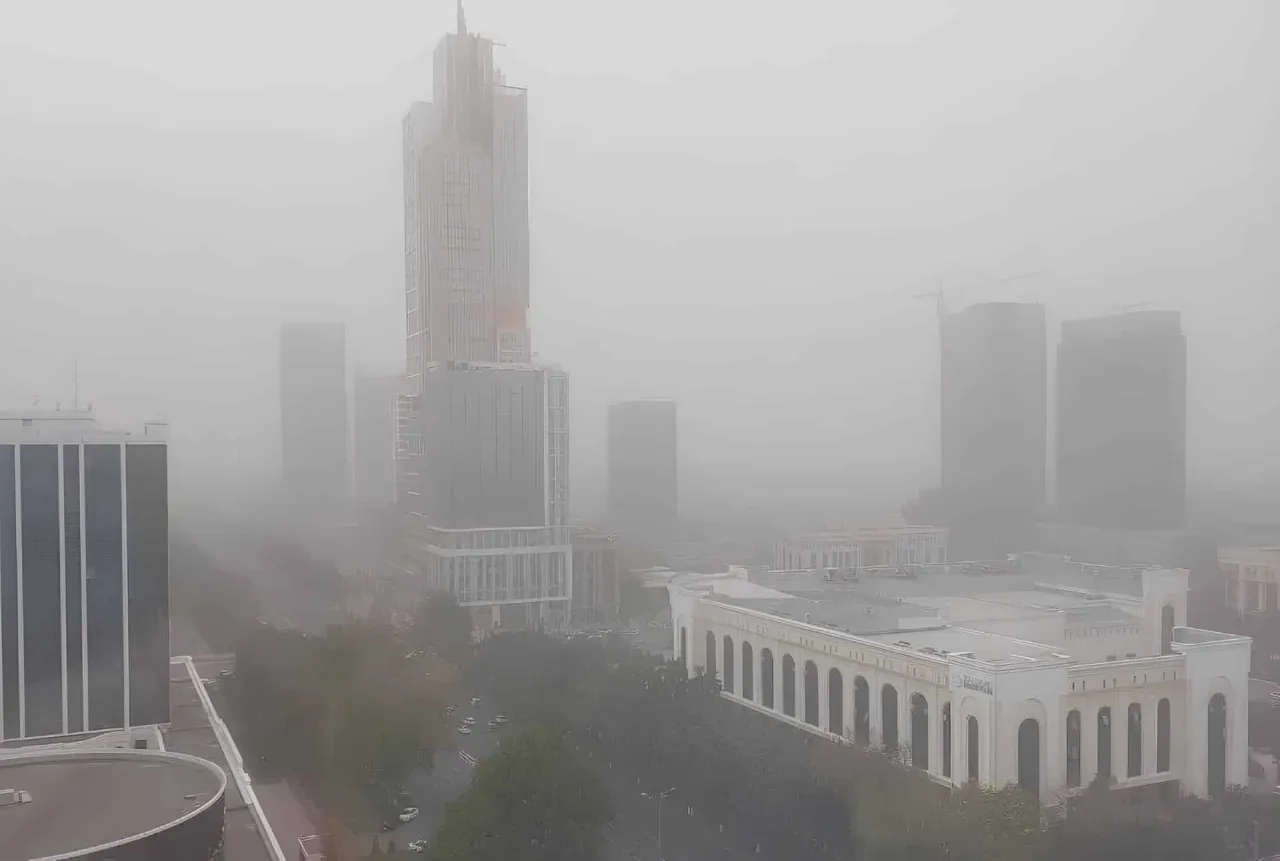
At the end of November 2025, a sharp deterioration in air quality in Tashkent was attributed to a combination of several factors. According to Uzbekistan's State Committee for Ecology, the main reason was a strong temperature inversion, which prevented polluted air from rising above the Earth's surface.
Anthropogenic emissions exacerbated the situation further. Experts noted that the issue was not only due to weather conditions but also a result of accumulated environmental problems.
The Ecology Committee explained the situation as a combination of natural and human-induced factors. The inversion that formed at the end of November, combined with weak winds, caused a "trapping" effect in the city, preventing pollutants from dispersing into the atmosphere.
Due to high atmospheric pressure and low wind speeds, smog persisted longer than usual. According to research conducted by the World Bank and the Ecology Committee, the main sources of pollution were distributed nearly equally between natural dust and anthropogenic emissions.
During such conditions, unfavorable weather accelerates pollution accumulation. Eco-blogger Mu’tabar Khushvaqtova highlighted that systemic changes are also worsening the situation: reliance on fuel oil and coal for heating systems, a reduction in green spaces, and dense construction disrupting natural wind corridors contribute to the problem.
Professor Tolqin Po‘latov, Director of the Nanotechnology Center, linked the increase in dust levels to soil degradation, the drying up of the Aral Sea, and the region’s overall desertification. He explained that natural dust combines with fine particles from the heating season to create a highly hazardous mixture.
In this situation, three major factors worked simultaneously: a strong temperature inversion, low wind speeds, and anthropogenic emissions. Their combination prevented pollutants from rising above the surface and caused them to linger at ground level for an extended period.
Pediatrician Kamola Po‘latova emphasized that PM2.5 and PM10 particles can irritate the respiratory tract, causing coughing and exacerbating chronic conditions within hours. During such periods, the number of hospital visits tends to rise.
Long-term exposure increases the risk of lung and heart diseases, hypertension, and cardiovascular problems. PM2.5 particles, which can enter the bloodstream, have become one of the most dangerous factors for people living in large urban areas exposed to polluted air.
Read “Zamin” on Telegram!