


Trump's doctrine: We will reconcile with Russia, we will fight with China!
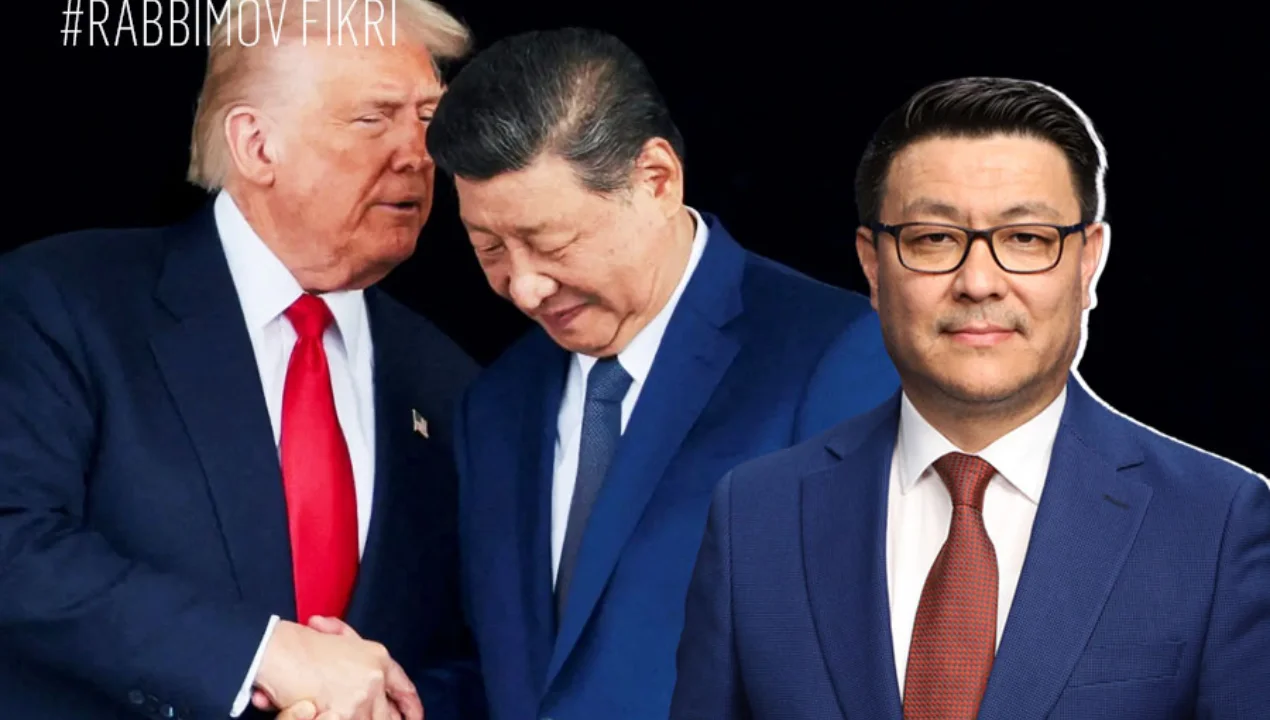
A few days ago, US President Trump signed a new edition of the National Security Strategy. This document is prepared by the US executive branch every 3-4 years, signed by the president, and submitted to Congress. This reflects the views of the USA on foreign policy, especially on security and stability.
This time, the strategy will dramatically change the US's previously established views. In particular, the attitude towards NATO and the European Union has changed dramatically. For this reason, this strategy caused considerable discontent among the US's traditional allies in the European Union and NATO member states.
In this strategy, the Russian Federation is not called an "enemy" or "rival" state, as in previous ones. A negative reaction was also expressed to NATO's expansion and the accession of new members. It was proposed to quickly end the Russo-Ukrainian war and restore relations with Russia.
It was stated that EU member states and NATO member states should take responsibility for their own security and stability. Against this backdrop, insider information and its analysis in Western media indicate that the US is shifting its strategic direction. The US no longer intends to wage war on two fronts. Because the resources of the USA may not be enough for this. For this reason, official Washington intends to quickly end the Russo-Ukrainian war and focus its full attention on another region. We are talking about the Indo-Pacific basin. Simply put, the US has now identified restraining the People's Republic of China as its top priority on the global stage.
The US does not intend to withdraw from NATO, but it intends to reduce its presence within NATO. The goal is to direct all resources to the Indo-Pacific basin, more precisely, against the PRC, that is, against the "Chinese threat."
Over the past two decades, the strategic vision of the US political elite and presidents towards China has been growing stronger. In the 1990s, after the end of the Cold War and the collapse of the USSR, political thinkers in Washington did not see China as the main threat. At that time, the prevailing view was that "the richer China becomes, the more liberal it becomes, and the more liberal it becomes, the more convenient it becomes for the USA and becomes a state on its side." However, seeing China as the main rival and threat today is normal for both parties in Washington and for all subsequent presidents. At the same time, there are differing views on the methods of resistance against China.
According to reports and analyses in Western media, Washington intends to abandon its role as a conventional arms supplier to Europe/NATO starting in 2027, notifying its allies in Europe. But it retains its role as a nuclear protector.
It should be noted that both Obama, Biden, and Trump themselves held the position that "in order to remain a powerful state in the future, we need to restrain the PRC and control its growth." However, in implementing this strategy, while Democrats focus heavily on US allies, Donald Trump doesn't emphasize the US's need for allies much.
With Trump's rise to power, the "Collective West" collapsed. This fragmentation is clearly visible in two examples: the Russian Federation and the PRC. Russia is the main threat to the European Union. In the eyes of Europe, the granting of Ukrainian lands to Russia, insufficient punishment for the invasion of Ukraine - inspires Moscow, encourages the invasion. However, Trump intends to reach an agreement with Putin as soon as possible. Trump's dream is to side with Russia or the US, or at least remain neutral, and not help China in the anticipated US-PRC strategic confrontation. However, European leaders do not believe in this project. Putin believes that his main goal is to overthrow the West, primarily the US, from global power. He believes more in Russia staying on China's side.
Moreover, the PRC is not an obvious threat to Europe. Today, trade and economic cooperation between the EU and the PRC is growing faster than trade between the EU and the USA. In short, Trump is reviewing US priorities, shifting his focus from Europe to China. They are preparing for the anticipated US-PRC confrontation in the future.
These contradictions have a direct impact on Uzbekistan and the fate of Central Asia. We are located in the very center of the Eurasian continent. The absolute majority of the world's greatest real and potential conflicts and wars are in and around the Eurasian continent. As the balance of power in the world changes and a new era of power trials and confrontations begins, the main task of the Central Asian, the Turkic world, is to preserve and increase vitality and power in mutual unity and solidarity.
Kamoliddin Rabbimov,
political scientist



Comments 0
…