


Geopolitical interests clashed around the Peace Council...
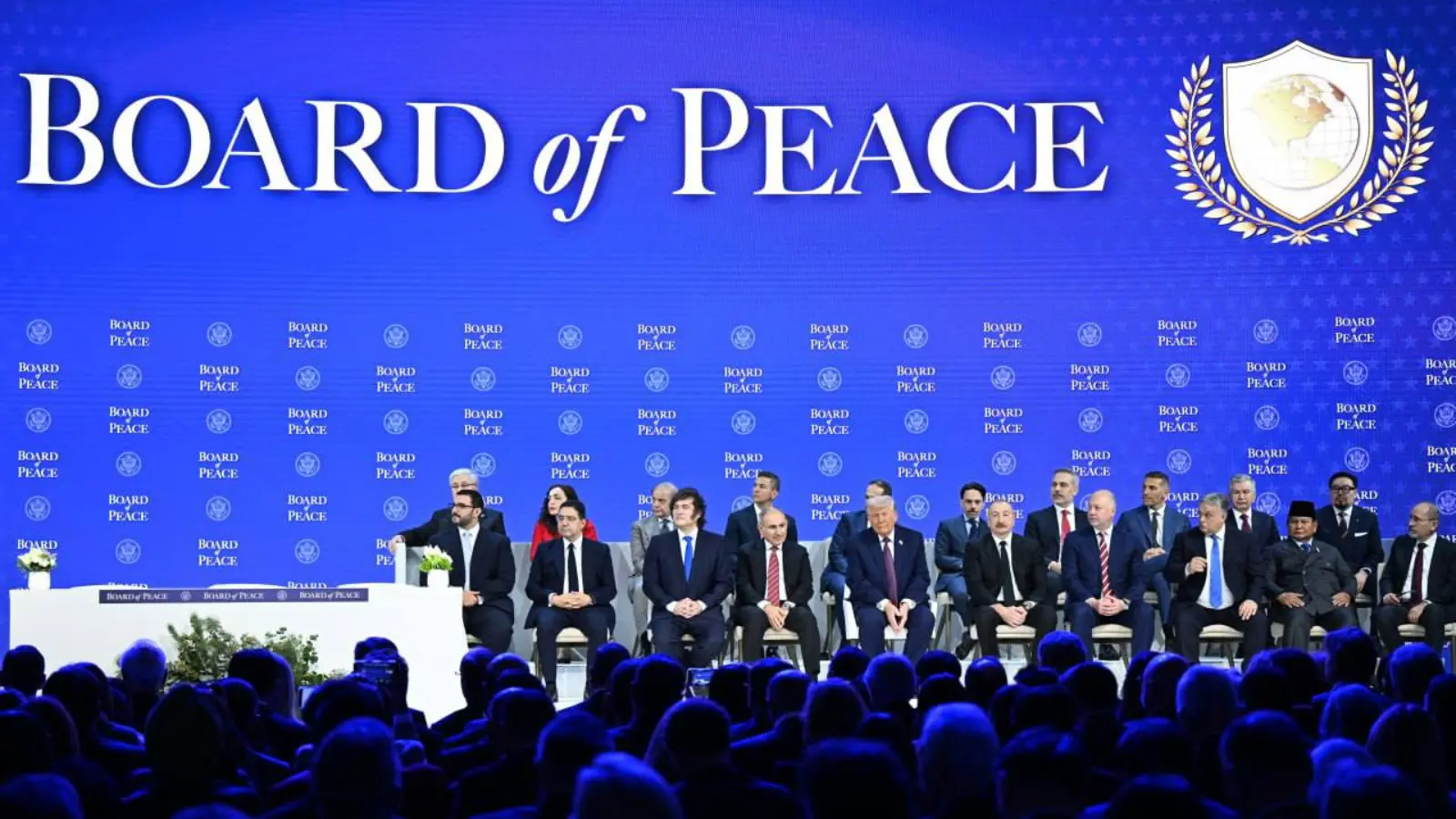
To date, 19 countries have officially joined the Peace Council, initiated by US President Donald Trump. Notably, in 12 of them, Muslims make up the majority of the population. According to political scientist Kamoliddin Rabbimov, this is no coincidence: these countries see the council as a solution to the conflict that has been going on in the Middle East for almost 80 years.
According to the expert, through this format, Muslim states aim to limit Israel's actions in Palestine and other territories, directly convey their position to the US leadership, and exert influence within the council. That is, the issue is not simply joining the new structure, but using it as a political instrument.
Currently, the next World Economic Forum is taking place in the Swiss city of Davos. This time, the main intrigue of the forum was Trump's participation and his speech. Because he was expected to address global issues such as Greenland, the Russia-Ukraine war, and tension in the Middle East in his speech. However, the biggest surprise in Davos came after the forum - Trump launched the signing ceremony of the Peace Council Charter.
Interestingly, this ceremony was not announced to the general public in advance. It is said that the invited countries were also notified about this a few days in advance. Initially, the "Peace Council" was presented as a temporary project aimed at establishing peace and restoring the Gaza Strip in 2025, and even the UN supported it in this form.
However, in recent months, the situation has changed. According to information leaked to the media, the new charter developed by Trump does not limit this council to Gaza or the Middle East. On the contrary, he intends to operate indefinitely throughout the world. Some analysts see this as an attempt to "de facto create an alternative to the UN."
The Charter states that the Peace Council aims to ensure peace and stability in the world, restore legal governance, and establish long-term peace in conflict zones. Trump himself has been appointed as the permanent chairman of the council. It is said that he intends to remain in this position even after the end of his presidential term.
As it turned out, there are currently four individuals in the executive body of the Council: US Secretary of State Marco Rubio, Special Representative for the Middle East Steve Whitkoff, Jared Kushner, and former British Prime Minister Tony Blair. According to the regulation, the Council is officially established with the approval of at least three countries, and Trump has sent proposals to 49 countries. The ceremony in Davos was attended by 19 heads of state or high-ranking representatives.
The composition of these 19 states also shows an interesting picture. Azerbaijan, Armenia, Uzbekistan, and Kazakhstan participated from the post-Soviet space. From Europe - Hungary, Bulgaria, and Kosovo, from Latin America - Argentina and Paraguay. The largest group consisted of Muslim countries: Saudi Arabia, Qatar, Turkey, UAE, Bahrain, Jordan, Pakistan, Indonesia, and the Maghreb, along with Uzbekistan, Kazakhstan, and Azerbaijan.
Perhaps for this reason, Israeli representatives did not participate in the signing ceremony of this council, which emerged under the slogan "Peace in Gaza." Israeli media outlets are openly criticizing Trump's initiative, especially the invitation from Turkey and Qatar.
Of course, how effective the Peace Council will be, how long it will live - this is still an open question. Perhaps it will be short-lived as a project related to Trump's personal political interests. However, it cannot be said that the countries that joined it are acting with the same motives.
For example, Muslim countries see this platform as a means of influencing Israel and strengthening the Palestinian issue. Such states as Uzbekistan, Kazakhstan, and Azerbaijan prioritize maintaining a multi-vector, balanced foreign policy. They are neither opposing Russia nor weakening ties with China - on the contrary, they are trying to maintain positive relations with all parties.
At a time when uncertainty is growing and turbulence is at its peak in the world, countries are searching for new equilibrium points. Uzbekistan also sees Trump's Peace Council as another platform for advancing its interests and views. The main goal is to influence the conflict in the Middle East, which has remained unresolved for years, and to speak up.



Comments 0
…