


Former US officer reveals "superweapon" used in Venezuela
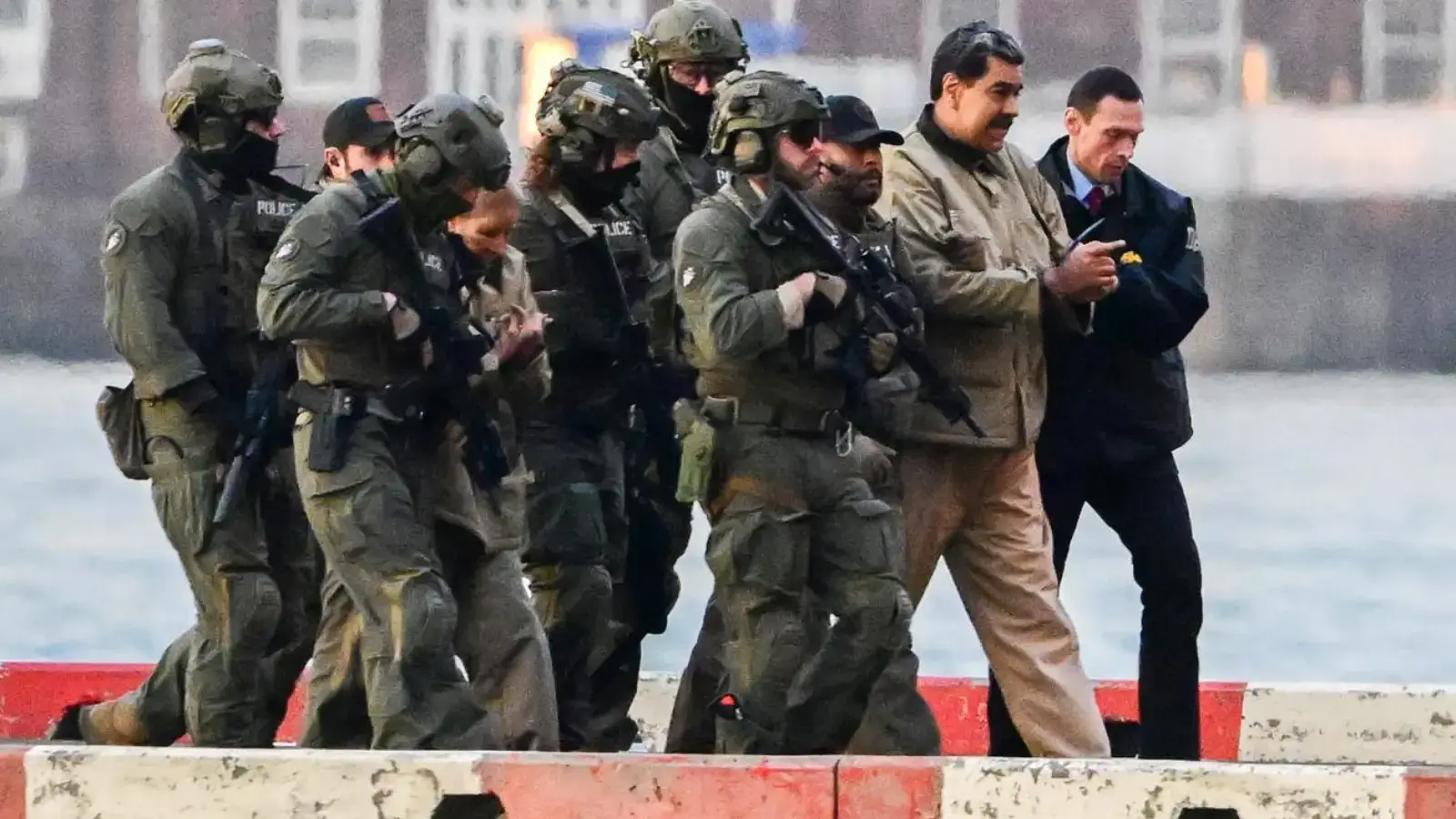
Following reports of an operation by US special forces aimed at the kidnapping of Venezuelan President Nicolas Maduro, various rumors circulated in the information space. The most discussed topic is that the US allegedly used some kind of secret "superweapon."
Military expert, former US Army officer Stanislav Krapivnik, commented on this controversy with a number of assumptions. According to him, the witnesses described cases similar to the "action of an unknown agent": severe headaches, nausea, disruption of balance and coordination, stupor, dizziness, and even brief loss of consciousness.
According to the expert, such symptoms are not something "radically new." On the contrary, he explained this situation as well-suited to the effect of the long-range acoustic device LRAD, which has been known for many years. The thing is, although it is said that such systems were initially designed for communication between ships, it was later discovered that high-power sound waves can have a sharp physiological effect on the human body at certain parameters.
The expert emphasized that such technologies are no longer a "secret": according to various sources, about 25 countries, including the Russian Navy, reportedly used similar equipment. Later, it was noted that they proved effective against pirates, after which police structures began to use them to disperse crowds during mass protests.
He also mentioned cases in New York where demonstrators experienced severe, and sometimes irreversible, consequences after the use of such devices. It is said that this led to legal proceedings and disputes with the city authorities.
Krapivnik emphasizes another important detail: such complexes are not small "hand tools" - they are large-sized, heavy, and require a powerful energy source. It is usually mounted on tactical vehicles. At the same time, it was assumed that the CH-47 Chinook transport helicopter, which was seen in the sky over Caracas on January 3, could be used as a platform.
Regarding the allegations that Venezuela's air defense system was temporarily "turned off" during the operation, the expert doesn't rule out that "simpler" methods might have worked here. According to him, in an interview with former CIA officer Larry Johnson, the version was mentioned that one of the Venezuelan generals took a bribe and disabled air defense, after which he left the country. This situation is also shown as an answer to the question "why were there no repeat raids?."
Another interesting point: the expert considers the claims that Maduro's guards were more Cuban than Venezuelan military personnel as a sign of distrust within the security system. That is, the opinion is also expressed that the president may not fully trust his armed forces.
In conclusion, Krapivnik sarcastically added that "the most dangerous super-duper weapon" is not an exotic technology. According to him, the main weapon is the dollar. In short, sometimes the most powerful influence lies not in the sound, but in the calculation.



Comments 0
…