


The Ukrainian issue that took place in Munich has become Europe's "security axis"
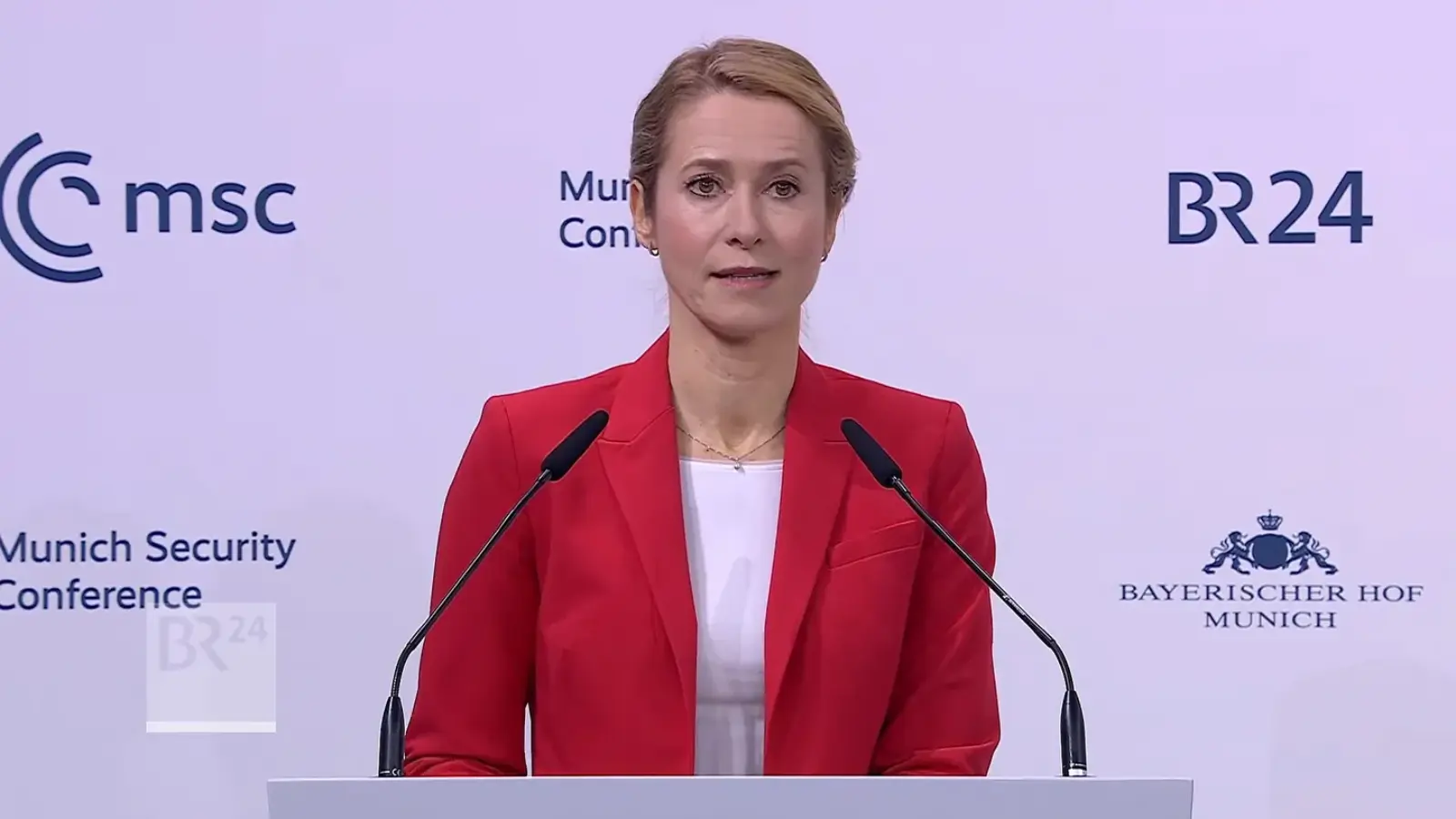
One of the most hotly debated topics at the Munich Security Conference was the Russia-Ukraine war. The European Union's High Representative for Foreign Affairs and Security Policy, Kaia Kallas, took a sharp and open position on this issue: she emphasized that Europe's security is directly linked to the fate of Ukraine.
Kallas's main warning came down to one point: the greatest danger is for Russia to give away results at the negotiating table that it has not achieved on the battlefield. In her opinion, incorrect concessions in diplomacy can later cost Europe dearly.
In this context, she said that one should not rush to portray Russia as a "superpower", emphasizing that the most dangerous scenario for Moscow is precisely granting excessive privileges. Callas also made it clear that Europe should put forward a number of principled demands: limiting Russia's armed forces, compensating for the damage caused to Ukraine, and keeping the issue of responsibility for war crimes on the agenda.
Another important mood was felt in the Munich discussions: Europe is increasingly resolute in its belief that the "old continent" must independently strengthen its defense system. French Minister for European Affairs Benjamin Haddad also expressed a similar position, stressing that Europe should not cling to statements coming from the United States, but should focus on increasing its military potential, rearming, and supporting Ukraine.
This background shows signs of a new stage in European-US relations: cooperation is maintained, but Europe is increasingly serious about strengthening strategic autonomy.
Kallas also responded to US criticism of Europe's "censorship", recalling that Europe still has a strong position in terms of press freedom and values, and assessed such statements more as a political statement.
At the same time, she said that the European Union is still an attractive integration project for many countries: the desire of Ukraine and the Western Balkan countries to join the EU was cited as a vivid proof of this.
The conclusion is as follows: the discussions in Munich clearly showed that transatlantic ties are not breaking, but that the gap in views is widening. Europe is trying to present itself not as a "region in decline", but as a stable and attractive political project. However, one fact remains unchanged: the war in Ukraine and the Russian factor remain a decisive point in European security policy - and this topic will not go off the agenda in the near future.



Comments 0
…