
James Webb Detects Methane on Planet 335 Light-Years Away
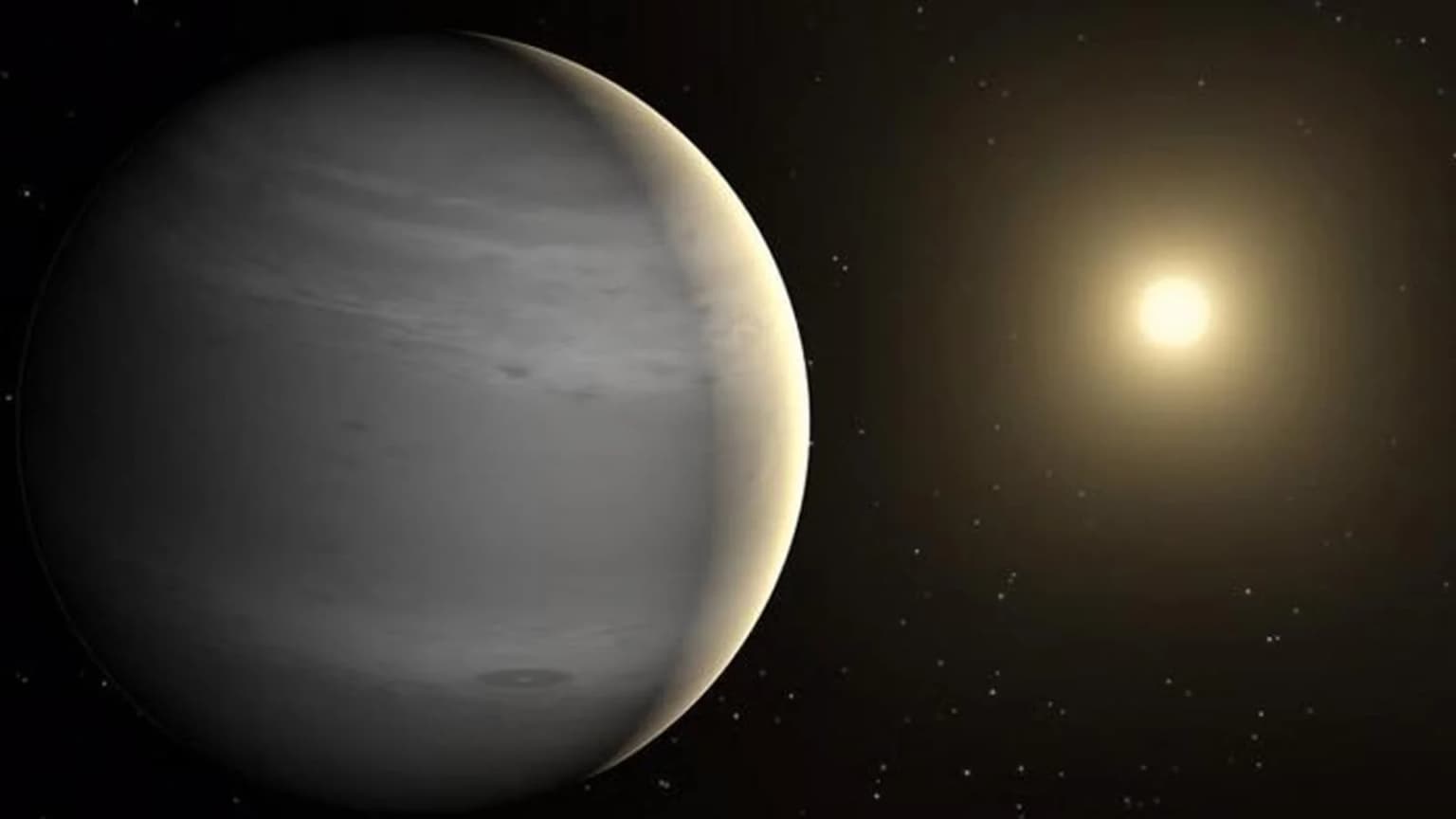
The James Webb Space Telescope (JWST) has detected methane gas in the atmosphere of exoplanet TOI-199b, located approximately 335 light-years from Earth. This discovery marks the first confirmed detection of methane in the atmosphere of a 'temperate' gas giant, opening a new chapter for scientists studying cosmic evolution. Ixbt.com reports .
Planet TOI-199b has a mass 0.17 times that of Jupiter and a radius 0.81 times that of Jupiter. It orbits its star every 104.9 days — a period falling between the orbits of Mercury and Venus in our Solar System. With a temperature of approximately 79 °C, it is significantly cooler than 'hot Jupiters' located very close to their stars.
Transmission spectroscopy was used to analyze the atmosphere. In this method, as starlight passes through the planet's atmosphere, various chemical elements absorb light at specific wavelengths. James Webb data clearly indicated the presence of methane in TOI-199b's gaseous envelope, confirming previous theoretical models.
According to study co-author Renyu Hu, an astronomer at Penn State University, future observations will help clarify gas concentrations in the atmosphere. Scientists also hypothesize the presence of carbon dioxide and ammonia on the planet, though these findings have not yet been definitively confirmed.
Methane has previously been found on other exoplanets such as WASP-80b (550 °C) and K2-18b. Studying temperate planets like TOI-199b is crucial for understanding the formation of gas giants and the evolution of planetary atmospheres, including refining models for Earth-like planets.














Comments 0
…