


Africa is splitting in two: Scientists say a new ocean is emerging
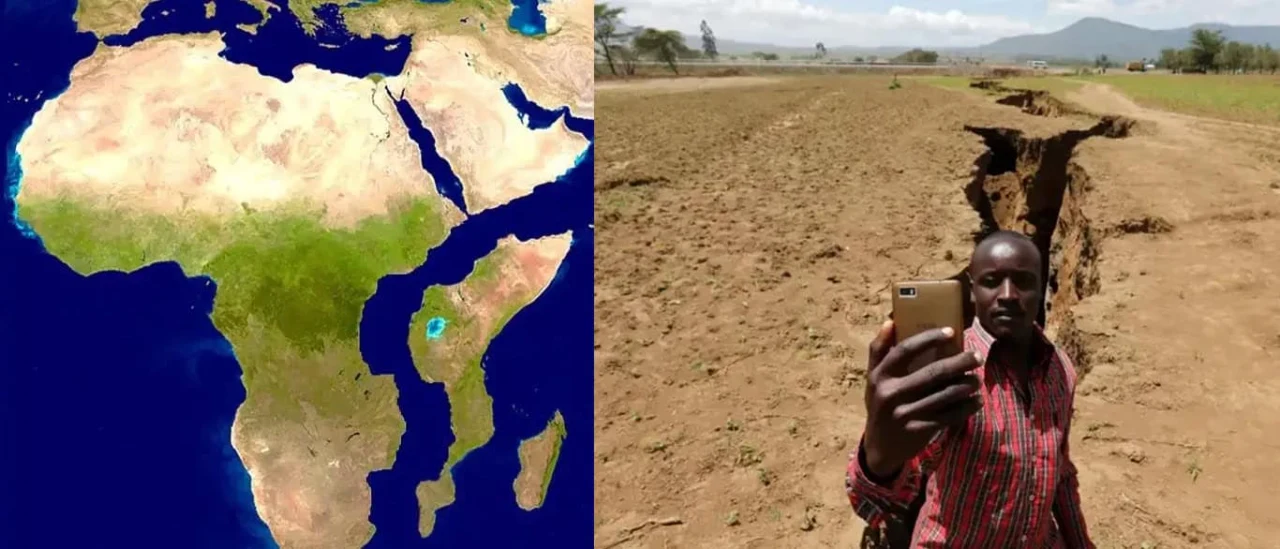
The geological face of the Earth is changing faster than we imagined. Recent research by geologists at Columbia University has revealed a groundbreaking discovery: the process of the African continent's breakup is accelerating much faster than expected. The results of this scientific study were published in the prestigious Nature Communications journal.
The continent's division: What is riftogenesis?
We are talking about a massive tectonic fault called the East African Rift System. Currently, the African plate is splitting into two independent parts — the Somali and Nubian plates. Scientists emphasize that this riftogenesis process will lead to the emergence of an entirely new ocean on the Earth's map in the future.
The "dangerous" thinning in the Turkana region
Researchers focused their attention on the Turkana rift zone on the border of Ethiopia and Kenya. The results of seismic analyses surprised geologists:
In the central part of the fault, the Earth's crust has thinned significantly, dropping to just 13 kilometers. For comparison, in the peripheral regions of the continent, this figure exceeds
35 kilometers. 35 kilometers exceeds.
Crucial point: According to geological laws, if the thickness of the Earth's crust drops below 15 kilometers, the process of the continent's complete breakup becomes irreversible. Africa has already passed this "tipping point."
How will the new ocean form?
As the Earth's crust continues to thin, hot magma from the Earth's interior begins to rise. Over time, this process forms a new type of crust characteristic of the ocean floor. Later, the waters of the Indian Ocean will flood into the massive depressions and trenches that have formed. As a result, a part of Africa will separate as a distinct island or continent.
Is there cause for concern?
Although scientists say that such massive geographical changes are accelerating, there is no reason for concern for the general population yet. It will still take millions of years for the continent to fully separate and a new ocean to form. However, today's discovery once again reminds humanity that our planet is a living organism in constant motion.
What do you think the Earth's map will look like in millions of years?



Comments 0
…