
Astronomers Identify Nature of Mysterious Radio Signals in Space
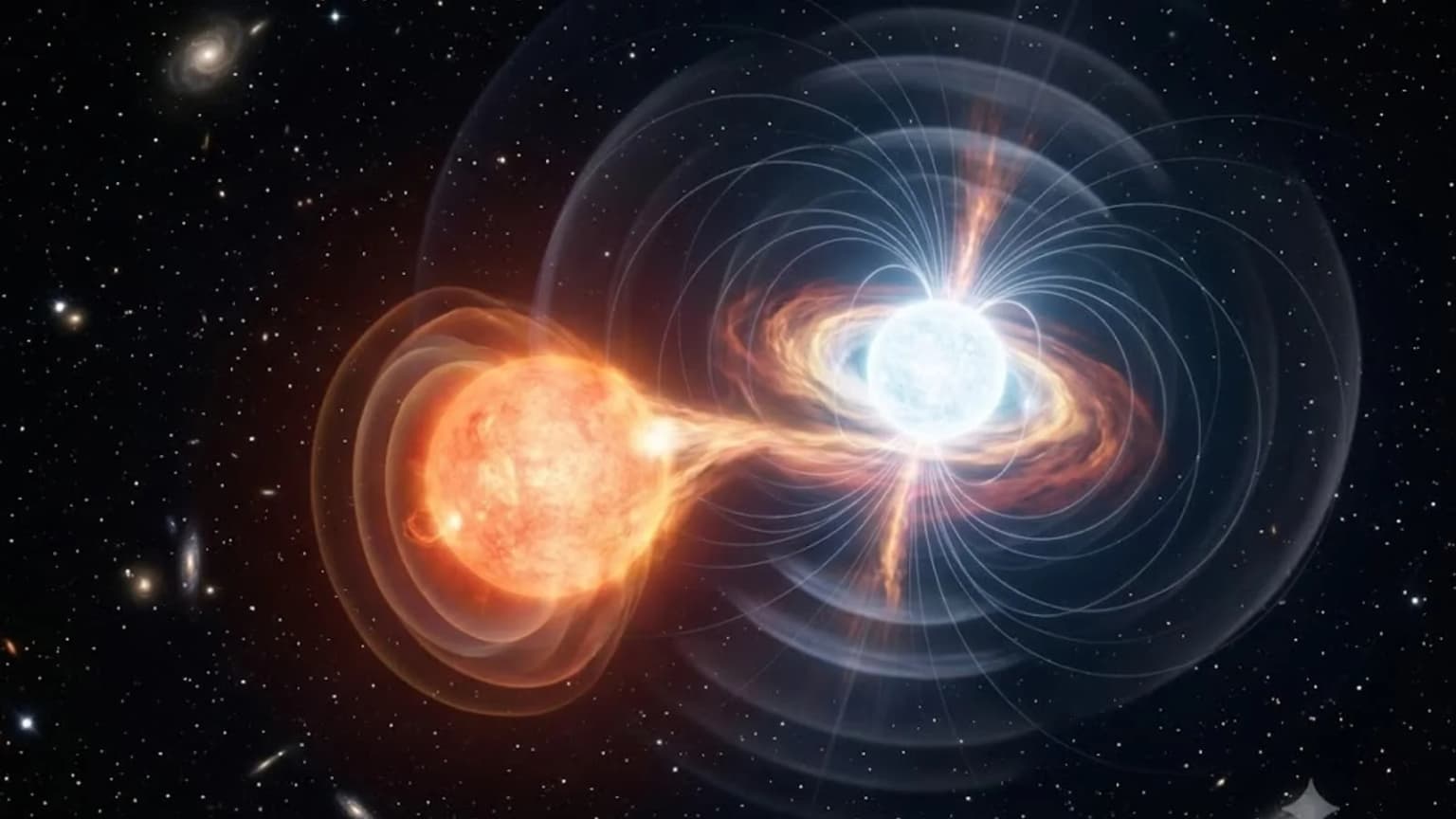
An international team of astronomers is close to solving the mystery of long-period radio transients, one of the most unusual cosmic phenomena of recent years. These rare radio sources produce flashes at precise intervals ranging from several minutes to several hours. Since the discovery of the first such object in 2022, scientists have managed to identify only about ten such sources. Ixbt.com reports .
A new study published in Nature Astronomy focuses on one of the most prominent representatives of this class, the object ASKAP J1745. Discovered using Australia's Square Kilometre Array Pathfinder (ASKAP) radio telescope, this object was studied by combining radio and X-ray data simultaneously. This approach allowed researchers to build a complete picture of the processes occurring.
The results indicate that ASKAP J1745 is most likely a cataclysmic variable star, a compact binary system containing a white dwarf. The white dwarf accretes matter from its companion star. The infall of this material releases energy in the form of X-ray radiation. Radio signals are generated by the interaction of charged particles with strong magnetic fields within the system.
Researchers note that the magnetic fields of such stars can be thousands of times stronger than that of an MRI machine. This condition, combined with a constant flow of matter between the binary components, creates the environment for unusual periodic radio flashes. ASKAP J1745 is the first object of its kind to be reliably identified not only via radio signals but also in optical and X-ray bands.
Scientists compare ASKAP J1745 to the Rosetta Stone, which helped decipher ancient Egyptian hieroglyphs. If this analogy holds true, further study of this object could be the key to understanding an entirely new class of cosmic phenomena discovered just a few years ago.















Comments 0
…