


After the resonance, the ICE operation in Minnesota is being scaled back
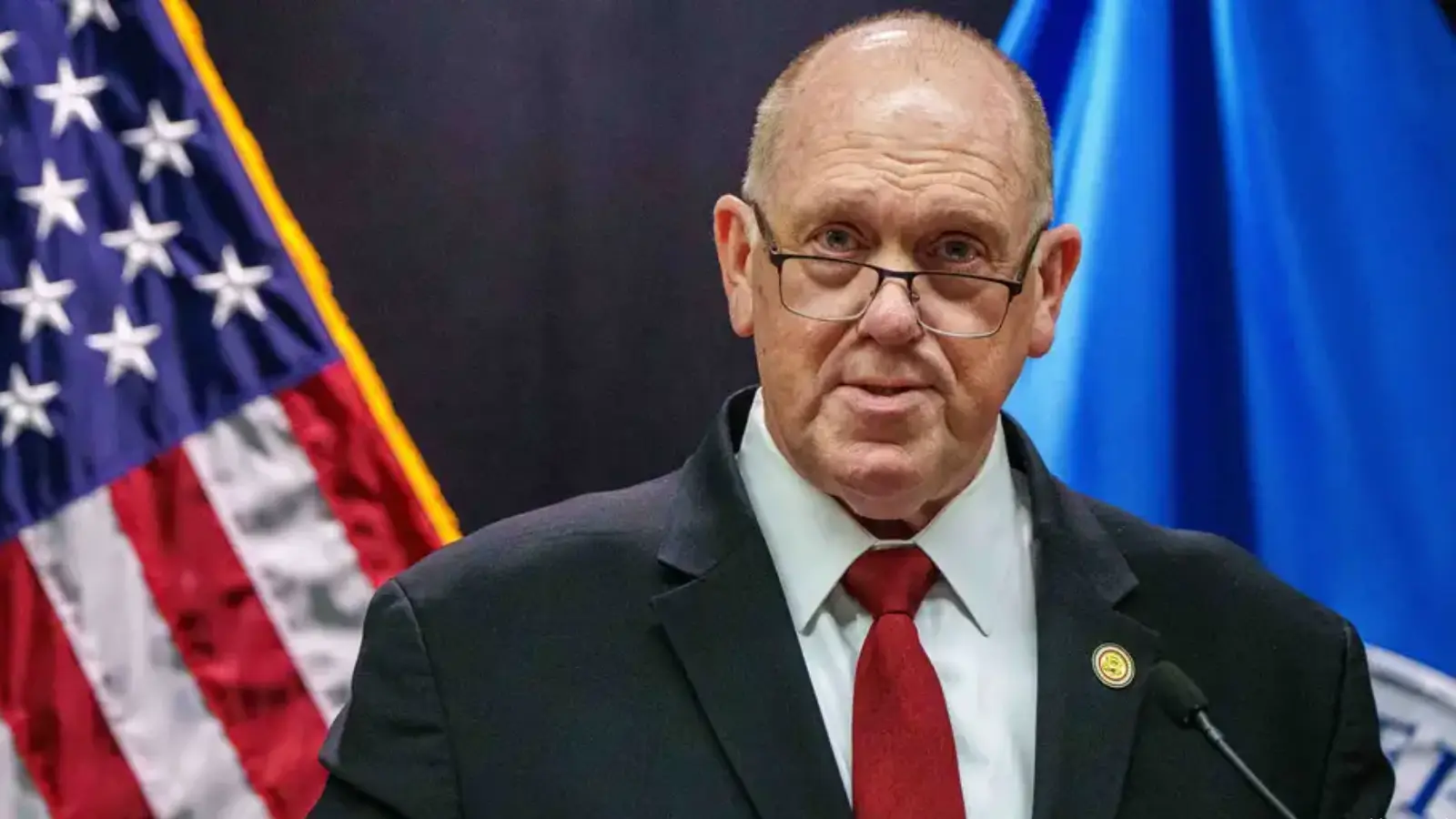
The “hot spot” around Minnesota is now slowly cooling down: the “Metro Surge” operation conducted by the US Immigration and Customs Enforcement Agency (ICE) will be curtailed. This was announced on February 12 by Tom Homan, the White House coordinator for border control. According to him, he presented a proposal to withdraw federal agents from the state to President Donald Trump, and Trump agreed to this decision, taking into account the “achieved results.”
Homan noted at a press conference that “many criminals” were arrested during the operation and that Minnesota would now become a “less convenient” place for them. The White House claimed on February 4 that “more than 4,000 criminals — illegal immigrants — were removed from the streets of Minnesota,” including “murderers, rapists, gang members.”
The scale of this operation was not a simple raid, but a large “surprise package”: during the “Metro Surge,” it was said that thousands of federal immigration officers were deployed to Minnesota, not the usual 150 during the “Metro Surge.” According to Reuters, this number has increased to about 3,000.
Most importantly, Homan touched on another controversial point: he emphasized that during the operation, ICE agents did not arrest anyone in hospitals, elementary schools, or churches. But he added that “these places are not completely inviolable” — that is, if they are considered a “serious public safety” or “national security” threat, such places may not be exempt.
Why is the reduction in operations starting now? According to Homan, two factors played a role: the first is the number of arrests and cases assessed as “public danger”; the second is the sharp decrease in the need for federal groups to call in rapid response forces, that is, the activity of “agitators” has decreased. He even said that “I don’t want any more bloodshed.”
At the same time, “rest” does not mean complete withdrawal. According to Reuters, Homan previously said that a partial withdrawal had begun, and now most of the remaining ones will be returned to their states or sent to other regions of the country in the coming week. This is said to serve the Trump administration’s goals of “border security” and “mass deportations.”
The January events in Minneapolis, however, have taken this topic beyond simple statistics and brought it to a very painful point. Various reports have reported clashes with federal agents, increased public protests, and, most dramatically, the deaths of two U.S. citizens, Renee Goode and Alex Pretty, in Minneapolis. These events have further fueled public anger.
Minnesota Governor Tim Walz has spoken out against the operation several times, openly describing its consequences. He has noted the economic damage, the strain on schools and daily life, the erosion of public trust in federal authorities, the fear of immigrant communities, and the long-lasting psychological scars. His words, “The long road to recovery is just beginning,” have been echoed in recent days.
Walz’s main concern is that this process could become a “frame of a lifetime” in children’s memories. For adults, it’s politics, debate, and numbers; for children, the disappearance of a classmate one day—and that’s it. Such signals are being heard not only from the governor, but also from local politicians and public figures.
Now the important question is: what will happen next? One side says that “the operation will end,” while the other side says that “normal immigration checks will continue anyway.” So, the Minnesota example may become a “scenario” for other states: agents will leave one place and appear in another. The bottom line is: the noise may subside, but the topic will not be off the agenda for a long time.
As for the fans: the second half of this game is beginning — someone will step up the “defense,” someone the “attack.” Now the most important thing: whether they will be able to solve the problem not with force, but with law and accountability — only time will tell.



Comments 0
…