


Origin of the South Pole–Aitken Basin on the Moon Determined
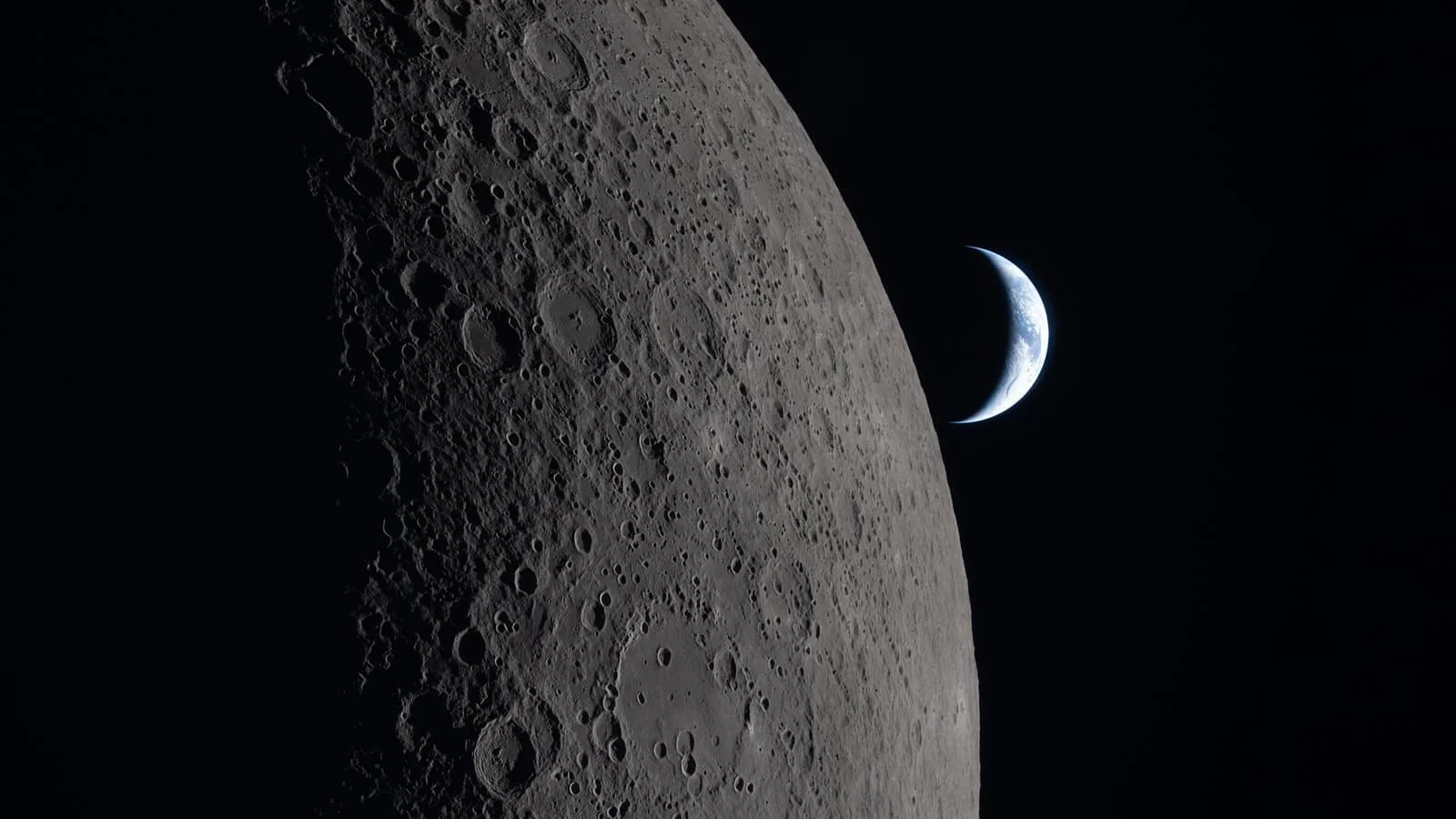
Astronomers are getting closer to uncovering the secrets behind the origin of the South Pole–Aitken basin, the Moon's largest and most mysterious crater. Spanning over 2,500 kilometers in diameter, this massive region is one of the oldest traces of a cosmic collision in the solar system. This is reported by Ixbt.com reports.
A research team led by Shigeru Wakita from Purdue University used 3D modeling to determine that this crater was formed by the impact of an asteroid 260 kilometers in diameter. Calculations suggest that the asteroid, composed of a mixture of rock and iron, struck the lunar surface at a 30-degree angle at a speed of 13 kilometers per second.
This powerful impact likely brought mantle layers hidden beneath the lunar crust to the surface. These materials are crucial for understanding the Moon's internal structure and uncovering its ancient history.
NASA's Artemis program is expected to play a decisive role in exploring this region. If planned missions are successful, astronauts could bring unique rock samples from the Moon's south pole back to Earth by 2028.



Comments 0
…