
Batteries Self-Disassemble: New Technology for Accumulators
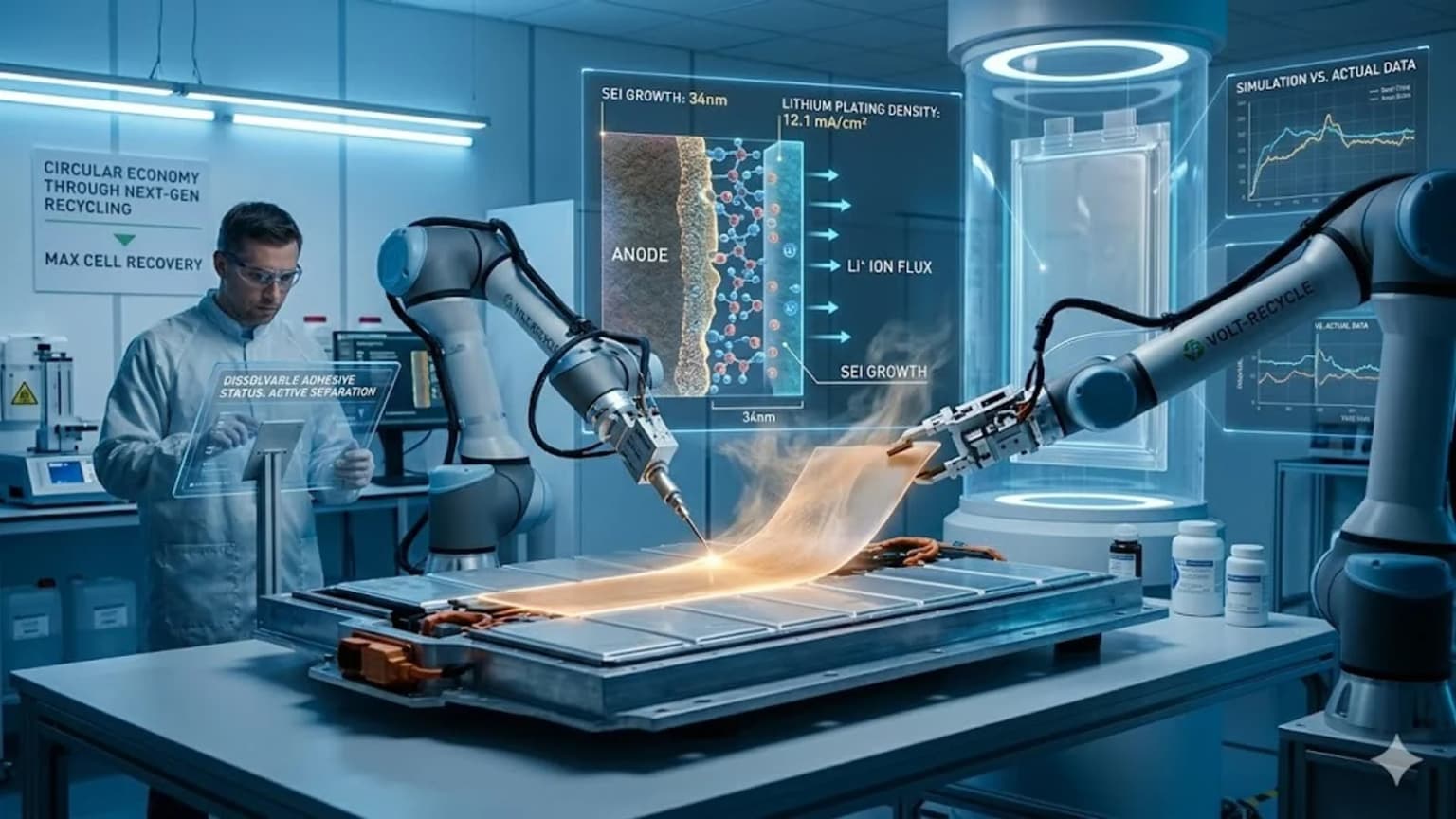
The battery industry and Embodied AI systems are encountering the limitations of purely data-driven approaches. As systems become more complex, manufacturers are shifting to a hybrid paradigm — combining physical models with data optimization. Engineers use fundamental electrochemical models, such as SEI layer growth, to refine parameters based on hundreds of real-world tests. This method has improved battery lifespan prediction accuracy from ±20% to ±5%. Ixbt.com reports on this. news .
However, a fundamental challenge arises in transitioning to simulation-based design: even the most accurate models require physical validation on real samples. Current BMS (Battery Management System) cannot replace disassembly and internal analysis without damaging cells. Adhesives used in traditional methods alter internal stress during battery opening, degrade interfaces, and can cause hazardous conditions like thermal runaway.
To solve this problem, Electrically Debondable Tape technology was developed — a special tape that loses its adhesive properties when low voltage (10–50 V) is applied. This material enables safe disassembly of battery structures and provides precise data on cell degradation. The resulting data is subsequently used to refine AI models and improve prediction quality.
The new technology is seen as a safety enhancement tool for servicing robotics, drones, and electric vehicles. It also holds significant potential for the circular economy: once a battery reaches end-of-life, robotic lines can automatically disassemble cells upon command from the management system. Phononic presents this development as future infrastructure ensuring a balance between high energy density and safe disposal.















Comments 0
…